
Javier Bardem Lost Roles Over Palestine Support — and Doesn’t Care
Javier Bardem confirms losing film roles and brand deals over his pro-Palestine activism — and says he’s perfectly fine with it.
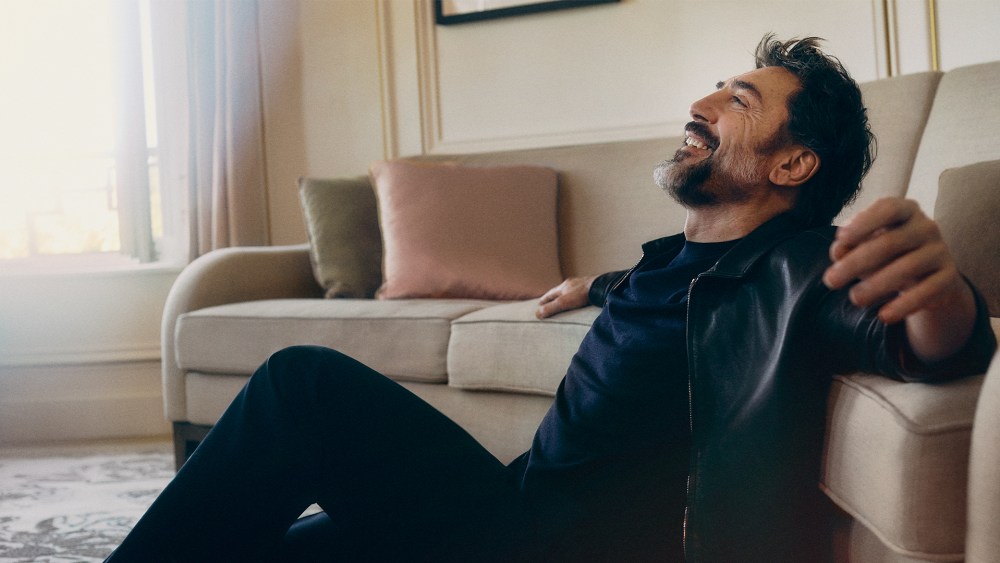
- Javier Bardem confirmed he’s lost acting roles and brand campaigns due to his vocal support for Palestine.
- The Spanish star shrugged off the consequences, saying “American studios are not the only place.”
- Bardem called out the industry’s treatment of Susan Sarandon as evidence of a broken system.
- He said he expected to be booed at the 2026 Oscars when he said “free Palestine” — and got a standing ovation instead.
- Bardem has a packed slate ahead: Cape Fear, Dune: Part Three, Bunker with Penélope Cruz, and rom-com Hello & Paris with Kate Hudson.
Javier Bardem knows he’s lost work because of his stance on Palestine. He just doesn’t particularly mind.
In a wide-ranging new interview with Variety, the Oscar-winning actor confirmed what many in Hollywood had been whispering: that his outspoken activism — including declaring “No to war, and free Palestine” while presenting at the 2026 Academy Awards alongside Priyanka Chopra Jonas — has cost him real professional opportunities. Film roles. Brand campaigns. Gone.
“Yes, I’ve heard things: ‘They were going to call you about that project, but that’s gone.’ Or ‘This brand was going to ask you to do the campaign, but they cannot,’” Bardem said. His response? “It’s fine. I live in Spain. American studios are not the only place.”
That’s not bravado for its own sake. Bardem, 57, is genuinely unbothered — and he’s got the perspective to back it up. He sat down with Variety in Madrid, where he lives with wife Penélope Cruz and their two children, Leo, 15, and Luna, 12. The city, the family, the life he’s built there — it’s his grounding. Hollywood’s approval is, by his own account, not the thing he’s optimizing for.
“That Tells You How Wrong This Whole System Is”
Bardem was equally direct about what he sees as the industry’s pattern of punishing dissent. He pointed specifically to Susan Sarandon, who has said it’s been “impossible” to find television work since she was dropped by her agent in 2023 following her participation in a pro-Palestine rally.
“She was one of the first ones to go there. And then she got that professional punishment,” Bardem said. “That tells you how wrong this whole system is.”
He’s not the only one to have paid a price. Melissa Barrera was fired from Scream 7 in 2023 after posting on Instagram about Israeli Prime Minister Benjamin Netanyahu’s response to the October 7 Hamas attacks. “There were times where I felt like my life was over,” Barrera later told The Independent. The chilling effect across Hollywood has been real and well-documented.
But Bardem sees the tide moving, even if slowly. “Some people will put you on a blacklist. I cannot tell you if that’s true or not — I don’t have the facts. What I do have the facts about are the new people that are calling you because they want you in their project. That makes me feel that the narrative that they’ve been using for so long is changing.”
Ready for the Boos — and Getting an Ovation Instead
When Bardem stepped onto the Oscars stage in March, he was prepared for the worst. He’d been thinking about Vanessa Redgrave, who in 1978 used her Oscar acceptance speech to reference Palestine and was met with scattered boos and public condemnation from the stage by screenwriter Paddy Chayefsky later that same night. Bardem had mentally rehearsed the same reception.
“I was ready,” he told Variety, miming a wave of disapproval. Instead, when he said “No to war, and free Palestine,” the room erupted in applause.
He’d worn an anti-war patch reading “No a la guerra” — “No to war” in Spanish — on his suit that night. It wasn’t his first public statement: at the Emmys in September, he’d worn a keffiyeh on the red carpet and told reporters he “cannot work with someone who justifies or supports the genocide” in Gaza. He also wore a red Artists4Ceasefire pin at the ceremony.
At the Vanity Fair Oscars afterparty, Bardem reflected on what the applause in the Dolby Theatre actually meant. “When I said ‘free Palestine’ in the room, in that theatre, the room broke out in a round of applause. So there is support, there is a lot of people supporting it, but it’s not loud enough,” he said. “That’s what I try to inspire. Like, ‘Guys, it’s OK. You can be part of the community of filmmaking, and also be a citizen, and it’s OK.’”
He also had a pointed observation about why more of his peers stay silent: “I think they don’t want to feel, themselves, uncomfortable. And that makes me uncomfortable; me and many others.”
On the broader geopolitical moment, Bardem connected the dots between media narratives and power. “We’re going back to the same beginning of lying and manipulating us in information and narratives they want to put out there for us to believe,” he said on the Vanity Fair carpet. “It’s about creating chaos that only benefits the richest and the people that has the power.”
A Very Full Plate — and a Two-Week Rule
None of this has slowed Bardem down professionally. If anything, he’s in one of the busiest stretches of his career. His Apple TV+ limited series reimagining of Cape Fear — in which he takes on the Max Cady role previously played by Robert Mitchum and Robert De Niro — drops June 5. “If it was a pure remake, I would have never dared,” he said. “But the essence of the craziness, of the nightmare, of the fever dream of ‘Cape Fear,’ is there.” Julia Roberts, a longtime friend and co-star, has already seen the trailer. “I will not be watching this,” she declared. “I barely made it through the trailer.”
He’s also heading to Cannes this month with Rodrigo Sorogoyen’s family drama The Beloved, in which he plays a flawed filmmaker director whose complicated relationship with his daughter forces a reckoning. “That takes us directly to the toxic masculinity of his generation and his age — which is my age, which is my culture, which is Spain,” Bardem said of the character’s arc.
Then there’s Dune: Part Three, due December 18, where he reprises his role as Stilgar — the Fremen leader whose unwavering faith in Timothée Chalamet’s Paul Atreides drives much of the trilogy’s emotional engine. Director Denis Villeneuve said of casting Bardem: “I needed someone who wouldn’t judge this character, and would instead embrace Stilgar’s worldview.” Bardem, characteristically, found the political parallel himself. “Religious reasoning for bombing countries. Religion is a very dangerous weapon of manipulation and fear, and a tool to excuse the most horrible violence. And you see that in Stilgar — because, in the third one, you’re now seeing the consequence of that.”
He’s also filming Hello & Paris, a romantic comedy opposite Kate Hudson, shooting in London. And then there’s Bunker, a psychological thriller written and directed by Oscar winner Florian Zeller (The Father), which reunites him on screen with Cruz — a project both of them were drawn to precisely because it would force them to be present with each other in a new way.
“It’s a beautiful story that is going to help us see again,” Bardem said. “Because sometimes you are immersed in your daily shit and the kids and the house, and it’s like — when do you sit down and look at each other again?”
Despite all of it, Bardem has one non-negotiable contract clause — and it has nothing to do with trailer size or hotel suites. “The only thing I do pay attention to is, no more than two weeks away from my family.” Since his son was born, either he or Cruz has always stayed home with the kids. On Bunker, which shot in Madrid, they were both home for dinner.
On Penélope, and the Life They’ve Built
At home in Madrid, the two Oscar winners keep their professional lives firmly out of the living room. No posters, no photos, nothing that reminds them of the industry they work in. Their his-and-hers Oscars — Cruz won hers for Vicky Cristina Barcelona — are kept out of sight. They don’t talk shop at the dinner table.
“We try to compartmentalize life and fiction,” Bardem said.
Roberts, who’s visited them in Madrid, puts it simply: “It just feels good when you’re around them and see them as a family. Paella on Sunday — don’t miss it!”
Bardem, who first met Cruz when he was 21 and she was 16 on the set of Jamón Jamón, is still visibly smitten. Reflecting on their years together, he said: “Penélope is an amazing, beautiful, good human being — the way she relates to her family, to her friends, to our kids, to me, to herself. It’s been a lot of years, and I haven’t seen a hint of malice in her.”
Then he grinned. “On top of that, she’s amazingly fucking beautiful! When I see her being photographed on some magazines, I go, ‘Is that my wife? Jesus, is it? It must be!’”
Cape Fear hits Apple TV+ on June 5. Dune: Part Three opens in theaters December 18, 2026.
Filed in

Comments
0