
Diego Luna’s ‘Ashes’ Divides Critics at Cannes
Diego Luna’s immigration drama ‘Ashes’ premieres at Cannes 2026 to mixed reviews — here’s what critics are saying about the film and its star Anna Díaz.
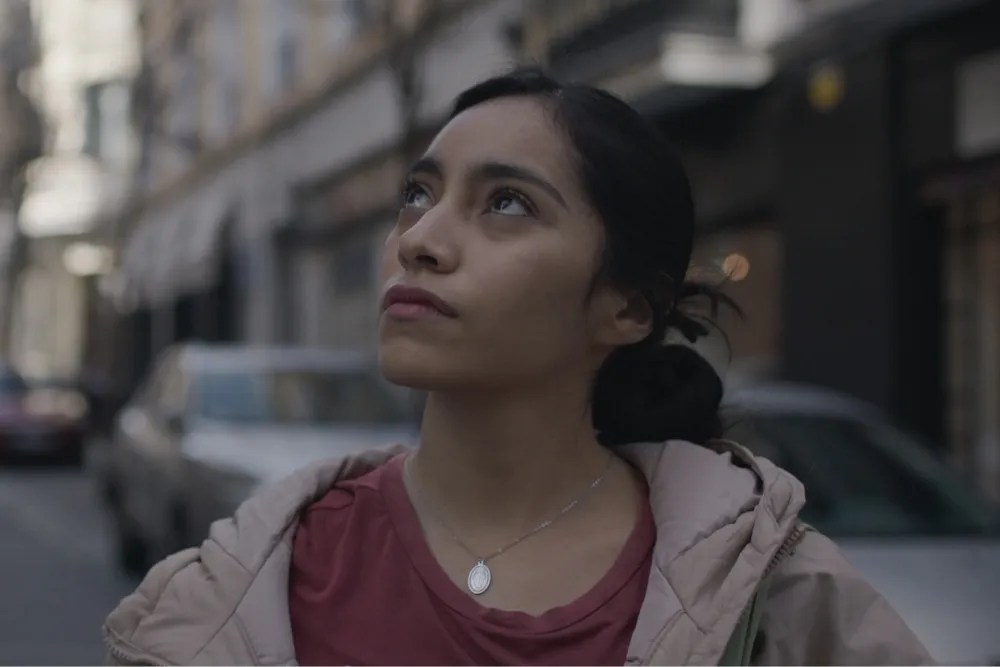
- Diego Luna’s immigration drama Ashes premiered at the 2026 Cannes Film Festival to mixed-to-positive reviews
- The film follows a young Mexican woman navigating life in Madrid and Barcelona after reuniting with her estranged mother
- Anna Díaz is drawing near-unanimous praise for her lead performance, even from critics who found the film itself lacking
- Luna, best known as the star of Andor, calls the project deeply personal — his own mother died when he was two years old
- Ashes is currently seeking U.S. distribution
Diego Luna has returned to the director’s chair for the first time in a decade — and the result is one of the more divisive films to land at Cannes this year. Ashes (Ceniza en la boca), an immigration drama adapted from Brenda Navarro’s 2022 novel, premiered Wednesday at the festival to a split critical reception: some moved by its quiet emotional intelligence, others frustrated by a story that keeps its audience at arm’s length.
What almost no one disagrees on is Anna Díaz. The young actress plays Lucila, a 21-year-old Mexican woman who followed her younger brother Diego (Sergio Bautista) to Madrid years after their mother Isabel (Adriana Paz, of Emilia Pérez) left Mexico and effectively disappeared from their lives for eight years. Díaz is, by every account, a revelation — carrying the film’s emotional weight across two cities, multiple jobs, and a grief that builds slowly and then arrives all at once.
The story moves between Lucila’s life as a nanny for a dismissive Spanish employer, a side gig as a food delivery driver, a romance with an English musician she keeps in the dark about her actual circumstances, and a tight-knit community of Latin American women navigating similar realities. Eventually, tragedy pulls her back to Mexico — and to a homeland that no longer feels like one.
A Personal Project for Luna
For Luna, Ashes was never just a film about immigration in the abstract. “My mother died when I was 2 years old,” he said in a Zoom interview ahead of the premiere. “So for me, the idea of not having that figure in my life is something strong. After the tragedy of my mother’s death, my dad was left with the responsibility of raising me and also making sure he could deliver what I needed. Many times, he wasn’t around because he was in the theater and had to travel for work. Often, we have to grow up to understand what our parents did for us or didn’t do for us.”
That understanding — or the long, painful road toward it — is at the heart of Ashes. The film doesn’t frame Isabel as a villain. It frames her as a woman who felt she had no other options, whose decision to leave fractured her family in ways that years of geographical proximity still can’t fully repair. Paz brings a haunted, semi-present quality to the role that some critics found intentionally elusive, others just elusive.
Luna also co-wrote the screenplay, and he was deliberate about what story he wanted to tell — and where. Setting a Mexican immigration story in Spain rather than the United States was a pointed choice. “It’s everywhere,” he said of anti-immigrant sentiment. “And it’s based on ignorance and selfishness. It’s related to this fear of what you have being taken away from you. It’s this stupid idea of feeling like you need to protect yourself.” The film makes the case that a shared language — Spanish — offers no real protection from xenophobia. Lucila’s employer barely conceals her contempt. Her boyfriend doesn’t even know what she does for a living. The racism, the class condescension, the bureaucratic invisibility: it’s all there, even without a border wall in the frame.
What the Critics Are Saying
Deadline called Ashes “a powerful and moving motion picture” and “a rich, and undeniably timely, addition to film depictions of the experiences of immigrants in both heartbreaking and humane ways.” The Wrap found it “unsettling and hard to shake,” praising Luna’s restraint and his willingness to let silence do the heavy lifting — particularly in a wrenching scene where Lucila receives the worst phone call of her life and her screams dissolve into the noise of a city that couldn’t care less.
IndieWire was perhaps the most enthusiastic, writing that “the tonal subtlety of Ashes showcases an artistic maturity on Luna’s part” and that the film “doesn’t feel like a typical immigration tale, not because of where it takes place, but because of the nuance of emotion that fuels it.” The review singled out a late confrontation between Díaz and Paz as “a fiery acting tête-à-tête” — the moment where two women who’ve spent the whole film holding things back finally just say what they mean.
Variety was considerably cooler, arguing that the film “plays out like a tale where too much has been relegated to the margins and left between the cuts” and that Luna’s storytelling operates more as “an intellectual exercise than an emotional one.” The Hollywood Reporter was blunter still, calling it “a wafty character study so stripped down and elliptical that it lacks the connective tissue to hook us into its story,” and noting that “the impression throughout is of a complex work of fiction distilled down to broad-strokes plot machinations.”
The tension between those two reads — restrained and purposeful versus stripped down to the point of disconnection — captures exactly what kind of film Ashes is. Luna shoots through windows, at a distance, letting vignettes accumulate rather than building to conventional dramatic peaks. Cinematographer Damián García, who also worked with Luna on Andor, brings an unassuming, in-the-moment style that follows Lucila’s relentless days without editorializing. The film is bookended by nearly identical shots of an apartment window — one in Mexico, one in Spain — that quietly connect Lucila and Isabel across their separate journeys without spelling anything out.
Whether that’s beautiful or frustrating probably depends on your patience for ellipsis. The Hollywood Reporter suggested the film may have been “chopped up in the edit in a bid to push the story forward, while inadvertently gutting it.” Variety noted that the film’s third-act return to Mexico feels “too tonally and visually disconnected to form a worthwhile bridge.” But for others, the sequence in Mexico — where Lucila mourns with grandparents she loves but a neighborhood she no longer recognizes, where military vehicles roll through blackouts and girls go missing without explanation — is where the film lands its most unsettling punch.
What Comes Next for Luna
This is Luna’s fifth feature as a director, though you might not know it — his work behind the camera has been largely overshadowed by his acting profile, which has only grown since Andor turned him into a genuine franchise cornerstone for Disney. He’s next set to star in the live-action remake of Tangled, but he’s already writing his next directing project and sounds eager to get back.
“I love acting, and I’ll keep acting,” he said. “But I don’t find myself more comfortable anywhere than directing and producing. It’s a much richer experience. As an actor, you’re invited to a very short part of the process, but it’s tiny compared to being on the whole journey of a film like you are as a director.”
He’s also thinking about what happens to film itself — not just his own career. “I’m concerned with movies not being part of the life of people,” he said. “I see my kids, and they don’t go to the cinema the way I used to. Most of the storytelling they get is a very individualized experience, and there’s loneliness in that. Cinema lets audiences share an event with others and makes them feel part of a community you didn’t know you belonged to. Growing up, cinema was not an escape. It was a mirror I could reflect on. It was the place where I could dream. And I’m scared society will lose that opportunity.”
Ashes is currently seeking U.S. distribution. In the film’s final image, Lucila holds the ashes of someone she’s lost — and the film makes clear they’re not just the remains of a person, but of a version of home that no longer exists anywhere she’s been.
Filed in

Comments
0