
Q’orianka Kilcher Sues Cameron Over Avatar Face
Yellowstone actress Q’orianka Kilcher alleges James Cameron used her face as a 14-year-old to design Avatar’s Neytiri — without her knowledge or consent.
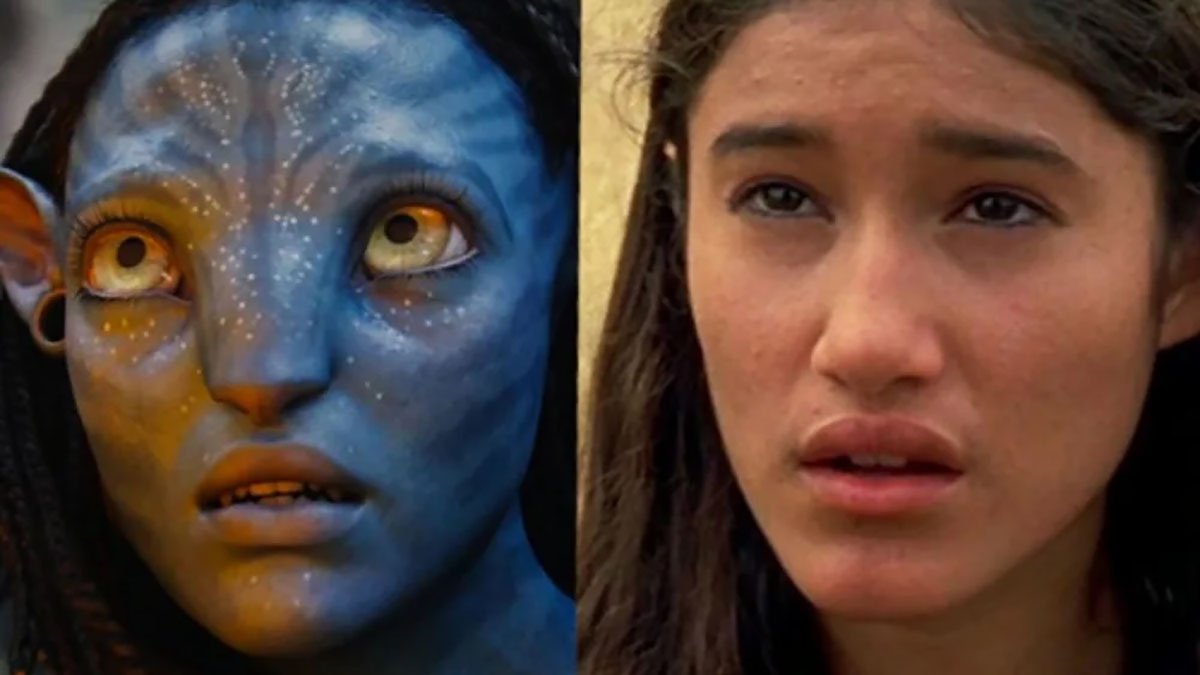
- Q’orianka Kilcher, now 36, alleges James Cameron extracted her facial features at age 14 to design Neytiri in the Avatar franchise
- The suit was filed May 5, 2026 in U.S. District Court for the Central District of California against Cameron, Disney, and Lightstorm Entertainment
- Cameron allegedly admitted the connection on camera, saying Kilcher’s photo was “the actual source” for the Neytiri sketch
- Kilcher’s lawsuit also invokes California’s recently enacted deepfake pornography statute, citing her age and Neytiri’s intimate scenes
- The Avatar franchise has earned billions worldwide; Kilcher is seeking compensatory damages, punitive damages, and disgorgement of profits
Q’orianka Kilcher says James Cameron took her face when she was 14 years old — and built a billion-dollar franchise on it.
The Yellowstone actress, now 36, filed a lawsuit Tuesday against Cameron, The Walt Disney Company, and Lightstorm Entertainment in the U.S. District Court for the Central District of California, alleging that Cameron used a photograph of her taken during production of Terrence Malick’s 2005 film The New World — in which she played Pocahontas — as the foundation for Neytiri, the Na’vi protagonist of the Avatar films played onscreen by Zoe Saldaña. The case is Kilcher v. Cameron, No. 2:26-cv-04832.
According to the complaint, Cameron spotted a promotional photograph of Kilcher in the Los Angeles Times and, struggling to make Neytiri feel human enough to connect with audiences — her look had been described internally as “too alien” — chose the teenage actress’s image as what the suit calls “a facial anchor.” From there, her likeness was traced into production sketches, sculpted into three-dimensional maquettes, laser-scanned into high-resolution digital models, and distributed across multiple visual effects vendors. Her lips, chin, jawline, and overall mouth shape were, according to the filing, preserved in Neytiri’s final appearance. The suit calls it “a literal transplant of a real teenager’s facial structure into a blockbuster movie character.”
Kilcher is a Native Peruvian actress and Indigenous rights activist. She was 14 in the photograph Cameron allegedly used. She says she had no idea any of this had happened.
“I never imagined that someone I trusted would systematically use my face as part of an elaborate design process and integrate it into a production pipeline without my knowledge or consent,” Kilcher said in a statement. “That crosses a major line. This act is deeply wrong.”
The Sketch, the Note, and the Moment She Found Out
The story gets more complicated — and, frankly, more unsettling — from there.
According to the filing, Kilcher and Cameron first crossed paths briefly at a charity event in 2010, shortly after Avatar‘s massive 2009 release. Cameron personally invited her to visit his office. When she arrived about a week later, Cameron wasn’t there — but a staff member presented her with a framed print of a sketch Cameron had made, along with a handwritten note from the director that read: “Your beauty was my early inspiration for Neytiri. Too bad you were shooting another movie. Next time.”
“When I received Cameron’s sketch, I believed it was a personal gesture, at most a loose inspiration tied to casting and my activism,” Kilcher said. “Millions of people opened their hearts to ‘Avatar’ because they believed in its message and I was one of them.”
The suit also notes that Kilcher’s talent agent at the time had tried to get her a read for the film — and was never given one.
The moment everything shifted came late last year, when a broadcast video interview with Cameron began circulating on social media. In the clip, Cameron stands in front of the Neytiri sketch and names Kilcher directly: “The actual source for this was a photo in the L.A. Times, a young actress named Q’orianka Kilcher. This is actually her…her lower face. She had a very interesting face.”
That interview, according to the complaint, is what finally revealed the full scope of what had been done with her image.
Cameron’s team wasn’t alone in acknowledging the connection, either. Sculptor and concept artist Jordu Schell told Gizmodo back in 2009 that Cameron “very much liked the face” of Kilcher from The New World, describing her as one of several “really beautiful ethnic women” whose images were referenced during the character design process.
What the Lawsuit Is Actually Claiming
The complaint is broad. Kilcher is alleging violations of California’s right of publicity law, which prohibits the commercial use of a person’s likeness without consent. But the suit goes further, invoking California’s recently enacted deepfake pornography statute — because Kilcher was a minor in the source photograph, and Neytiri is depicted in an intimate scene in the film.
“This case exposes how one of Hollywood’s most powerful filmmakers exploited a young Indigenous girl’s biometric identity and cultural heritage to create a record-breaking film franchise — without credit or compensation to her — through a series of deliberate, non-expressive commercial acts,” the suit reads.
Lead counsel Arnold P. Peter of Peter Law Group did not mince words. “What Cameron did was not inspiration, it was extraction,” he said. “He took the unique biometric facial features of a 14-year-old Indigenous girl, ran them through an industrial production process, and generated billions of dollars in profit without ever once asking her permission. That is not filmmaking. That is theft.”
Co-counsel Asher Hoffman added: “The complaint describes a deliberate analog-to-digital creative process that misappropriated Ms. Kilcher’s identity.”
The suit also draws a pointed contrast between Avatar‘s public-facing message and what allegedly happened behind the scenes: “The result was a hugely lucrative film franchise that presented itself as sympathetic to Indigenous struggles, all while silently exploiting a real Indigenous youth behind the scenes.”
The first Avatar film earned more than $2.92 billion worldwide and remains one of the highest-grossing films of all time. Avatar: Fire and Ash, the third installment, crossed $1 billion at the box office after its release late last year. The franchise is among the biggest in Hollywood history.
Kilcher is seeking compensatory and punitive damages, disgorgement of profits tied to the use of her likeness, injunctive relief, and corrective public disclosure. Neither Disney nor Cameron has responded to the lawsuit.
“It is deeply disturbing to learn that my face, as a 14-year-old girl, was taken and used without my knowledge or consent to help create a commercial asset that has generated enormous value for Disney and Cameron,” Kilcher said.
Filed in

Comments
0