
Devil Wears Prada 2 Is Already a Phenomenon
The Devil Wears Prada 2 has crossed $433M globally in under two weeks — and it’s hitting harder than expected for anyone who loves magazines.
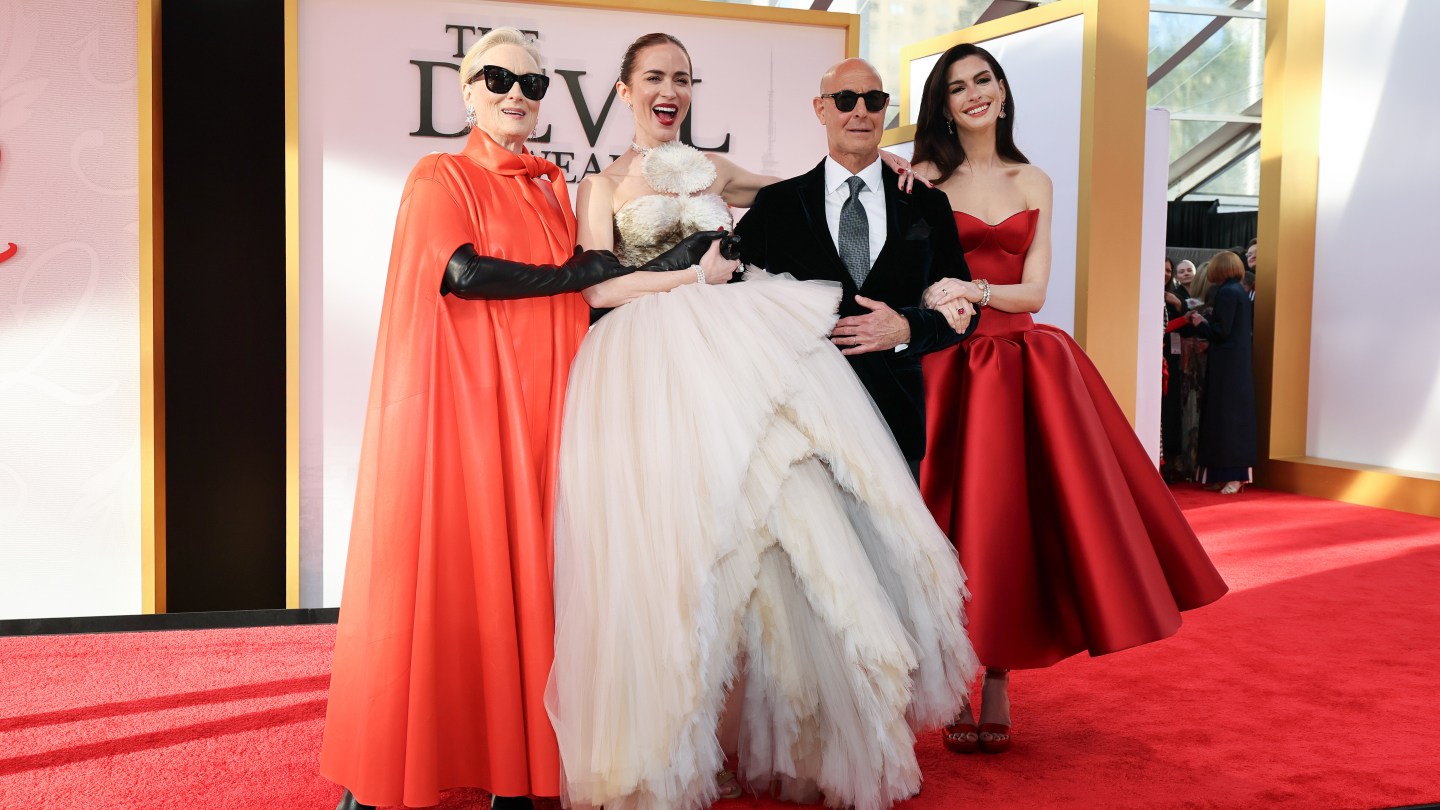
- The Devil Wears Prada 2 has grossed $433.2 million globally in under two weeks, surpassing the original’s entire run.
- The film’s plot tackles media industry collapse, AI-driven layoffs, and the death of print journalism.
- Disney’s marketing campaign secured brand partnerships valued at $250 million — the studio’s largest ever by number of partners.
- The first trailer broke 20th Century’s record with 222 million views in its first 24 hours.
- Meryl Streep, Anne Hathaway, Emily Blunt, and Stanley Tucci all return, alongside new cast members and a Lady Gaga cameo.
Twenty years after Miranda Priestly first made an entire industry flinch, The Devil Wears Prada 2 has arrived — and it’s not just a sequel. It’s a $433 million cultural event that nobody, apparently, was prepared for.
In under two weeks, the film has already blown past the original’s $326 million lifetime global haul. As of Mother’s Day weekend, it sits at $433.2 million worldwide — $144.8 million domestically and a staggering $288.4 million overseas — making it the biggest female-led movie since Barbie in 2023. It dropped only 43 percent in its second domestic weekend, which in Hollywood terms is the sign of a genuine word-of-mouth sensation, not just opening-weekend hype.
What nobody quite anticipated was how much the movie would resonate beyond the fashion world. Yes, there are the stilettos and the cerulean callbacks and the Dior. But the story driving this sequel is something rawer: the slow-motion collapse of journalism as we knew it.
The Movie’s Real Villain Is the Media Industry
“Do you remember when magazines were a thing?” It’s a throwaway line from Emily — now a top Dior executive, once Miranda’s first assistant — but it lands like a gut punch for anyone who’s worked in media. That single question essentially announces what this film is actually about.
Meryl Streep returns as Miranda Priestly, still the editor-in-chief of Runway. Stanley Tucci is back as Nigel, her right-hand man. Emily Blunt’s Emily has climbed to the executive ranks at Dior. And Anne Hathaway’s Andy Sachs, once the second assistant who barely survived Miranda’s orbit, is now Runway’s features editor — which means she has a front-row seat to everything falling apart. Layoffs. AI gutting editorial jobs. A media landscape increasingly dependent on tech money and the moods of tech billionaires to keep the lights on.
Screenwriter Aline Brosh McKenna, who also wrote the original, was direct about why she wanted to go there. “It seemed like they would be in the same type of existential crises that we are in in Hollywood, frankly — a massive amount of pressure to make everything monetized to within an inch of itself, in a world where we don’t know how to make money off of digital media,” she said. “And you know, it’s a comedy. So distress is your friend.”
Director David Frankel — whose father was an executive editor at The New York Times — didn’t soften it. “I do think it’s horrible what’s happened to journalists,” he said. “The movie is meant to spread joy and give some relief from the harsh realities of the world we live in. But I think the best kinds of entertainment are ones that meld some frothiness with some undergirding of serious intent. Journalism is in a bad place right now, objectively. Any time you’re living in a country where the First Amendment is under assault, you need to be concerned.”
Audiences, it turns out, were ready to hear it. The vegetables blended into the froth, as one observer put it, went down just fine — $240 million in opening weekend alone.
How Disney Pulled Off the Biggest Female-Led Marketing Campaign in Years
The path to this moment wasn’t obvious. When it became clear that Avengers: Doomsday wouldn’t be ready to open the summer, Disney movie chief Alan Bergman made a call that raised eyebrows internally: put The Devil Wears Prada 2 in the May 5 slot. The original, after all, had opened in early summer 2006 against Superman Returns and won — costing just $40 million to make while earning $326 million. The sequel cost $100 million and, so far, it’s looking like an even better bet.
But selling a sequel set two decades later, in a world where the glamour of print media has been replaced by existential dread about it, required something extraordinary. Disney’s marketing team — led by Martha Morrison, head of marketing at Disney Entertainment Studios, and Lylle Breier, executive VP of partnerships — built what the studio describes as the largest brand partnership campaign in its history by number of partners, with contributions valued at $250 million.
“The partnership campaigns are incomparable to anything we’ve done before,” Breier told The Hollywood Reporter. “We set out to have it be the best marketing partnership program that’s ever launched, and I think even delivered it ahead of a movie like Avengers.”
The partner list reads like a luxury department store directory: Dior (which plays a key role in the film itself), Google, Coca-Cola (running campaigns for both Diet Coke and Smartwater), Grey Goose, Mercedes-Benz, L’Oréal Paris, Lancôme, Zillow, TRESemmé, and United Airlines, among dozens of others. The fashion and beauty industry’s enthusiasm for this one was a complete reversal from 2006, when most luxury houses steered clear for fear of upsetting Anna Wintour.
This time, Disney was flooded with requests.
The moments that cut through were the clever ones. At the Academy Awards, Hathaway and Wintour presented together and riffed on the first film — a full-circle moment that generated headlines globally. L’Oréal Paris launched its Prada campaign at the Oscars with a spot featuring Kendall Jenner being mistaken for a new Miranda assistant candidate, alongside Simone Ashley, who plays an assistant in the sequel. It went viral immediately, exactly as intended.
Lancôme used the film to launch its new “Age is Nothing But a Number” Longevity MD skincare line, with a spot featuring Prada 2 co-stars Caleb Hearon and Pauline Chalamet — yes, Timothée Chalamet’s sister — desperately trying to track down the product for their boss. A second spot had Chalamet running into Lancôme ambassador Isabella Rossellini playing a Miranda-type figure. It was the luxury brand’s first-ever official Hollywood partnership.
“We wanted everything to be funny and bespoke,” Breier said. “But again, one of the things we really tried hard to do is not give away the movie, or have the brand spots use a ton of movie footage, but instead be part of the world.”
Even the unofficial moments worked. When Streep appeared on The Late Show with Stephen Colbert in early April wearing a blue cashmere J.Crew sweater — a nod to Miranda’s famous cerulean lecture — the $198 custom piece sold out almost immediately. A $49.99 version did too.
The first trailer, released in February, racked up more than 222 million views in its first 24 hours, becoming the most-watched trailer in 20th Century’s history. The team’s biggest challenge from there was converting that enthusiasm among older audiences into genuine ticket sales from Gen Z and younger Millennials. On opening day, 29 percent of buyers were between 25 and 34, with another 11 percent between 18 and 24. Mission accomplished.
The timing helped too. The film opened May 5, which meant its stars — including Lady Gaga, who makes a cameo — were making headlines at the Met Gala the very next day. Mother’s Day fell on its second weekend. It beat Mortal Kombat II in a domestic upset. Everything clicked.
Fashion, the Devil, and a Very Long History
At the world premiere, Streep leaned all the way into Miranda’s devilish mythology — arriving in long black gloves, Miranda’s signature sunglasses, and a flowing red leather cape from Givenchy’s Winter 2026 collection. It was a moment, and a deliberate one.
The “devil” in the title has always done more work than it appears. Fashion and Christianity have been tangled together for centuries — sometimes as adversaries, sometimes as strange collaborators. The 18th-century founder of Methodism, John Wesley, urged his followers to dress “neatly” and “plainly” as an expression of faith. Fashion, by contrast, was long cast as the enemy of spiritual purity: material desire made wearable.
And yet Christian imagery has shaped the industry in ways that are hard to overstate. Designers from Cristóbal Balenciaga to Geoffrey Beene drew on the austere elegance of Catholic vestments. Gianni Versace put the Virgin Mary on a bejeweled halter top in his Fall/Winter 1991 collection — a moment that, according to Wake Forest University religion scholar Lynn S. Neal, reflected a broader cultural shift away from institutional religion toward individual spiritual expression. “Christian symbols were lifted from church contexts and recirculated through popular culture, including fashion, in new ways,” Neal writes in her research on the subject.
Dolce & Gabbana have returned to Christian themes repeatedly — their 1998 “Stromboli” collection, their 2013 “Tailored Mosaic” line inspired by Sicilian cathedral mosaics, and most recently a 2025 menswear collection drawing on Catholic priestly vestments. At New York Fashion Week in 2026, a luxury brand called YesuGod sent looks down the runway adorned with the words “anno domini” and “the Lord is Coming.”
The devil, by contrast, has always been a bit player in this story — showing up in mid-century perfume ads and lingerie campaigns as a symbol of delicious transgression, then fading again. It’s the saints, Mary, and the iconography of holiness that have genuinely taken root on the runway.
Which makes it fitting, in a way, that Miranda Priestly — imperious, untouchable, dressed in white — has always read less like a devil and more like a deity. The title was always a bit of misdirection. The real power in that story, and in this one, isn’t hellish at all.
“Reminding people what they love so much about the first movie and then asking them to come and revisit these characters and see where they are 20 years later,” Morrison said, “was definitely a big factor in getting all audiences of all ages excited.”
At $433 million and climbing, it seems safe to say they succeeded.
Filed in

Comments
0