Demi Moore on AI at Cannes: ‘A Battle We Will Lose’
Demi Moore says Hollywood must find ways to work with AI at the Cannes Film Festival jury press conference — but fellow juror Paul Laverty isn’t buying it.
- Demi Moore told reporters at Cannes that fighting AI is “a battle we will lose” and Hollywood must work with it instead
- Moore admitted the industry is “probably not” doing enough to protect itself from AI’s risks
- Fellow juror Paul Laverty pushed back hard, calling out “tech bros” and billionaires dictating how society lives
- Moore is serving on the 79th Cannes jury alongside Park Chan-wook, Chloé Zhao, Ruth Negga, and others
- The festival opens with a notable lack of Hollywood films, which organizers tied to ongoing industry upheaval
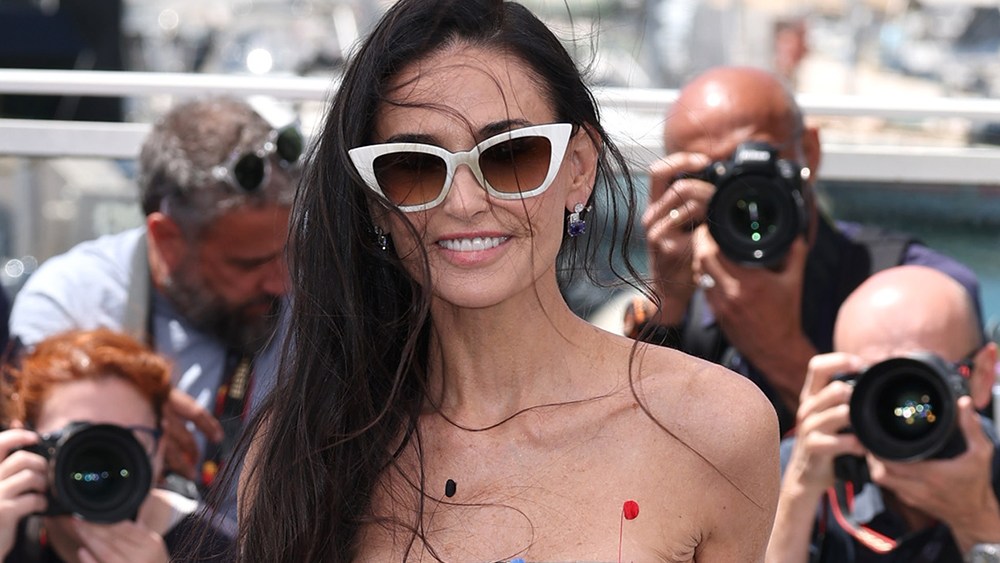
Demi Moore didn’t come to Cannes to dodge the hard questions. On the first day of the 79th annual Cannes Film Festival, the Oscar-nominated actress — sitting alongside jury president Park Chan-wook and fellow jurors Chloé Zhao, Ruth Negga, Laura Wandel, and others at the Palais des Festivals — went straight into one of the most contested conversations in Hollywood right now: artificial intelligence.
“The reality is that to resist — I always feel that against-ness breeds against-ness,” Moore told reporters. “AI is here. And so to fight it is to fight something that is a battle that we will lose. So to find ways in which we can work with it, I think, is a more valuable path to take.”
It’s a position that’s become familiar in certain corners of the industry — pragmatic, forward-looking, careful not to sound alarmist. Moore acknowledged there are “beautiful aspects to being able to utilize” the technology, and pushed back against the idea that AI poses an existential threat to art itself. “The truth is, there really isn’t anything to fear,” she said, “because what it can never replace is what true art comes from, which is not the physical. It comes from the soul. It comes from the spirit of each and every one of us sitting here. And that they can never recreate through something that is technical.”
But she wasn’t entirely reassuring either. When asked whether the industry is doing enough to regulate and protect itself from AI’s downsides, Moore paused. “I don’t know the answer to that. And so my inclination would be to say probably not.”
Not Everyone on the Jury Is Ready to Make Peace With It
Moore’s measured stance didn’t go unchallenged at the same table. Irish-Scottish screenwriter Paul Laverty — known for his long collaborations with Ken Loach on films like The Wind That Shakes the Barley and I, Daniel Blake — was considerably less diplomatic about who’s actually driving the AI conversation.
Laverty pointed to the environmental toll of data centers, calling out the “crisis now in data — affecting sustainability, water and populations.” He argued that the billionaires behind the technology “assume the rest of the world will follow and swallow it, no matter what the consequences are,” and called for transparency and democratic accountability. “I think people are beginning to realize that we should not let these tech bros — billionaires who are, mostly, right-wing libertarians — dictate how we live our lives,” he said.
It’s a striking contrast in tone between two jurors sitting side by side — one urging collaboration, the other urging resistance — and it reflects a divide that’s been running through Hollywood since the writers’ and actors’ strikes that consumed the industry in 2023, with AI protections at the center of those negotiations.
Moore on Art, Politics, and Censorship
AI wasn’t the only charged topic at the press conference. Moore was also asked whether speaking freely about politics can hurt a filmmaker’s career — a question that carries extra weight after the fierce controversy at the Berlin Film Festival earlier this year. Her answer was unequivocal.
“I would hope not,” she said. “Part of art is about expression. So if we start censoring ourselves, then I think we shut down the very core of our creativity, which is where we can discover truth and answers.”
Jury president Park Chan-wook echoed that sentiment, pushing back against the idea that politics and art are in conflict. “Just because a work of art has a political statement, it should not be considered an enemy of art,” he said through a translator. “Even if we are to make a brilliant political statement, if it’s not expressed artfully enough, it would just be propaganda. So what I want to say is that art and politics are not concepts that are in conflict with each other — as long as they are artistically expressed, they are valuable.”
Moore Returns to Cannes After ‘The Substance’
This is a homecoming of sorts for Moore. She was last on the Croisette with her body horror film The Substance, which earned her a Golden Globe nomination and reestablished her as one of the most compelling screen presences working today. Now she’s on the other side of the table, helping decide which films take home the Palme d’Or.
Her jury includes some of the most respected names in world cinema: Park Chan-wook, fresh off No Other Choice; Chloé Zhao, who won the Oscar for Nomadland and most recently directed Hamnet; Ruth Negga (Loving, Passing); Belgian director Laura Wandel; Chilean filmmaker Diego Céspedes; Ivorian actor Isaach de Bankolé; and Swedish actor Stellan Skarsgård.
The festival itself runs May 12–23, opening Tuesday night with Pierre Salvadori’s French comedy-drama The Electric Kiss and an Honorary Palme d’Or for Peter Jackson. Cannes chief Thierry Frémaux addressed the festival’s notably thin Hollywood lineup at a Monday press conference, connecting the absence directly to industry upheaval — “After COVID, the writers’ strike, which, incidentally, is linked to issues surrounding artificial intelligence, followed by restructuring, mergers, acquisitions” — and the continued rise of streaming.
So even when the AI debate isn’t explicitly on the agenda at Cannes this year, it’s woven into almost everything — the films that got made, the ones that didn’t, and the jury now tasked with deciding what matters most.
Filed in

Comments
0