
Taylor Swift, Beyoncé Make History in National Recording Registry
Taylor Swift’s ‘1989’ and Beyoncé’s ‘Single Ladies’ are among 25 recordings just inducted into the Library of Congress’ National Recording Registry.
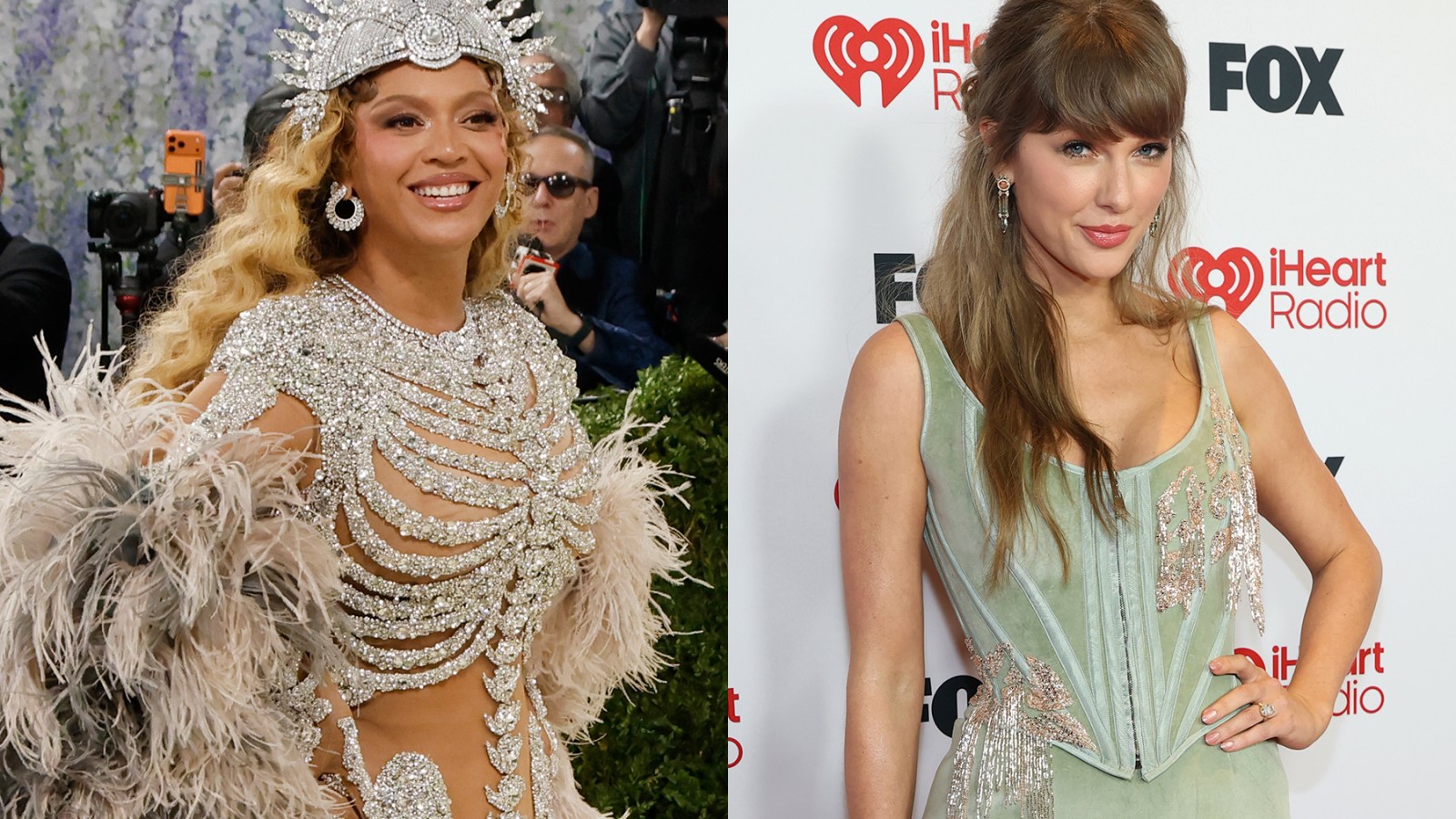
- Taylor Swift and Beyoncé are both entering the National Recording Registry for the first time with ‘1989’ and ‘Single Ladies (Put a Ring on It),’ respectively.
- The Library of Congress named 25 recordings to its 2026 class, chosen from more than 3,000 public nominations.
- Other inductees include Weezer’s Blue Album, The Go-Go’s ‘Beauty and the Beat,’ Chaka Khan’s ‘I Feel for You,’ and Ray Charles’ ‘Modern Sounds in Country and Western Music.’
- Rosanne Cash and her late father Johnny Cash become the first daughter-father duo both represented in the registry.
- The additions bring the registry’s total to 700 titles — a fraction of the Library’s nearly 4 million recorded sound items.
Taylor Swift and Beyoncé have conquered just about every chart, award, and record the music industry has to offer. Now they can add the Library of Congress’ National Recording Registry to that list.
Acting Librarian of Congress Robert R. Newlen announced the 2026 class of inductees Thursday, selecting 25 recordings deemed worthy of permanent preservation based on their “cultural, historical or aesthetic importance in the nation’s recorded sound heritage.” Swift’s 2014 pop landmark 1989 and Beyoncé’s 2008 anthem “Single Ladies (Put a Ring on It)” both make their Registry debuts — the first time either artist has been included in the archive.
“Music and recorded sound are essential, wonderful parts of our daily lives and our national heritage,” Newlen said in a statement. “The National Recording Registry works to preserve our national playlist for generations to come. The Library of Congress is proud to select these audio treasures and will work to preserve them with our partners in the recording industry.”
1989 is the most recent recording in this year’s class — and the only one from after 2008. The Library notes that Swift made the bold choice to fully abandon country on her fifth studio album, a decision she defended at the time. “A big goal of mine was to make this album very sonically cohesive,” she told CBS This Morning in 2014. “So, if I were to put a fiddle on a version of ‘Shake It Off’ and service it to country radio, that would’ve completely shattered the entire idea I had that this album was going to have its own sound.” The gamble paid off — 1989 produced three number-one singles, won Album of the Year at the Grammys, and was later re-recorded and released in 2023 as 1989 (Taylor’s Version) after Swift acquired the rights to her masters from music executive Scooter Braun.
“Single Ladies” gets its own moment of recognition too. The Library describes the song as a blockbuster “embraced by all generations and fans of almost every musical style.” It was the centerpiece of Beyoncé’s double album I Am… Sasha Fierce, which debuted at number one, sold 10 million copies worldwide, and won five Grammys. Beyoncé, who has spoken about how hard-fought her success has been, put it plainly in a 2010 interview: “I didn’t wake up and become famous. I started out without a tour bus, having the seat in the back of the awards show, at the Grammys. And every year, gradually we had to work and we became stronger and more people acknowledged us. But it was a lot of tears, a lot of sacrifice, a lot of hard work that went into my career.”
There’s a political footnote worth mentioning: acting Librarian Newlen was appointed after President Trump fired the previous Librarian, Carla Hayden, in 2025. Trump, who has publicly voiced contempt for both Beyoncé and Taylor Swift, has not commented on either induction.
The Full Class of 2026 Has Something for Everyone
Beyond the two headline names, this year’s class is a genuinely eclectic sweep through American musical history — spanning 70 years, from Spike Jones and His City Slickers’ 1944 novelty single “Cocktails for Two” all the way to Swift’s 1989.
Weezer’s self-titled debut — universally known as The Blue Album — was among the most nominated recordings submitted by the public this year. The Library describes it as a record that “broke through the angst-filled sounds of alternative rock and presented a new nerdy geek-rock charm,” featuring “Buddy Holly,” “Say It Ain’t So,” and “Undone – The Sweater Song.” Rivers Cuomo reflected on the band’s contrarian approach in a 2024 interview: “Rock bands were getting more and more outrageous with tattoos and piercings. We came out completely clean-cut, four guys standing in a line, singing songs in major keys, about girls or whatever. It didn’t quite make sense how that was the next step for rock and roll.”
The Go-Go’s landmark debut Beauty and the Beat is also in, and the band is understandably emotional about it. “I don’t know that there is a better feeling than knowing that women are raising their daughters and playing them the Go-Go’s,” guitarist Jane Wiedlin said. “As far as the Go-Go’s legacy, the biggest accomplishment is that we broke the glass ceiling. I get in a lot of arguments over this, but there is literally no other all-female band that went No. 1 on the charts, play their own instruments and write their own songs. None.” Singer Belinda Carlisle added her own long view: “It’ll be great 100 years from now when someone is doing their research and they see The Go-Go’s in there.”
Chaka Khan’s 1984 cover of Prince’s “I Feel for You” — the one that opens with Grandmaster Melle Mel chanting her name on a loop, which Khan has admitted she wasn’t thrilled about at the time — is now immortalized alongside the rest. “For the Library of Congress to say this recording belongs in the permanent collection of American sound heritage, that means it wasn’t just a hit, it was history,” Khan said. “And I am so very grateful to have been part of it.” The track spent 26 weeks on the Billboard Hot 100 and won two Grammys.
Ray Charles’ Modern Sounds in Country and Western Music (1962), Stevie Ray Vaughan and Double Trouble’s Texas Flood (1983), Reba McEntire’s Rumor Has It (1990), and the original 1975 Broadway cast recording of Chicago round out the album selections. Classic singles entering the registry include Gladys Knight and the Pips’ “Midnight Train to Georgia,” The Charlie Daniels Band’s “The Devil Went Down to Georgia,” The Byrds’ “Turn! Turn! Turn!,” José Feliciano’s “Feliz Navidad,” Vince Gill’s “Go Rest High on That Mountain” — a song Gill wrote for his brother Bob, who died of a heart attack — and the Chicago house music staple “Your Love” by Jamie Principle and Frankie Knuckles.
There are a couple of genuinely unexpected entries too. The Doom video game soundtrack (1993) becomes only the third video game score inducted into the registry, following Super Mario Bros. and Minecraft: Volume Alpha. And the March 8, 1971 radio broadcast of “The Fight of the Century” — Muhammad Ali vs. Joe Frazier — gets its moment, preserved for the way announcers Van Patrick and Charles King managed to cover the bout from a nearby hotel after fight organizers blocked ringside radio access.
A Family First
One of the quieter milestones in this year’s class belongs to Rosanne Cash. Her 1993 album The Wheel — written during the painful stretch between the end of her marriage to Rodney Crowell and the beginning of her relationship with producer John Leventhal — earns her a place in the registry alongside her father, Johnny Cash, whose At Folsom Prison was inducted back in 2003. They become the first daughter-father pair to both be represented in the archive.
The 2026 class brings the National Recording Registry to 700 total titles — still just a sliver of the Library’s collection of nearly 4 million recorded sound items. Public nominations for the class of 2027 are open through October 1.
Filed in

Comments
0