
Javier Bardem Gets 7-Minute Cannes Ovation for The Beloved
Javier Bardem and Victoria Luengo brought director Rodrigo Sorogoyen’s father-daughter drama The Beloved to Cannes 2026 — and the crowd went wild.
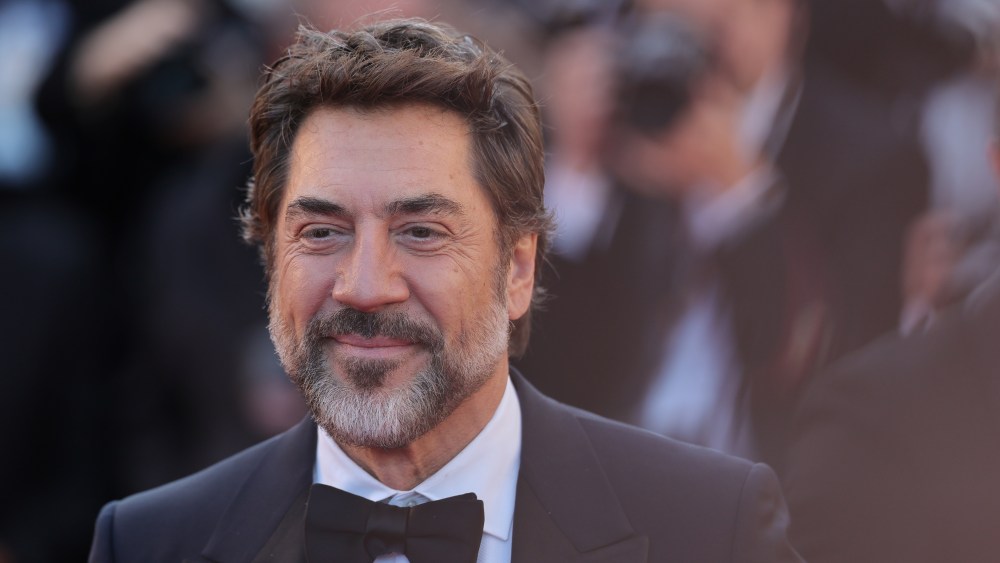
- Javier Bardem received a seven-minute standing ovation at Cannes 2026 for his performance in The Beloved
- The film, directed by Rodrigo Sorogoyen, follows a legendary director trying to reconnect with his estranged daughter by casting her in his film
- Victoria Luengo co-stars and is pulling double duty at Cannes this year, also appearing in Pedro Almodóvar’s Bitter Christmas
- Bardem and Luengo were asked not to meet before filming, lending their opening scene an electric, unscripted tension
- The Beloved is Bardem’s sixth film at Cannes and his fourth in competition
Javier Bardem knows how to own a room — and on Saturday, that room was the Palais des Festivals at Cannes 2026. The Spanish icon received a seven-minute standing ovation following the world premiere of The Beloved (El Ser Querido), director Rodrigo Sorogoyen’s emotionally charged father-daughter drama that’s already generating serious awards buzz. A beaming Bardem worked his way down the line of castmates, hugging each one, waved enthusiastically to the crowds up in the balcony, and at one point pulled festival director Thierry Frémaux into a full bear hug. It was the kind of moment Cannes was made for.
The film puts Bardem in the role of Esteban Martínez, a celebrated but volatile film director — an Oscar winner with a shady past — who returns to Spain after years of self-imposed exile in New York to shoot a period piece set in the Western Sahara. His plan: cast his estranged daughter Emilia (Victoria Luengo), a struggling actress he abandoned after birth, in the lead role. What begins as a tentative attempt at reconciliation slowly, painfully, unravels on set, where old wounds don’t stay buried for long.
The premiere was also something of a full-circle moment for Sorogoyen and Bardem. It was at Cannes 2022 — during the presentation of Sorogoyen’s acclaimed rural thriller The Beasts — that the director and his longtime writing partner Isabel Peña first pitched the idea to Bardem over a meeting at the Hotel Martinez.
“We explained to him that we only had a few lines written, a theme that interested us and a specific universe,” Sorogoyen said in a statement after learning of the film’s Cannes selection in April. “But, above all, we also had Victoria Luengo, the other actress for whom we wrote The Beloved. Javier received us at the Hotel Martinez and there began the journey that has led us here. We can only say that we are as grateful as we are excited to close the circle four years later in the same place where it all began. We are going to enjoy every minute that the festival gives us because we understand that this is our duty.”
A Film Built on Deliberate Discomfort
Sorogoyen — an Oscar nominee for his short film Mother and the César Award-winning director behind The Beasts — approached The Beloved as a full-on experiment, and he wasn’t shy about it. Speaking from his Madrid production house Caballo in the days before Cannes, he described the word he repeated to himself throughout the entire shoot: “experiment.”
The most striking choice? Bardem and Luengo were deliberately kept apart before cameras rolled. They didn’t meet, didn’t talk, didn’t rehearse. Their first real encounter was the opening scene of the film — a 20-minute, 10-page sequence shot on the very first day of production, set in a plush Madrid restaurant where Esteban reappears in Emilia’s life after 13 years.
“The result is 20 minutes of scenes that, in my opinion, are pure gold,” Sorogoyen said. “The silences, the doubts, the looks are the most real I have ever filmed.”
From there, the film moves to the sun-scorched Canary Island of Fuerteventura, standing in for 1932 Western Sahara, where Esteban’s film-within-the-film — a high-minded period piece called Desert, about the Sahrawi uprising against Spanish colonialism — begins production. As the father-daughter tension escalates on set, so does Sorogoyen’s visual language. He mixes digital, 35mm, 16mm, and 8mm formats, shifts between color and black-and-white, toggles between widescreen and box ratios — a kaleidoscope of styles that reflects the fractured emotional states of his characters.
“If this had been my first film, I wouldn’t have taken so many risks,” Sorogoyen admitted. The freedom to experiment, he acknowledged, came from the full trust — and budget — of producers Movistar Plus+ and France’s Le Pacte.
Of Bardem, the director was effusive: “He’s very intelligent and with his feet on the ground, the least star of stars that can exist. And he wanted to try things on. If I made seven takes of the same shot, he’d deliver seven different performances.”
What the Critics Are Saying
Reviews out of Cannes have been largely warm, with Bardem’s performance drawing the most consistent praise. Variety called it “a terrific” turn, noting that “the subtle power of his performance is that it takes us a while to grasp the kind of mind games Esteban is a master of.” The Hollywood Reporter described Martínez as “like Anton Chigurh strapped to a director’s chair” — high praise, in its way, for anyone who remembers what Bardem did with that role.
Luengo holds her own. Variety praised her “fascinating quality of pensive engagement,” while The Hollywood Reporter noted that her “performance becomes more touching as Emilia’s fury rises to the surface.” It’s a difficult role — a woman who has every reason to stay guarded and every reason to hope — and Luengo lands it.
The film’s most talked-about sequence is a chaotic outdoor lunch scene on set where actors keep breaking into giggles, the fish stew is unappetizing at 9 a.m., and Esteban’s attempts to direct his cast’s eating into something cinematically meaningful spiral into a masterclass in controlled rage. Critics called it both “hilariously anguished” and “bravura” — the kind of scene that gets clipped and shared for years.
Not every reviewer was fully won over. The Hollywood Reporter raised a fair point that the film-within-the-film, Desert, never quite connects to the personal drama unfolding around it, and that the emotional beats — absent father, resentful daughter, old drinking problem — occasionally feel familiar. But even skeptics agreed that Sorogoyen’s filmmaking instincts and Bardem’s sheer presence elevate the material.
A Big Cannes Moment for Spanish Cinema
The premiere of The Beloved is part of a notably Spanish moment at this year’s festival. Pedro Almodóvar and directing duo Javier Ambrossi and Javier Calvo — known as The Javis — are also presenting films in competition. And Victoria Luengo is having what might be the busiest Cannes of anyone’s career: she appears in both The Beloved and Almodóvar’s Bitter Christmas, both in official competition.
For Bardem, this is his sixth film at Cannes and his fourth in competition — a list that includes Asghar Farhadi’s Everybody Knows, Sean Penn’s The Last Face, and Alejandro González Iñárritu’s Biutiful, which won him the Best Actor Palme d’Or in 2010. He’s also appeared at the festival with Woody Allen’s Vicky Cristina Barcelona and the Coen Brothers’ No Country for Old Men, and once served on the jury himself.
He’s seen all sides of this festival. “I’ve been a juror. I’ve been recognized with this amazing award, a recognition that, for me, is one of the most important in the world,” Bardem said in a recent Variety cover story. “At the same time, I’ve been with movies that were killed and got stones thrown at” — a nod to the critical drubbing The Last Face received in 2016.
Saturday felt nothing like that. With The Beloved, Bardem and Sorogoyen have brought something genuinely alive to the Croisette — a film about storytelling, about the lies fathers tell themselves, and about whether a daughter who grew up watching her dad unravel in a movie theater during Kill Bill: Volume 2 can ever really let that go.
The film is a Movistar Plus+ original, co-produced with Caballo Films and Le Pacte, and will get a theatrical release in Spain via A Contracorriente Films before landing on Movistar Plus+. International sales are being handled by Goodfellas.
Seven minutes of applause. Four years in the making. It’s a good week to be Javier Bardem.
Filed in

Comments
0