
Boyd Holbrook’s Iraq War Film ‘Atonement’ Stuns Cannes
Boyd Holbrook and Hiam Abbass star in Reed Van Dyk’s debut film about a Marine seeking forgiveness from the Iraqi family he devastated. Critics are calling it a must-see.
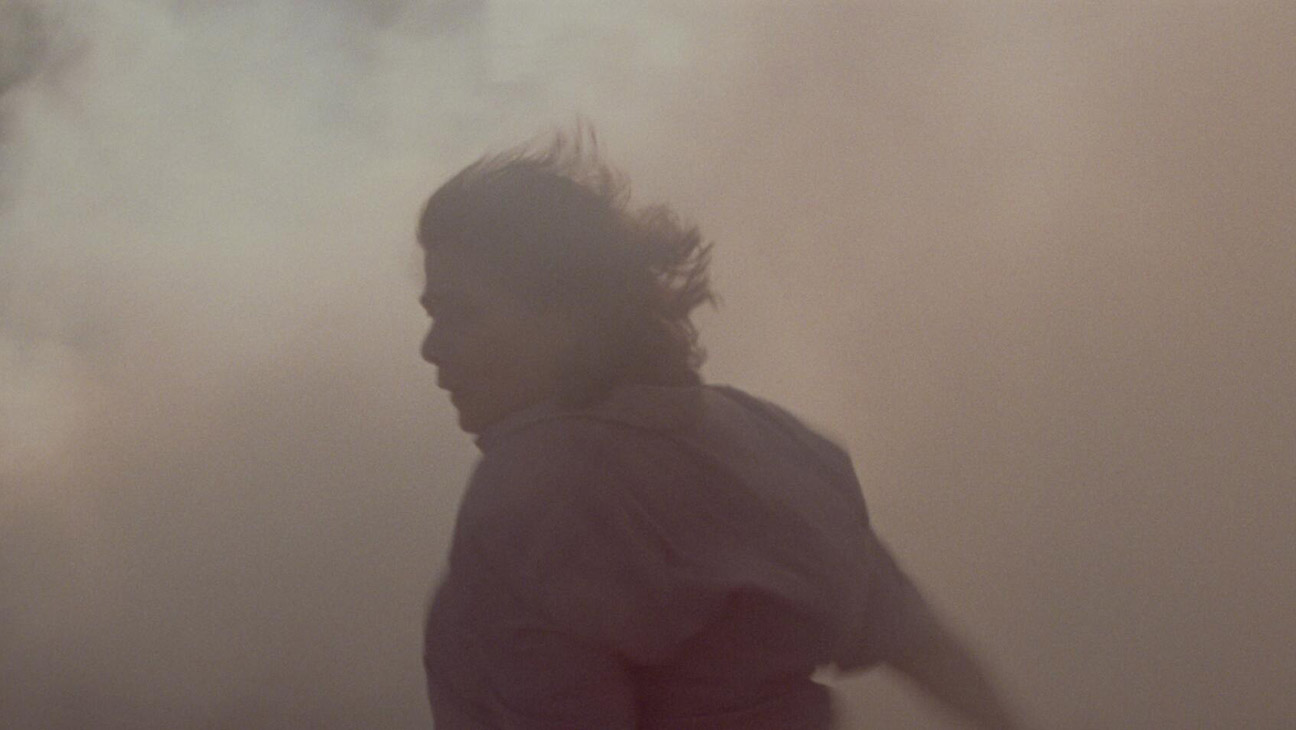
- Atonement, Reed Van Dyk’s debut feature, premiered at Directors’ Fortnight at the 2026 Cannes Film Festival
- Boyd Holbrook plays a U.S. Marine who seeks forgiveness from the Iraqi family he devastated during the 2003 invasion
- Palestinian actress Hiam Abbass is being called a revelation, with critics praising her restraint opposite Holbrook
- The film is based on Dexter Filkins’ 2012 New Yorker article and is currently seeking U.S. distribution
- Kenneth Branagh also stars as the journalist who brokers the film’s devastating central meeting
There’s a moment near the end of Atonement where a grieving Iraqi grandmother looks at the trembling U.S. Marine sitting across from her in a California living room — the man who killed her husband and two sons — and says, flatly: “We forgive you. That’s what you need from us, right?” It’s one of the most quietly devastating lines you’ll hear in a film this year, and the way Hiam Abbass delivers it will stay with you long after the credits roll.
Reed Van Dyk’s debut feature premiered at Directors’ Fortnight at the 2026 Cannes Film Festival, and it has arrived as one of the most talked-about films of the festival — a war movie that has almost nothing in common with what you expect from a war movie.
The True Story Behind the Film
Atonement is based on Dexter Filkins’ 2012 New Yorker article about Second Lieutenant Lou D’Alessandro — fictionalized here as Lou, played by Boyd Holbrook — a Marine who, during a firefight in the Baladiyat district of Baghdad on April 8, 2003, opened fire on cars moving through an intersection. Inside those cars was the multigenerational Kachadoorian family, Iraqi Christian-Armenian civilians trying to flee their home after an explosion. Three men were killed. Years later, after learning that some of the surviving family members had relocated to California, Lou tracked them down, hoping for something like forgiveness.
Van Dyk first read Filkins’ piece while sitting in his Los Angeles apartment. “I couldn’t stop crying,” he says. But he adds that at the time, “I was in no position to make a movie.” He went on to attend UCLA film school, made several short films — including DeKalb Elementary, which earned an Oscar nomination in 2018 — and never stopped thinking about Lou and the Kachadoorians. When he finally had the support to attempt a feature, he says, “I asked.”
Before a single frame was shot, Van Dyk flew to New York to have dinner with Filkins, drove to Las Vegas to sit with the real Lou, and spent years getting to know the Kachadoorian family, who lived just 20 minutes from him in Los Angeles. “I didn’t want to open up these old wounds for them without being certain that I was wanting to breathe life into this as a film,” he says. What followed was, in his words, “a beautiful process of, over years, talking to them, getting their blessing.”
Putting Baghdad on Screen — Honestly
Van Dyk was determined not to make the kind of Iraq War film where Baghdad exists only as a backdrop for American stories — a criticism he levels plainly at the genre. He and his cinematographer traveled to Baghdad for a scouting trip, armed with a reading list from Iraqi authors. The six-hour Abbas Fahdel documentary Homeland: Iraq Year Zero became a primary reference. The film’s Iraq sequences were ultimately shot in Jordan, and the attention to texture shows — spent shell casings alongside kids eating peaches, Arabic graffiti on sun-bleached walls, the specific atmosphere of a city in the early days of an occupation.
He also spoke at length with Marines to understand the mechanics of the film’s central firefight, consciously steering away from Hollywood’s battlefield shorthand — what he describes as films where combat looks like a sporting event, “it is their side, our side. Who’s up and who’s down.” His intention was something closer to documentary, or at minimum, “closer to the truth than I’m accustomed to seeing in movies, where Iraqis are often looked at through the sniper scope.”
The result is a film that opens with the Khachaturian family — three generations crammed into a temporary shelter, preparing a meal, children chasing a ball in the street, Mariam’s daughter Nora eating cherries and spitting out the pits. The mood is warm, specific, lived-in. These are people, not symbols. And then a blast takes the side off the house, and the family piles into two cars, and the film becomes something you have to remind yourself to breathe through.
Why Boyd Holbrook, and How He Got There
Van Dyk’s path to casting Holbrook is a good story in itself. He wasn’t approaching it through Holbrook’s most visible work — not Logan, not Narcos. Instead, he caught the actor in a supporting role in Jeff Nichols’ The Bikeriders and left the theater talking about him. “I said, ‘I saw that guy in an Indiana Jones movie and he was nothing like he was in that,’” Van Dyk recalls. Shortly after, he watched Holbrook play Johnny Cash in A Complete Unknown — James Mangold’s Bob Dylan biopic — and something clicked. “I was just like, ‘This guy can do anything.’ He’s a character and really puts his shoulder into finding the body and movement and voice of that person.”
Holbrook signed on just two months before shooting began. He was drawn in by what he describes as the film’s refusal to be another “monetized version of war” — and by Lou’s specific mission. “I’m going to, face to face, meet these people and put myself aside,” Holbrook says of what pulled him toward the role.
The physical demands were immediate. The firefight sequence, shot on location in Jordan, required Holbrook to wear 40 pounds of gear in temperatures exceeding 100 degrees. He was fine with the discomfort. “It was not, ‘I’m going to look like a cool soldier.’ That’s the whole antithesis of the vibe that Reed wanted.”
Van Dyk made a strategic call to film the Jordan sequences first, so that Holbrook could carry those physical memories into the film’s second half — the American scenes, a decade later, where Lou is falling apart. Panic attacks, sleepless nights, a body that won’t let him forget.
Holbrook knew he couldn’t fake a panic attack convincingly. He developed a breath work technique that would “kick in this diaphragm thing,” working himself into a state that felt genuinely physiological. He remembers sustaining what felt like a real attack for over two hours during filming. “I got into such a place that I couldn’t control what I was physically going through.” Van Dyk’s response was to move through the scene as quickly as possible and “stay out of his way.”
Hiam Abbass, and the Scene That Defines the Film
Opposite Holbrook is Hiam Abbass, the Palestinian actress best known to American audiences as Marcia Roy on Succession, and she is extraordinary here. She plays Mariam Khachaturian, the family matriarch — a former ninth-grade schoolteacher, a woman of deep faith and composure, who loses her husband and two sons in the space of a few chaotic minutes and spends the next decade carrying that weight without breaking.
When Abbass first read the script, she started crying. “And when I get such a big emotion from reading a script, I know that it’s necessary to go into the story and make it happen,” she told Deadline. She was drawn particularly to the duality of Mariam — the coexistence of forgiveness and grief. “On the one hand, there was forgiveness and on the other, in order for her sons to rest in peace, she gives life to Lou who has suddenly come to seek her forgiveness for killing most of her family.”
Abbass didn’t seek out the real family in her preparation. Instead, she built the character from Van Dyk’s script and from her own knowledge of war and conflict in the Middle East. “What was important for me is not the truth of the true story as much as the truth of the script and the story that Reed wanted to tell,” she says. She wanted Mariam to be universal — “an example to a lot of people to think about how painful it is for a mother to live what she went through.”
When pressed on whether her own Palestinian heritage informed the role, Abbass was characteristically measured. “I have no idea,” she said simply, adding that lived experience is just “great food for the characters we create.” She’s careful not to collapse one conflict into another. “The war in Iraq had its own components, its own characteristics, its own conditions. The war on Palestine is another condition, and you cannot compare them. But the pain and the injustice of civilians that become victims of war — whether it’s the Palestinians, Sudanese Africans or Iraqis in our case — the pain is the same.”
Holbrook, for his part, had initially wanted to avoid meeting Abbass before their big scene together — the actor’s instinct to keep the encounter fresh. But they were both filming in Jordan at the same time and eventually decided to get to know each other. He’s glad they did. “I’ve got to understand her and her story, so when it came time to do our big scene, we didn’t need any rehearsal.”
That scene — Lou sitting across from Mariam in a living room in Glendale, barely able to hold himself together while she regards him with a stillness that contains multitudes — is what critics are already singling out. The Hollywood Reporter called Abbass “a master class in less-is-more restraint,” her character’s “fortitude severely challenged but unbroken by her years of suffering.” Holbrook, meanwhile, is “a bundle of exposed nerves as he reckons with his own guilt and with the tremendous weight of grief and anger on the Iraqi family.”
Kenneth Branagh rounds out the central cast as Michael Reid, a composite stand-in for Filkins himself — the journalist who first documents the Khachaturians’ story and later brokers the meeting between Lou and the family. Branagh plays him with the kind of quiet moral seriousness the role requires.
Van Dyk describes what the film is ultimately reaching for in a single image: “Two people on opposite sides of a war coming together in a living room and, almost in spite of themselves, reaching for each other.”
Atonement is currently seeking U.S. distribution.
Filed in

Comments
0