
Rob Reiner: The Life, Films, and Legacy of a Hollywood Icon
Rob Reiner was one of the most versatile figures American entertainment has produced — a sitcom star who reinvented himself as a director, then built a run of films so beloved they became part of the cultural furniture. From This Is Spinal Tap to When Harry Met Sally…, from The Princess Bride to A Few…
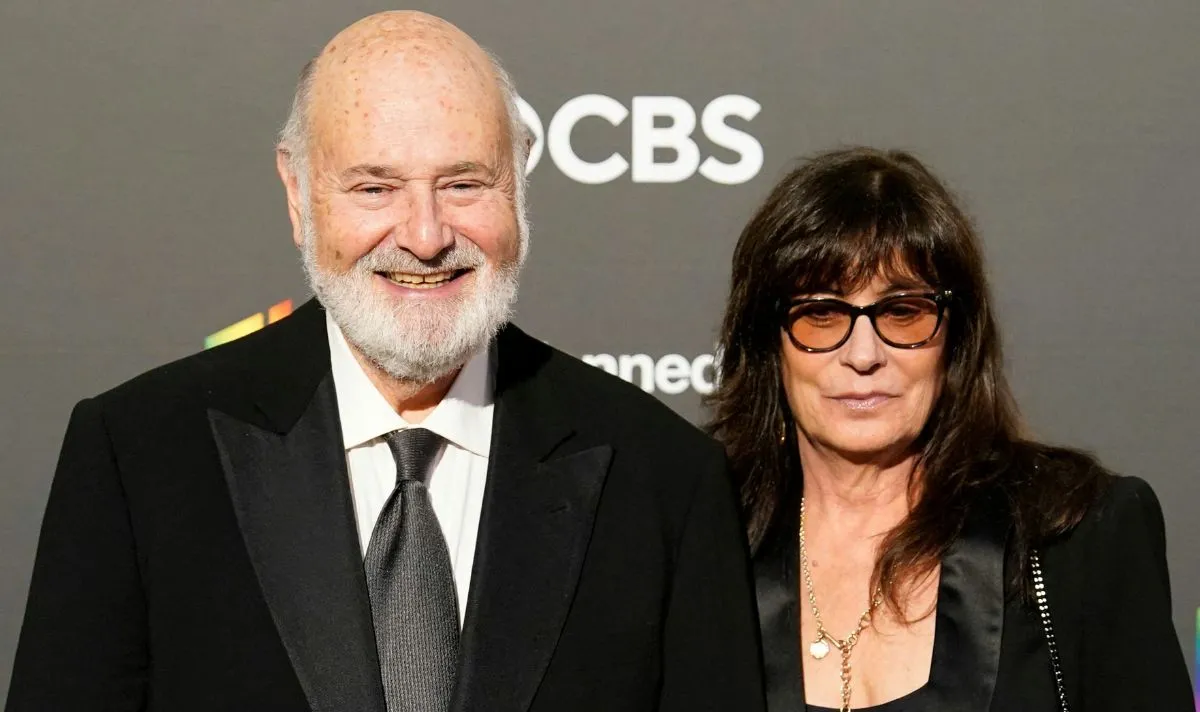
Rob Reiner was one of the most versatile figures American entertainment has produced — a sitcom star who reinvented himself as a director, then built a run of films so beloved they became part of the cultural furniture. From This Is Spinal Tap to When Harry Met Sally…, from The Princess Bride to A Few Good Men, Reiner spent four decades making movies that people quote, rewatch, and pass down to their kids. He died on December 14, 2025, at the age of 78, and his passing closed the book on a career that shaped how a generation thinks about comedy, romance, and storytelling itself.
This is a full look at who Rob Reiner was: where he came from, how he became a filmmaker, the movies that made him, the causes he fought for, and the tragic circumstances of his death.
Who Was Rob Reiner?
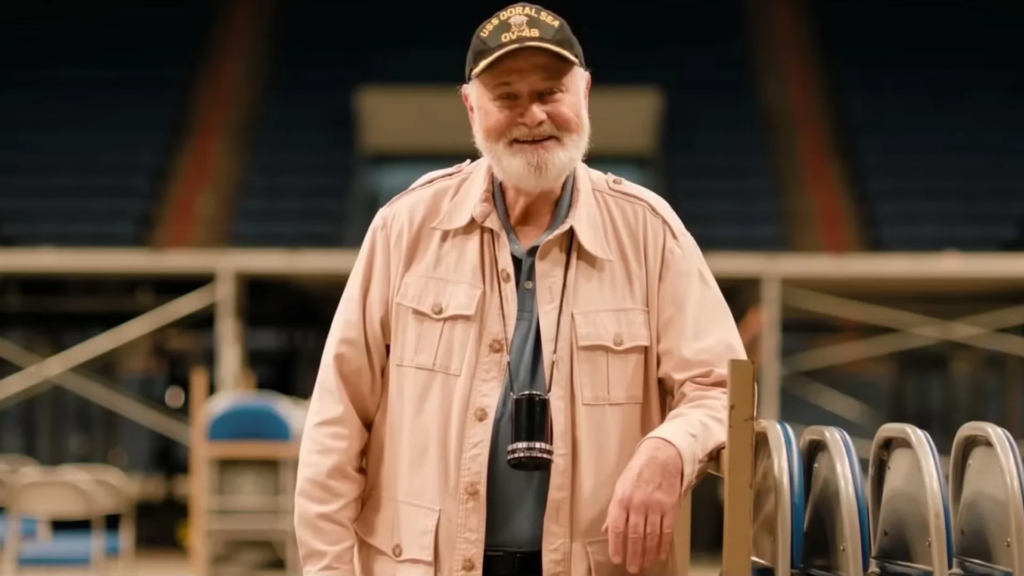
Robert Reiner was born on March 6, 1947, in New York City, and he lived his entire adult life inside the entertainment industry. He worked as an actor, director, producer, screenwriter, and political activist, and he was successful enough in each lane that any one of them could have defined a normal career.
Over the years he collected an armful of honors, including two Primetime Emmy Awards and a Hugo Award, along with nominations for an Academy Award, a BAFTA, and nine Golden Globes. In 1999 he received a star on the Hollywood Walk of Fame, and three of the films he directed were later inducted into the National Film Registry — the Library of Congress list reserved for movies deemed culturally, historically, or aesthetically significant.
That last detail tells you a lot about his standing. Reiner did not just make hits; he made films that institutions decided were worth preserving forever.
Early Life: Growing Up in Comedy Royalty
Reiner was, quite literally, born into the business. His father was Carl Reiner, the writer, actor, and director who created The Dick Van Dyke Show and became one of the defining comedic minds of postwar American television. His mother, Estelle Reiner, was a singer and actress — and, in one of the great cameos in film history, she is the woman who delivers the punchline “I’ll have what she’s having” in her son’s When Harry Met Sally….
Growing up with a father who had won a wall’s worth of Emmys was both an inspiration and a weight. Reiner often spoke about the pressure of measuring up to Carl’s legacy, and about the way his mother’s musical sensibility shaped how he later thought about film — how music worked in a scene, how color functioned on a set, how performance and writing fit together.
The family relocated to Los Angeles, where Reiner attended Beverly Hills High School before studying at the UCLA School of Theater, Film and Television. He got early hands-on experience as an apprentice at the Bucks County Playhouse in Pennsylvania, the kind of unglamorous summer-theater grind that teaches a young performer the mechanics of the craft.
Breakthrough as an Actor: “Meathead” on All in the Family
Reiner’s first taste of national fame came in 1971, when he was cast as Michael “Meathead” Stivic on the groundbreaking CBS sitcom All in the Family. He played the liberal, long-haired son-in-law of Archie Bunker, the bigoted working-class patriarch portrayed by Carroll O’Connor.
The show was built around the clash between the two men. Michael challenged Archie’s reactionary views on women, race, and sexuality, and those confrontations — funny, uncomfortable, and often startlingly frank for network television — became appointment viewing for millions of Americans. The role won Reiner two Emmy Awards and made him a household name.
Just as importantly, it put him next to O’Connor, whom Reiner would later credit as a mentor who helped him understand the business and encouraged his move toward directing. The set of All in the Family was, in effect, a film school with a live studio audience.
The Transition to Directing
Even at the height of his sitcom fame, Reiner didn’t feel that acting was his true calling. That changed when he stepped behind the camera.
His directorial debut, the 1984 mockumentary This Is Spinal Tap, is now regarded as one of the funniest films ever made. Shot as a fake documentary following a washed-up British heavy-metal band, the movie skewered rock-and-roll excess with such a straight face that some viewers initially thought the band was real. Its influence on comedy — the improvisational, deadpan, faux-documentary style — is impossible to overstate, and lines like the amplifier that “goes to eleven” entered the language.
With that debut, Reiner announced a rare gift: he could direct actors, control tone, and let comedy breathe without overplaying it. What followed was one of the most remarkable hot streaks in modern Hollywood.
The Iconic Films of Rob Reiner
Between the mid-1980s and the early 1990s, Reiner directed a sequence of movies that would each, on its own, anchor a director’s reputation. Together, they made him one of the most bankable and respected filmmakers of his era.
Stand By Me (1986) — Adapted from a Stephen King novella, this coming-of-age story follows four boys who set out to find the body of a missing child. Tender, funny, and quietly devastating, it captured the ache of boyhood friendship better than almost any film before or since, and it launched several young careers.
The Princess Bride (1987) — A fairy-tale adventure wrapped inside a bedtime story, The Princess Bride blended swordfights, romance, giants, and absurdist humor into something genuinely timeless. Endlessly quotable — “As you wish,” “Inconceivable!,” “My name is Inigo Montoya” — it flopped modestly at the box office before becoming one of the most cherished cult classics in film history.
When Harry Met Sally… (1989) — The film that essentially wrote the modern romantic-comedy playbook. Working from Nora Ephron’s razor-sharp screenplay, Reiner asked whether men and women can ever really be “just friends,” and gave Billy Crystal and Meg Ryan a showcase that included the most famous scene in the genre — the one in Katz’s Delicatessen, punctuated by his mother’s immortal line.
Misery (1990) — Another Stephen King adaptation, this time a claustrophobic thriller about a novelist held captive by his “number one fan.” Kathy Bates won the Academy Award for Best Actress for her terrifying performance, proving Reiner could shift from warmth to genuine dread without missing a beat.
A Few Good Men (1992) — A courtroom drama pitting Tom Cruise against Jack Nicholson, this film gave audiences one of the most quoted exchanges in movie history: “You can’t handle the truth!” It earned a Best Picture nomination and confirmed that Reiner’s range extended well past comedy.
Later films — including The American President (1995), Ghosts of Mississippi (1996), The Bucket List (2007), and Flipped (2010) — kept him working across genres, even if none quite matched the peak of his golden decade.
Castle Rock Entertainment
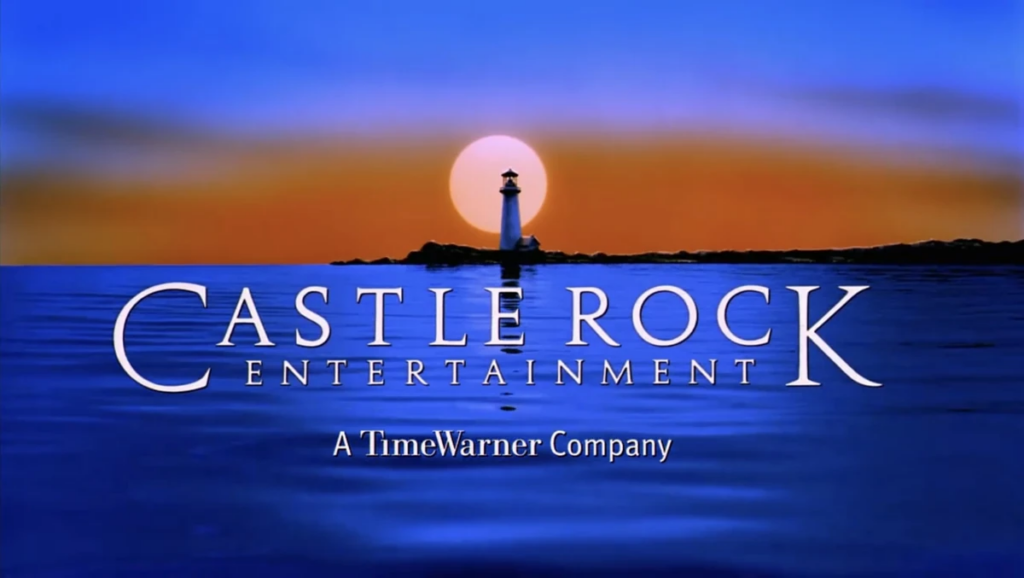
Reiner’s success gave him the leverage to build something of his own. In 1987 he co-founded Castle Rock Entertainment — named after the fictional Stephen King town — alongside partners including Martin Shafer, Andrew Scheinman, Glenn Padnick, and Alan Horn.
Castle Rock became a genuine powerhouse. Beyond Reiner’s own films, the company produced or backed projects such as In the Line of Fire, The Shawshank Redemption, and the hit sitcom Seinfeld. The studio eventually became part of the Warner Bros. Discovery family, and it cemented Reiner’s reputation not just as an artist but as a builder of institutions.
Rob Reiner the Actor: Cameos and Character Roles
Even after directing became his primary identity, Reiner never fully left acting behind. He turned up in a long list of memorable supporting roles and cameos, often playing a version of the sharp, slightly neurotic New Yorker he did so well.
He appeared in Martin Scorsese’s The Wolf of Wall Street (2013) as the volatile father of Leonardo DiCaprio’s character, and popped up in films like The First Wives Club, Bullets Over Broadway, Primary Colors, and Throw Momma from the Train. On television, he made appearances on 30 Rock, The Simpsons, New Girl, and The Bear, among many others. He had a knack for stealing scenes in just a few minutes of screen time.
Political Activism
Reiner was one of Hollywood’s most outspoken political voices, a lifelong Democrat who put real time and money behind his convictions rather than simply lending his name.
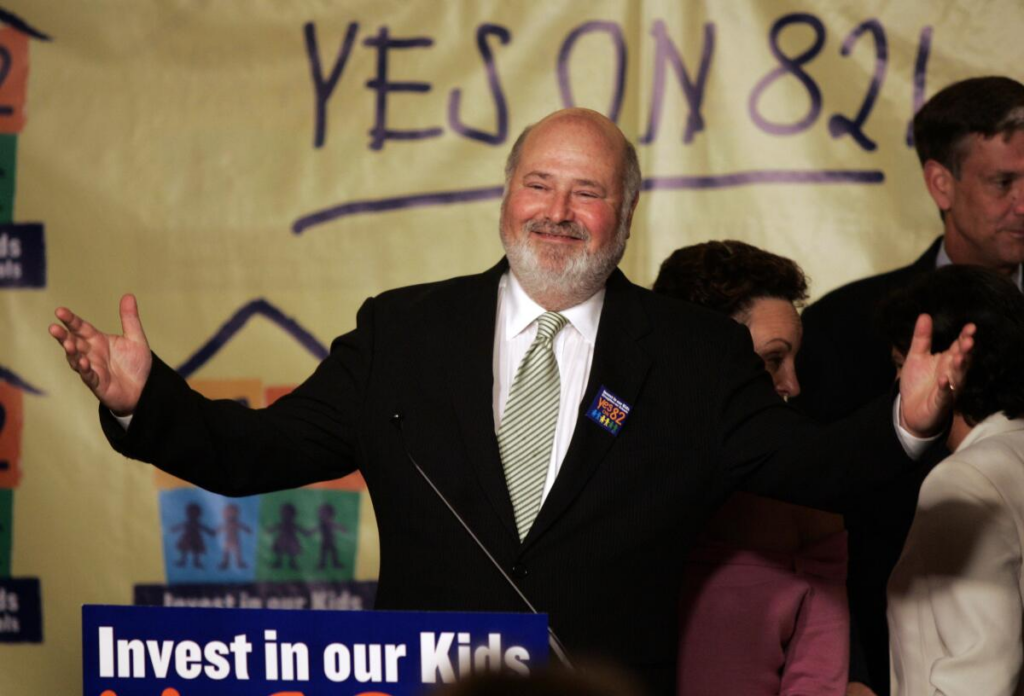
He co-founded the American Foundation for Equal Rights, which supported the legal fight for marriage equality, and he was closely involved in the landmark challenge to California’s Proposition 8. He championed early-childhood education in California, campaigned on public-health issues including anti-tobacco efforts, and spoke frequently on domestic-violence prevention and the health of American democratic institutions.
His activism made him a lightning rod. Admirers saw a citizen using his platform for causes he believed in; critics saw a celebrity wading too far into politics. Either way, Reiner never softened his views to keep the peace, and he remained politically engaged right up to the end of his life.
Personal Life
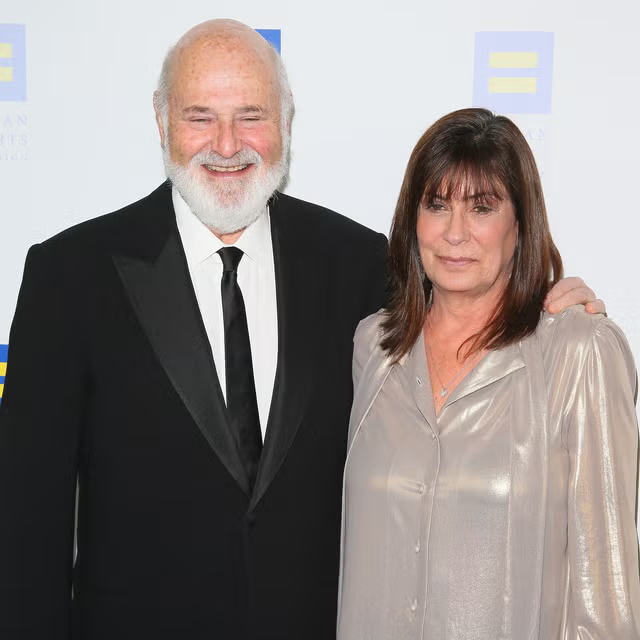
Reiner’s first marriage was to actress and director Penny Marshall, whom he wed in 1971 and divorced in 1981. In 1989 he married photographer and producer Michele Singer, and the two remained together for the rest of their lives. They had three children — Nick, Jake, and Romy — and Reiner also had a daughter, Tracy, from Marshall’s previous relationship whom he helped raise.
By all accounts, family was central to him, and his later years were spent balancing filmmaking, activism, and a life rooted in Los Angeles.
A Final Bow: Spinal Tap II (2025)
In one of the more fitting late-career turns imaginable, Reiner returned in 2025 to the project that started it all. Spinal Tap II: The End Continues brought back the fictional band and reunited Reiner with longtime collaborators Christopher Guest, Michael McKean, and Harry Shearer.
He promoted the sequel in the months before his death, including a 60 Minutes interview reflecting on his career and the films that made his name. It gave audiences a chance to see him come full circle — closing his filmography with the same irreverent comedy that had opened it four decades earlier.
The Death of Rob Reiner
On December 14, 2025, Rob Reiner and his wife, Michele Singer Reiner, were found dead in their home in the Brentwood neighborhood of Los Angeles. Both had suffered fatal injuries, and authorities immediately treated the case as a homicide. Reiner was 78; his wife was 68.
According to reporting on the case, the couple’s daughter, Romy, discovered the scene and a 911 call was placed that afternoon. Los Angeles Police Department detectives from the Robbery-Homicide Division worked through the night, and their son, Nick Reiner, then 32, was taken into custody the same day.
Nick Reiner was subsequently charged with two counts of first-degree murder with special circumstances. He pleaded not guilty at his arraignment on February 23, 2026, and — as is his right — is presumed innocent unless and until proven guilty in court. He has remained in custody without bail while the case proceeds.
Public reporting has noted that Nick Reiner had a documented history of mental-health and addiction struggles, including a court-approved conservatorship several years before the deaths. As of mid-2026, the case was still moving slowly through the pretrial process, with hearings pushed back amid ongoing evidence collection and the release of investigative records. Because the matter is active and sensitive, details continue to develop, and readers should rely on official sources and reputable news outlets for the most current status.
The killing sent a shock through Hollywood and beyond. Tributes poured in from across the industry and from public figures who admired both his films and his advocacy, and the circumstances — a beloved filmmaker allegedly killed by his own son — made the loss all the more difficult to absorb.
Legacy: Why Rob Reiner Still Matters
Strip away the tragedy of his final chapter, and what remains is a body of work almost unmatched for its warmth and staying power. Rob Reiner made films that people don’t just watch once — they return to them, share them, and hand them to the next generation.
His genius was tonal control. He could make you laugh until you cried in When Harry Met Sally…, hold your breath during Misery, feel the lump in your throat at the end of Stand By Me, and cheer through A Few Good Men — often demonstrating that same range within a single decade. Few directors have moved so fluidly between comedy, romance, thriller, and drama while keeping their films so deeply human.
He also mattered as a citizen. Whether or not one shared his politics, Reiner modeled the idea that success carries a responsibility to engage with the world, and he spent decades doing exactly that.
Rob Reiner leaves behind a filmography that will outlast the headlines surrounding his death. Quote his movies at a dinner party and someone will always finish the line for you. That is the truest measure of his legacy — not the awards or the box-office receipts, but the way his stories became a shared language.
Frequently Asked Questions About Rob Reiner
What movies did Rob Reiner direct? His best-known films as a director include This Is Spinal Tap (1984), Stand By Me (1986), The Princess Bride (1987), When Harry Met Sally… (1989), Misery (1990), and A Few Good Men (1992), along with later work such as The American President and The Bucket List.
Who were Rob Reiner’s parents? His father was Carl Reiner, the legendary comedian and creator of The Dick Van Dyke Show, and his mother was singer and actress Estelle Reiner, famous for her cameo line in When Harry Met Sally….
What was Rob Reiner’s most famous acting role? He is best known as an actor for playing Michael “Meathead” Stivic on the classic sitcom All in the Family, a role that earned him two Emmy Awards.
How did Rob Reiner die? Reiner and his wife, Michele Singer Reiner, were found dead in their Los Angeles home on December 14, 2025, in what authorities are prosecuting as a homicide. Their son was charged and has pleaded not guilty; the case remains ongoing.
What is Castle Rock Entertainment? It is the production company Reiner co-founded in 1987, responsible for films and shows including The Shawshank Redemption, In the Line of Fire, and Seinfeld.
Filed in

Comments
0