
László Nemes Returns to Cannes With WWII Drama ‘Moulin’
László Nemes brings French Resistance hero Jean Moulin to Cannes with Gilles Lellouche and Lars Eidinger in a tense, visually stunning WWII drama.
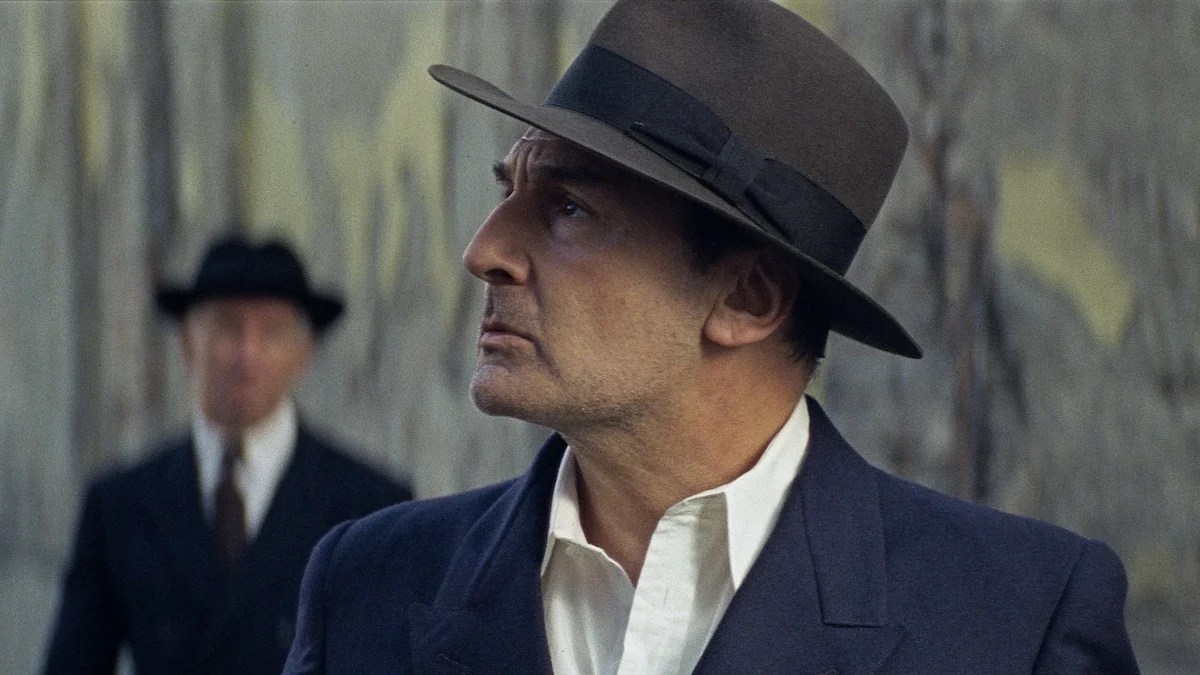
- László Nemes returns to Cannes competition 11 years after winning the Grand Prix for Son of Saul
- Gilles Lellouche plays French Resistance hero Jean Moulin in his final 10 days before death at Gestapo hands
- Lars Eidinger plays Klaus Barbie, the real-life “Butcher of Lyon,” in what critics call the film’s most electrifying performance
- Reviews are split — some praise its austere visual power, others find it narratively flat and overly punishing
- Nemes next heads to English-language filmmaking with a Cormac McCarthy adaptation starring Jacob Elordi and Lily-Rose Depp
László Nemes is back at Cannes — and he brought the weight of history with him again. Eleven years after Son of Saul stunned the festival, won the Grand Prix, and went on to claim the Oscar for Best International Feature, the Hungarian filmmaker returns to competition with Moulin, a French-language drama centered on one of France’s most venerated wartime heroes. The film had its world premiere at the 2026 Cannes Film Festival, and the critical response has been — to put it gently — complicated.
Gilles Lellouche plays Jean Moulin, the French Resistance leader who, in 1943, was captured by the Gestapo and tortured until his death at age 44. Rather than covering his full life, Nemes zeros in on the final 10 days — specifically Moulin’s chilling confrontation with Klaus Barbie, the notorious Nazi officer known as “the Butcher of Lyon,” played here by Lars Eidinger. It’s a deliberate, claustrophobic choice, and one that defines everything about how the film feels.
A Hero With Many Names
The film opens with Moulin parachuting back into occupied France under the alias Max, then Martel, then Jacques — a man of many names who must never let the wrong people learn his real one. He’s been tasked with unifying the fractured factions of the French Resistance, and the early stretch of the film plays like a lean, shadowy spy noir: dark cobbled streets, curls of cigarette smoke, furtive glances exchanged in doorways. Cinematographer Mátyás Erdély, shooting on 35mm, gives the whole thing the look of a chiaroscuro painting — fedoras, gaslamp glow, strong-jawed profiles half-swallowed by shadow.
“There are elements of a spy movie, adventurousness, some epic quality,” Nemes told Variety ahead of the premiere. “It’s a confrontational movie, and the tension of that confrontation between Barbie and Moulin is at the heart of it.”
That confrontation arrives when an emergency meeting of Moulin’s deputies is raided by the Gestapo. The Nazis know that the man called Max will be among those gathered at a doctor’s office on the outskirts of Lyon — they just don’t know which face belongs to him. From there, the film becomes something else entirely: a grinding, methodical study in endurance, as Moulin, imprisoned and under interrogation, refuses to reveal himself. The Nazis want to know where the Allied invasion will land. He will not tell them.
Two Men, Two Faces of Humanity
What the film has going for it — unambiguously — is its two lead performances. Lellouche, whose square-jawed features were recently put to comic use in this year’s Cannes opener The Electric Kiss, does something more demanding here: he starts suave and controlled, then gradually strips that away, letting exhaustion and resignation seep through the cracks. One critic noted that Lellouche is asked to be “a memorial statue come to life” for much of the runtime, and that’s not entirely wrong — but the film earns it. His Moulin knows he will break under enough pressure. That self-awareness, that absence of the usual heroic delusion, is what makes him feel genuinely human rather than mythic.
Eidinger’s Barbie is something else again. Where Lellouche internalizes, Eidinger radiates — a frightening calm beneath which something deeply pathological hums. Critics have reached for Ralph Fiennes in Schindler’s List as a comparison point, and the shadow of that performance is hard to avoid. But Eidinger makes the role his own, carrying what several reviewers identified as the film’s most electric energy. He is, as one put it, “a locus of our anger and disgust” — which is precisely what Nemes wanted.
“I didn’t want a circus Nazi,” Nemes said. “I wanted someone a little like Max von Sydow in certain very cold roles in Bergman’s movies — simplicity and purity, but something that troubles the viewer in their heart about how a human being can become something like that. The foundational fact is that both men are humans, not demons or gods. There are two ways a human being can evolve.”
Nemes has spoken about wanting the viewer to feel like a friend and witness to Moulin, not a voyeur to his suffering. There’s a sequence in which the imprisoned men sing “La Marseillaise” before assembled Gestapo officers that several critics flagged as the film’s emotional peak — a moment that consciously echoes the famous scene in Casablanca, but strips away the champagne-fizz romanticism and replaces it with prison grays and a far grimmer aftermath.
Where Critics Part Ways
The reviews coming out of Cannes have been respectful but divided — and the fault lines are interesting. Those who respond most warmly to Nemes’ approach praise its formal rigor, its refusal of hagiography, and its classical compositional beauty. Those who struggle with it point to a film that is, by design, withholding to a fault.
Variety called it “narratively flat, visually arresting” — a film whose aesthetic goals outrun its dramatic ones, particularly in the first half, where the espionage tradecraft is compelling but the characters remain deliberately opaque. The Hollywood Reporter was more pointed, questioning whether Nemes’ instinct to depict rather than editorialize results in something that feels closer to a “just-the-facts documentary” than a film with a real sense of purpose. The Wrap was warmer, arguing that the film “maintains a somber keel, never curdling into bleakness or hagiography” and that its controlled study of resistance — divorced from action, rooted in sheer human endurance — is quietly powerful.
The historical mystery at the film’s center — who betrayed Moulin and his fellow operatives to the Gestapo? — is one the film only half-engages. It gestures toward the long-suspected René Hardy but doesn’t pursue the question, which some critics found frustrating and others found honest, given that it remains genuinely unresolved in the historical record.
What’s not in dispute is that Moulin is a very different film from Son of Saul, even as it shares DNA with it. That earlier film built its entire visual grammar around a single tight shot on its protagonist’s face, with horror erupting at the periphery. Moulin is more conventionally staged — drawing on the midcentury visual language of Jean-Pierre Melville (whose films like Le Samouraï and Army of Shadows were themselves shaped by the real Moulin’s legacy) rather than forging a new grammar from scratch. For some, that’s a limitation. For others, it’s Nemes demonstrating range.
Why This Story, Why Now
Nemes, who spent part of his childhood under Hungary’s communist dictatorship before the Berlin Wall fell, is not shy about why WWII material keeps calling to him — or why he thinks it resonates so broadly right now.
“The resistance years were almost like a civil war in France,” he said. “When tyranny takes over a society, you have to choose your side, and whatever your choice is — even if you’re indifferent — you’ve chosen a side. You’ve chosen nihilism. This friction between democracy and tyranny is still at the heart of our times. Maybe that’s why people keep coming back to it.”
He was also drawn to how isolated Moulin actually was — how marginal the Resistance really was, despite its mythologized status. “People aren’t fully aware of how complicated, down-to-earth, dirty, and full of suffering the resistance was,” Nemes said. “They were more marginal than we think.” That demythologizing impulse runs through Lellouche’s performance and through the film’s refusal to make Moulin’s suffering operatic.
The film was shot in Budapest — Nemes’ home base — with Lyon’s visual profile integrated through scanned footage and original period photography. “Budapest can act as different cities,” he noted. “Lyon is a good match because of the hilly side — there’s a flat side and a hilly side, and the architecture has very big similarities.” It’s a practical solution that also speaks to Nemes’ broader filmmaking philosophy: keep control of the coordinates, spend the money on the screen.
Moulin arrives at Cannes alongside a handful of other WWII-set films this year, including Emmanuel Marre’s A Man of His Name, Antonin Baudry’s De Gaulle, and Daniel Auteuil’s La Troisième Nuit — a cluster that suggests the festival’s programmers are attuned to the same cultural moment Nemes is speaking to.
As for what comes next: Nemes is headed to English-language filmmaking for the first time with Outer Dark, a Cormac McCarthy adaptation he describes as “a dark fairy tale bordering on horror.” Jacob Elordi and Lily-Rose Depp are attached, and Nemes hopes to shoot next spring — likely in Hungary, where he can maintain the kind of direct creative control that defines his process. “I can’t give up that kind of control,” he said simply.
For now, though, he’s here on the Croisette with a quiet, demanding film about a man who gave everything and left almost nothing behind — no rousing final speech, no triumphant coda. Just the fact of what he chose, and what it cost him.
Filed in

Comments
0