
Rami Malek Cried at Cannes Ovation for ‘The Man I Love’
Rami Malek shed tears during an 8-minute standing ovation at Cannes for ‘The Man I Love’ — and revealed his fears about echoing his Freddie Mercury role.
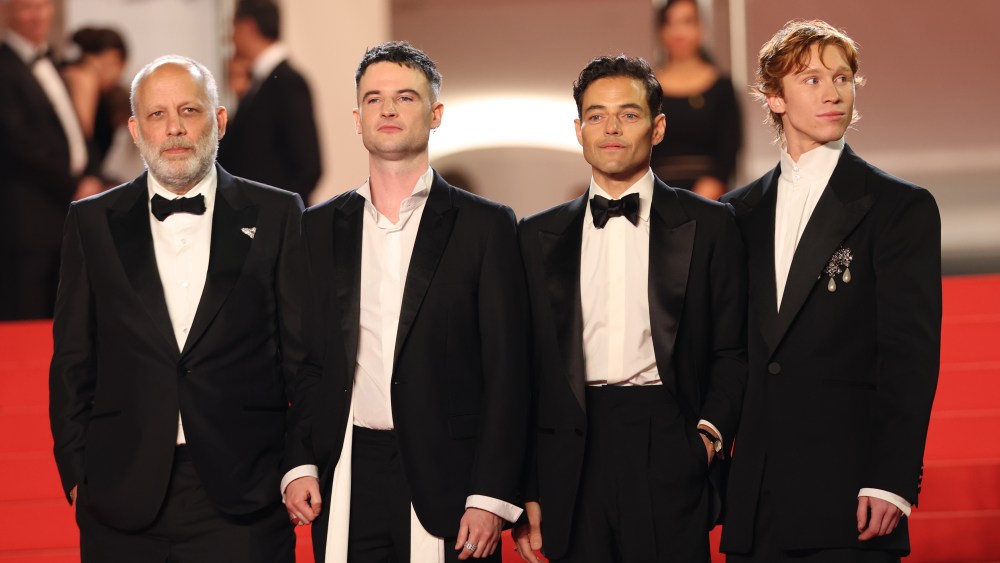
- Rami Malek’s new Cannes film The Man I Love earned an eight-minute standing ovation at its world premiere — and Malek cried through it.
- Malek initially feared the role was too similar to his Oscar-winning Freddie Mercury performance in Bohemian Rhapsody.
- Director Ira Sachs’ film is one of only two American features competing for the Palme d’Or at Cannes 2026.
- The film co-stars Tom Sturridge, Rebecca Hall, Ebon Moss-Bachrach, and newcomer Luther Ford — with MUBI holding international rights and U.S. distribution still up for grabs.
- Critics are already calling it Malek’s best performance since Bohemian Rhapsody, with early Oscar buzz building fast.
Rami Malek stood in the Palais at Cannes on Wednesday night, tears running down his face, soaking in eight minutes of sustained applause for The Man I Love — and if you know anything about what it took him to get there, those tears make complete sense.
Before he ever said yes to director Ira Sachs’ deeply moving AIDS-era drama, Malek almost walked away from it entirely. The role hit too close to home. “I can’t do this, there’s too many similarities,” he said after reading the script. His concern was obvious: he’d already won a Best Actor Oscar playing Freddie Mercury in Bohemian Rhapsody, a performer who also died of AIDS. Now here was another role — a singer and performer battling the same disease, in the same era. “It could be problematic,” he admitted. “There was a certain sense of fear.”
But he didn’t walk away. He ran toward it.
“If there was anything that Freddie taught me it was to address the fear,” Malek said. “If there’s anything I learned from Ira is that he makes unique cinema unlike any other, and I knew I was in extraordinary hands. If he was choosing me, I could rely on him, not only to depend on him throughout the film, but to elevate it, to push myself, to force myself to race into that fire. When I raced into it, I started to discover that these were men who were similar, but they were also worlds apart.”
Who Is Jimmy George?
In The Man I Love, Malek plays Jimmy George, a fictional Downtown New York performance artist in the late 1980s who has just survived a three-week hospital stay following AIDS-related pneumonia. He’s back on his feet — barely — and his response to staring down death is to create. He throws himself into staging a theater piece loosely inspired by André Brassard’s 1974 French-Canadian queer film Once Upon a Time in the East, playing a defiant female character named Hélène who sings with a band. He sings at his parents’ anniversary party. He picks up a new lover — Vincent (Luther Ford), a younger man who’s just moved into the apartment downstairs — even as his devoted partner Dennis (Tom Sturridge, genuinely terrific) holds everything together at home.
The film was co-written by Sachs and his longtime collaborator Mauricio Zacharias, and it’s set against the backdrop of Reagan-era America — a period of reactionary homophobia at its ugliest. But Sachs isn’t interested in making a film about suffering for suffering’s sake. Jimmy’s story is about the hunger to live, to create, to love one more time, even when the clock is running out.
Rebecca Hall and Ebon Moss-Bachrach round out the cast as Jimmy’s sister and brother-in-law, and there’s a woundingly funny scene where Moss-Bachrach walks in on Jimmy oversharing some extremely personal details about his sex life to his nephew — a moment that captures, without any speechifying, the quiet estrangement between Jimmy and his family.
What the Critics Are Saying
The reviews out of Cannes suggest Malek has delivered something that will be very hard to ignore come awards season. Variety called it his best role since Bohemian Rhapsody, writing that the performance is built on “shades of anger, tenderness, psychosis, and the sheer pesky individuality of Jimmy” — and singled out one particular scene as the film’s emotional highlight: Malek sitting in front of a backup band at his parents’ anniversary party, singing the 1970 Melanie hit “What Have They Done to My Song Ma.” The way he delivers it, according to Variety, “he charges it with the sadness and defiance of a lifetime.”
The Wrap went even further, declaring that Bohemian Rhapsody “was just the opening act for his vocal work here” — pointing to a sorrowful cover of “Look What They’ve Done to My Song, Ma” that reportedly lands like a gut punch. Their review called the film “spectacular” and “shattering.”
IndieWire was more measured but no less impressed, noting that Malek’s work here is “probably the most affecting of his career” — a quieter, more inward-facing performance than anything he’s done before, and a deliberate departure from the larger-than-life showmanship of Freddie Mercury. The review praised Sachs for sidestepping every AIDS-movie cliché: there are no Kaposi’s sarcoma lesions on display, no tearful bedside vigils playing for easy emotion. Just a man who wants to keep making art for as long as his body will let him.
The character of Jimmy, multiple critics noted, was inspired by real figures from New York’s queer arts underground — Ron Vawter of The Wooster Group, performance artist and playwright Ethyl Eichelberger, and comedian Frank Maya — all of whom kept performing until the very end.
A Big Night at the Palais
The premiere at the Grand Théâtre Lumière on Wednesday, May 20 drew a crowd that included Demi Moore, Halsey, and filmmaker Chloé Zhao alongside the film’s cast. Malek, Sturridge, Hall, and Moss-Bachrach all walked the red carpet before the screening that would leave the room on its feet for eight solid minutes.
The Man I Love is one of only two American films competing for the Palme d’Or this year — the other being James Gray’s Paper Tiger, starring Adam Driver, Miles Teller, and Scarlett Johansson. It also marks Malek’s first time headlining a Cannes competition film. MUBI holds international distribution rights; U.S. distribution is still being negotiated.
It’s worth remembering what Malek said about the moment he finally stopped being afraid and started discovering who Jimmy George really was: a man similar to Freddie Mercury in some ways, but worlds apart in others. Standing in that theater, in tears, the audience refusing to sit down — it’s hard to argue with the decision he made.
Filed in

Comments
0