
Sonny Rollins, Jazz’s Restless Genius, Dead at 95
Sonny Rollins, the tenor saxophonist whose bold improvisations and constant reinvention made him one of jazz’s greatest voices, has died at his home in Woodstock.
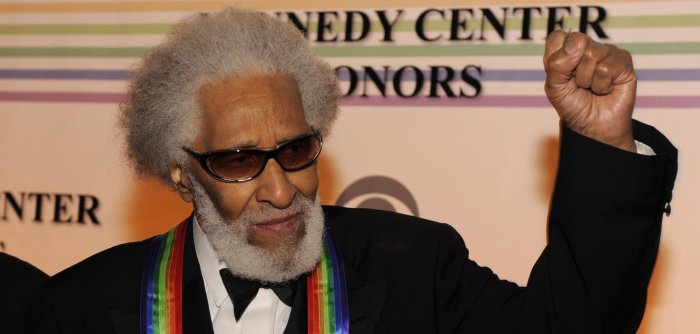
- Sonny Rollins died Monday at his home in Woodstock, New York, at age 95
- He was one of the last living greats of the bebop era, alongside John Coltrane and Charlie Parker among the most influential saxophonists ever
- Rock fans knew him from the Rolling Stones’ “Waiting on a Friend,” where his sax solo became iconic
- He famously practiced alone on the Williamsburg Bridge during a self-imposed exile from performing in the late 1950s
- No public memorial is planned at this time
Sonny Rollins, the tenor saxophonist whose bold, unmistakable tone and refusal to ever stop searching shaped more than half a century of jazz, died Monday at his home in Woodstock, New York. He was 95.
“It is with deep sorrow and profound love that we announce the passing of Sonny Rollins,” read a statement posted to his official channels. “The Saxophone Colossus died this afternoon at his home in Woodstock, NY.”
Spokesperson Terri Hinte confirmed the news to the Associated Press. No specific cause of death was given, though she noted Rollins had been largely housebound in recent years due to various physical ailments. No public memorial is planned.
A Work in Progress Until the End
That was how Rollins always described himself. Not as a master. Not as a legend. As someone still learning.
“I don’t consider myself a musician that has learned as much as I want to learn,” he told the Associated Press in 2007. It was a remarkable thing to say for a man who’d recorded more than 60 albums, won Grammy Awards in 2001 and 2006, received the Kennedy Center Honor and the National Medal of Arts from President Obama in 2011, and been called a colossus by people who would know.
But that dissatisfaction was the engine. From his early days as a teen phenom running with Bud Powell and Miles Davis in Harlem, through his legendary recordings — Saxophone Colossus, Way Out West, Freedom Suite, A Night at the Village Vanguard — Rollins never settled. He found bebop, mastered it, then pushed past it into hard bop, calypso-inflected jazz, free jazz, and things that didn’t have names yet.
The Bridge
The most famous sabbatical in jazz history happened in the late 1950s, when Rollins — already a star, already recording for Prestige and Blue Note — simply disappeared from public performance. He’d walk to the Williamsburg Bridge in New York and practice alone, for hours, working through ideas no audience would hear until he was ready.
He came back in 1962 with an album literally called The Bridge. It was a different Rollins. It was supposed to be.
He took another hiatus from 1966 to 1971, during which he studied yoga and Eastern philosophy. Each time he returned, the sound had moved.
Before the Music, the Darkness
Like too many jazz musicians of his generation, Rollins was swallowed by heroin as a teenager. He committed an armed robbery at 19 to fund the habit. Rikers Island. Homelessness in Chicago. A second arrest. In 1954, he checked himself into a hospital in Lexington, Kentucky, and that decision saved everything that came after.
“I began to have a deeper philosophy of what life was about,” he said later. The spiritual transformation that followed his recovery became central to how he approached both music and life for the remaining seven decades.
The Last Notes
Pulmonary fibrosis forced Rollins into retirement. He played his final concert in 2012 and stopped playing altogether by 2014. He missed it terribly — not just the crowds, but the physical act of playing.
Rock fans who never bought a jazz record still knew his sound. His wistful saxophone on the Rolling Stones’ “Waiting on a Friend” — recorded after watching Mick Jagger dance during the Tattoo You sessions in 1981 — remains one of the most recognizable sax moments in popular music.
Born Theodore Walter Rollins on September 7, 1930, in Harlem’s Sugar Hill neighborhood, he grew up in a household where his sister played piano and his brother played violin. He picked up the saxophone at 11. By the time he was out of high school, he was playing alongside Thelonious Monk and Max Roach.
“I think when the creative person ends, he continues in the next existence,” Rollins said in 2009. “I’m a person who believes this life isn’t the be-all and end-all of everything.”
The Colossus is gone. The sound carries on.
Filed in

Comments
0