
Sharyn Alfonsi Is Out at 60 Minutes After Clashing With Bari Weiss
The 60 Minutes veteran’s contract expired Saturday after a bitter dispute over a pulled CECOT prison segment — and she’s not going quietly.
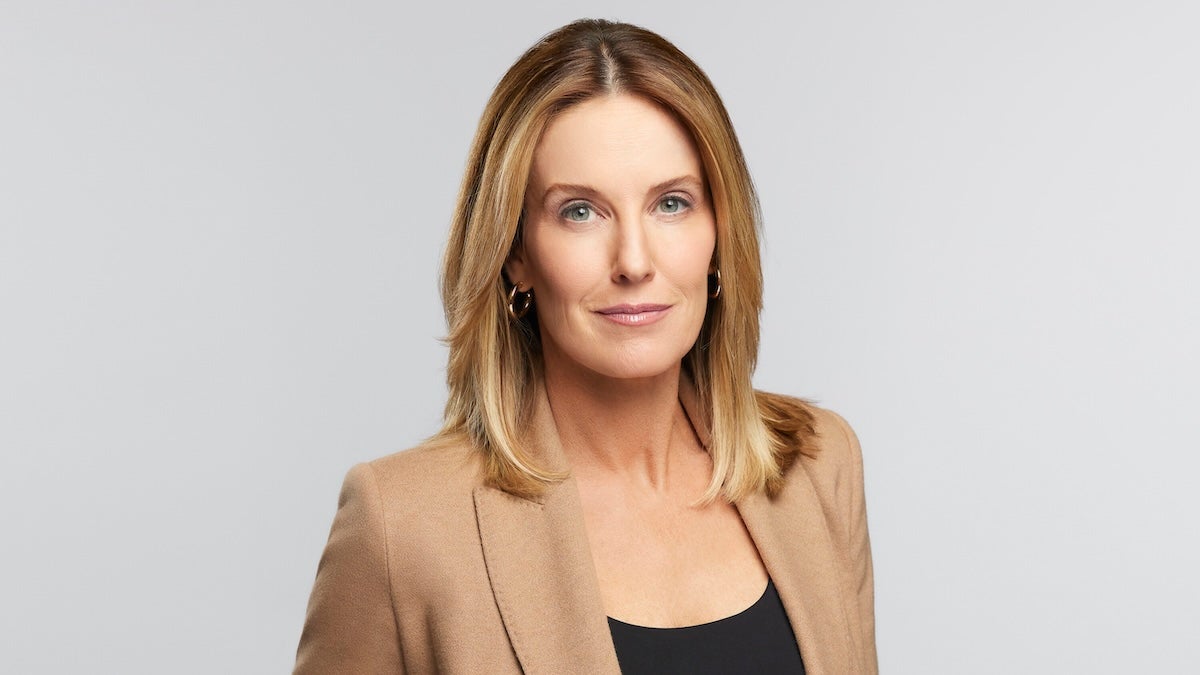
- Sharyn Alfonsi’s CBS contract quietly expired Saturday after 11 years at 60 Minutes — she has no expectation of returning to the show
- The fallout traces to December, when editor-in-chief Bari Weiss pulled Alfonsi’s segment on Venezuelan migrants detained at El Salvador’s CECOT prison, which Alfonsi publicly called a “political decision”
- In a scorching statement, Alfonsi said her ouster was “a deliberate choice to penalize a journalist for refusing to sanitize factually accurate reporting”
- She remains technically employed at CBS News but says: “If they want me gone because I did my job, they’ll have to fire me”
- Anderson Cooper also departed 60 Minutes in February — Bari Weiss is now planning a significant overhaul of the 58-year-old franchise
Sharyn Alfonsi is out at 60 Minutes. And she is not going quietly.
The veteran CBS News correspondent confirmed to The New York Times on Wednesday that her contract expired over the weekend, drawing to a close more than a decade at the network’s flagship newsmagazine. According to Alfonsi, her agent spent weeks trying to establish a path forward with CBS executives — and was met with complete silence. “The message could not be clearer,” she wrote in a statement published by Puck’s Dylan Byers. “My time at 60 Minutes is apparently over.”
For anyone who’s been following the slow unraveling at CBS News, the news wasn’t exactly a surprise. But the statement Alfonsi released alongside it — blistering, detailed, and aimed squarely at CBS management and editor-in-chief Bari Weiss — landed like a grenade.
What She Said
“This was not a routine corporate transition,” Alfonsi wrote. “It was a deliberate choice to penalize a journalist for refusing to sanitize factually accurate reporting, and it sends a chilling message to the entire newsroom.”
She went further. “Fearless, independent reporting has always been the defining standard at 60 Minutes. Today, CBS management is abandoning that mission, choosing access journalism over accountability and protecting power rather than scrutinizing it.”
And then, directly to her former colleagues: “I’ve learned exactly what it costs to hold the line right now. Hold it anyway.”
In a separate interview with the Times, she was equally blunt: “I think it was a deliberate choice to penalize a journalist for refusing to sanitize accurate reporting.” As for her employment status — she remains on the CBS payroll for now, though without a contract and with no expectation of appearing on screen. “I’m not resigning,” she said. “If they want me gone because I did my job, they’ll have to fire me.”
How It Started
The conflict goes back to December, when Weiss — installed by Paramount owner David Ellison in 2025 — abruptly pulled a 13-minute segment Alfonsi had reported on Venezuelan migrants deported by the Trump administration to El Salvador’s notorious CECOT prison. Alfonsi sent an internal email to colleagues calling the decision “political.” Weiss rejected the characterization, saying the piece “was not ready” and requesting last-minute additions, including an interview with Trump adviser Stephen Miller.
The segment eventually aired largely intact the following month, with administration comments added. Some CBS executives privately characterized Alfonsi’s internal email as insubordinate. Alfonsi said she didn’t regret sending it. “I know they said I was being difficult,” she told the Times, “but I believed I was doing my job.”
She continued to appear on 60 Minutes through the end of this season, which wrapped May 17. Then her contract expired on Saturday, with no renewal conversation ever having taken place.
The State of 60 Minutes
Alfonsi would be the second 60 Minutes correspondent to exit since Weiss took over. Anderson Cooper announced in February that he was leaving the program after 20 years.
Weiss, meanwhile, is preparing what sources describe as a significant shake-up of the franchise: new contributing journalists, shorter digital segments, and live events modeled on The New Yorker Festival where viewers could meet star correspondents. The fate of executive producer Tanya Simon is also said to be uncertain — Weiss is reportedly considering bringing in an outside journalist to oversee or work alongside her.
60 Minutes debuted in 1968 and remains the country’s highest-rated television newsweekly. Its viewership this season was actually up 9 percent from the year before, per Nielsen — which makes the current turbulence all the stranger.
Alfonsi has been thinking about what comes next at the show she helped define for more than a decade. “For the last 60 years it’s been the same formula: tell the truth, hold the power accountable, don’t blink,” she said. “And it’s unclear what next season looks like.”
She added: “There’s a feeling that the wall has come down between editorial independence and corporate interests. The concern is we’re going to end up with a broadcast that looks like ’60 Minutes’ but doesn’t have the courage or the character to produce 60 Minutes journalism that actually matters.”
CBS News declined to comment.
Filed in

Comments
0