
Putin Hiding in Bunkers as Coup Fears Grip the Kremlin
A leaked European intelligence report says Putin is spending weeks in fortified bunkers, fearing assassination by drones — and what comes next could be even scarier.
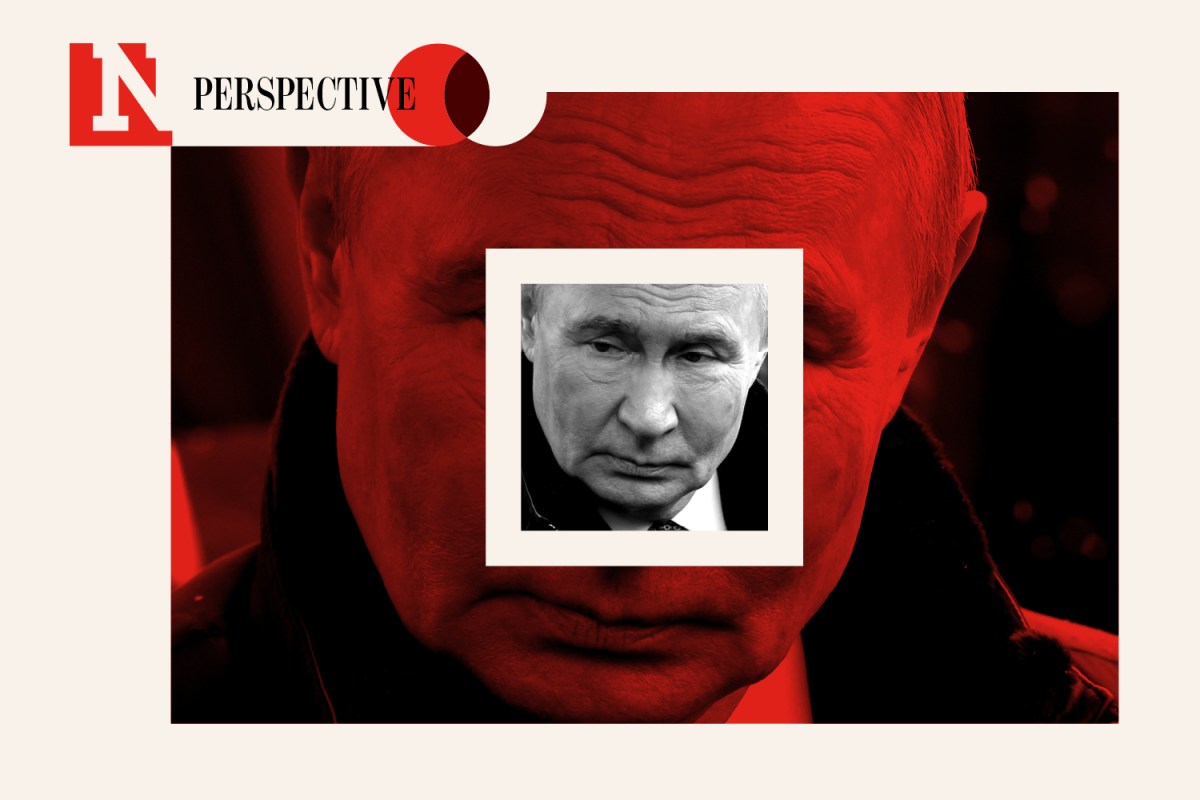
- A leaked European intelligence report claims Putin has been hiding in fortified bunkers in southern Russia since early March 2026.
- The Russian president fears assassination by drone, potentially carried out by members of his own political elite.
- Security around Putin has been dramatically tightened — staff are banned from phones, surveilled at home, and travel only in FSO-controlled vehicles.
- Bitter tensions between Russia’s security services, including the FSB and military leadership, have reportedly intensified.
- Analysts warn that Putin’s sudden death or removal could trigger a chaotic, nuclear-armed succession crisis far more dangerous than Putin himself.
Vladimir Putin is reportedly spending weeks at a time hiding underground. According to a leaked European intelligence document — first reported by the U.K.’s Financial Times and Russian independent outlet Important Stories — the Russian president has been holed up in renovated bunkers in the Krasnodar region of southern Russia since at least the beginning of March 2026, gripped by fears of assassination and a coup from within his own inner circle.
“Since the beginning of March 2026, the Kremlin and Vladimir Putin have been concerned about a leak of sensitive information and, at the same time, about the risk of a plot or coup attempt against the Russian president,” Important Stories reported. “In particular, he fears the use of drones for a possible assassination attempt by members of the Russian political elite.”
The timing is striking. Ukraine’s President Volodymyr Zelensky has taunted Moscow openly, saying the Kremlin is worried that “drones may buzz over Red Square” as Russia locks down hard ahead of the May 9 Victory Day parade. And it’s not an idle threat — Ukraine has demonstrated it can hit targets deep inside Russia, including Moscow, through drones and special operations.
Life Inside the Lockdown
The security crackdown around Putin is sweeping. The Federal Protective Service (FSO), which is tasked with keeping Russia’s top officials safe, has dramatically scaled back the number of locations Putin visits. He and his family have stopped frequenting their usual residences near Moscow and the Valdai presidential compound entirely.
Those allowed into Putin’s orbit are living under extraordinary pressure. Staff working near the president are banned from using mobile phones and required to use devices with no internet access. They’re barred from public transportation and travel exclusively in FSO-controlled vehicles. Surveillance systems have reportedly been installed inside the homes of cooks, photographers, and even bodyguards.
Meanwhile, Russian state media has been airing prerecorded footage of Putin to maintain the appearance of normalcy — propping up the illusion that the president is conducting business as usual. He hasn’t made a single visit to Russian military infrastructure this year, a notable break from his previous pattern of high-profile wartime appearances.
The security net has now extended to the military’s top brass, with sweeping measures reportedly applied to 10 senior generals, including three powerful deputy chiefs of the General Staff. The report says concerns intensified following the December 2025 killing of Lieutenant General Fanil Sarvarov in a Moscow car bomb explosion that Russian investigators suspect was carried out by Ukrainian special services.
The Knives Are Already Out
The intelligence report paints a picture of a Russian security apparatus that is deeply fractured. Bitter tensions have reportedly risen among the FSB, military leadership, the Rosgvardiya, and the FSO over responsibility for keeping senior officials safe. The same document connected concerns about former Defense Minister Sergei Shoigu’s network — and the risk of a coup against Putin — to the arrest of former Deputy Defense Minister Ruslan Tsalikov in March 2026.
Shoigu, who was moved from defense minister to secretary of Russia’s Security Council in 2024 after the Ukraine war faltered, had been one of the most visible figures in Putin’s wartime elite. His diminished standing hasn’t made him less dangerous as a variable in the power equation.
This isn’t the first time the architecture of Putin’s authority has shown cracks. In June 2023, Yevgeny Prigozhin’s Wagner fighters seized the military headquarters in Rostov-on-Don and advanced toward Moscow before abruptly turning back — a reminder that loyalty in Putin’s system can become armed leverage with startling speed. Prigozhin later died in a suspicious plane crash. Putin survived that round.
Who Would Replace Him?
Russia doesn’t lack names for those who might hope to step into the vacuum. Aleksey Dyumin, a former Putin bodyguard turned presidential aide, is one. Sergei Kiriyenko, the Kremlin official overseeing domestic politics and managed elections, is another. Then there’s Dmitry Patrushev, a deputy prime minister and son of Putin’s longtime confidant Nikolai Patrushev — representing a younger face on the same old siloviki ideology. Elder hardliners like Nikolai Patrushev himself and FSB director Alexander Bortnikov may matter more as kingmakers than actual heirs.
Under Russia’s constitution, Prime Minister Mikhail Mishustin would serve as acting president if Putin were to die. But that’s largely a formality. The real contest would begin behind Mishustin — a knife fight among elite clans, military commanders, intelligence chiefs, oligarchic interests, and regional power brokers, all of whose fortunes depend on proximity to coercive power.
None of those names, however, resolves the central problem: Putin has spent 25 years making himself the irreplaceable referee of Russian politics, playing elite factions off each other so they compete for his favor. He’s the system’s lynchpin — and his removal wouldn’t free Russia from that system. It would just leave the system without its center of gravity.
Why His Death Might Not Be the Answer
The fantasy of Putin’s removal is understandable, especially for Ukraine. But analysts argue the reality that follows could be far more dangerous than the man himself.
Russia is already under enormous strain. Harvard Kennedy School’s Russia Matters project notes that one late-February 2026 Western assessment put Russian casualties at roughly 1 million killed or wounded — meaning a vast number of Russian families have been personally touched by the war. Interest rates and inflation are painfully high. Reserves are depleted. Sanctions have bitten hard.
Then there’s what happens when the soldiers come home. The Institute for the Study of War has argued that the Kremlin likely sees alienated veterans as a genuine threat to regime stability. A separate report by Global Initiative found that returning veterans — including convicted criminals who were recruited — are already feeding violence and organized crime. A post-war Russia wouldn’t just be bringing soldiers home. It would be importing hundreds of thousands of men trained, traumatized, and wounded by a brutal war into civilian life, only for many to become embittered by a poorer peace.
A contested succession at the top of that powder keg — in a heavily militarized, nuclear-armed state with a war already underway — is not a crisis with a clean outcome. The successor most likely to survive would be the one best able to frighten everyone else. And most of the names in the running have fully bought into Putin’s playbook: imperial expansionism, anti-Western antagonism, hard-power realism.
The result, analysts warn, would likely be Putinism with a different face. Possibly an angrier one.
That’s the cold calculation the West has to sit with. Trump reportedly told Britain’s King Charles III during an April 27 White House visit that Putin “wants war” — and that “if he did what he said, he will wipe out the population,” according to lip reader Nicola Hickling. Charles, for his part, told Trump they would “discuss that later.” A man hiding in a bunker, surrounded by rivals sharpening their knives, commanding a nuclear arsenal and a war machine — that’s the situation whether Putin lives or dies.
Be careful what you wish for.
Filed in

Comments
0