
Michael Pennington, Moff Jerjerrod in Return of the Jedi, Dies at 82
Michael Pennington, the acclaimed Shakespearean actor who played Moff Jerjerrod in Return of the Jedi, has died at 82 after a six-decade career.
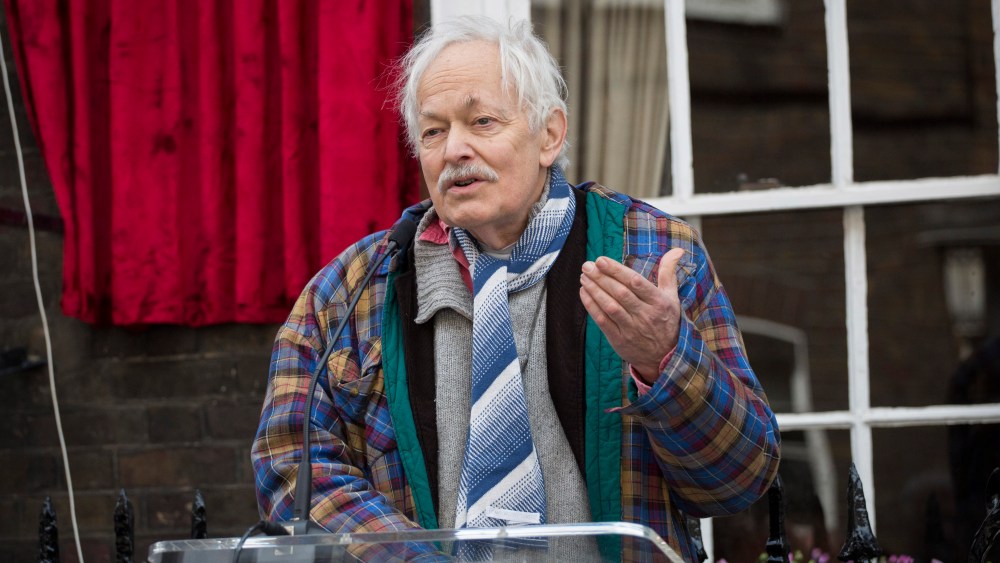
- Michael Pennington, who played Death Star Commander Moff Jerjerrod in Return of the Jedi, died Sunday at age 82
- He was one of Britain’s most celebrated Shakespearean actors, co-founding the English Shakespeare Company in 1986
- In 1980, he famously turned down a role opposite Meryl Streep in The French Lieutenant’s Woman — Jeremy Irons took the part instead
- He published 10 books and compiled more than 70 screen credits across a six-decade career
- He is survived by his son, Mark
Michael Pennington, the distinguished British actor beloved by theatre audiences for his towering Shakespearean performances and recognized by a whole other generation of fans as Death Star Commander Moff Jerjerrod in Star Wars: Return of the Jedi, has died. He was 82.
His death was confirmed Sunday by The Telegraph and shared by Star Wars News Net writer Soeren Kamper. No official cause of death has been announced, and his family has not yet released a statement.
Born Michael Vivian Fyfe Pennington on June 7, 1943, in Cambridge, England, he came to theatre the way only a certain kind of person does — not through drama school, but through sheer obsession. “My dad took me to see Paul Rogers in Macbeth at the Old Vic,” he told The Stage in 2021. “I was hooked immediately. It was like discovering rock’n’roll. Afterwards I wrote a little newsletter on an old Olivetti typewriter as if I’d been sent to review the play.”
He studied English at Trinity College, Cambridge — in a generation that included Trevor Nunn and Richard Eyre — and went straight into acting without any formal training. “I’m one of those Oxbridge upstarts who read English (but not much of it!) at Cambridge in the early 1960s,” he told What’s On Stage in 2003, “and thought I could start right away as an actor afterwards, having treated university like a repertory theatre!”
It turned out he was right.
A Life Built Around Shakespeare
Pennington joined the Royal Shakespeare Company in 1964 and never really left Shakespeare’s orbit for the rest of his life. He first encountered Hamlet as a university production, then appeared as Fortinbras opposite David Warner in Peter Hall’s celebrated 1965 RSC staging. He later played Laertes opposite Nicol Williamson in a production directed by Tony Richardson that transferred to New York. Director John Barton, reflecting on what made Pennington the right fit for the title role, said simply: “He’s a very fine actor… he’s the person I most want to do Hamlet with.”
That Hamlet, when it finally came, would define him. And it nearly didn’t happen at all.
In 1980, Pennington was offered the starring role opposite Meryl Streep in Karel Reisz’s film adaptation of The French Lieutenant’s Woman. He turned it down. The reason? He couldn’t bring himself to give up the chance to play Hamlet for the RSC. “I realised I couldn’t let Hamlet go,” he said. “It is one of the prizes.” Jeremy Irons stepped in and delivered a performance that earned the film five Academy Award nominations. Pennington never looked back.
He returned to Hamlet again in 1994, this time as Claudius and the Ghost in Peter Hall’s production, and later published Hamlet: A User’s Guide — because of course he did. The play was practically a lifelong companion.
In 1986, Pennington co-founded the English Shakespeare Company alongside director Michael Bogdanov, serving as Joint Artistic Director until 1992. The ESC’s ambitious Wars of the Roses cycle toured internationally and brought Shakespeare to audiences who might never have encountered it. He later reflected that it was the work he was proudest of. “In retrospect, I’m most struck by the sheer bravura and unlikeliness of it,” he said. “Yet at the same time we also succeeded in turning a lot of young actors, who might have drifted off elsewhere, into Classical actors. And I see the influence of the ESC everywhere, wherever Shakespeare is done in belt and braces.”
His stage career continued earning raves well into his seventies. His King Lear in Brooklyn drew an ecstatic review from New York Times critic Ben Brantley, who called the performance “devastating.” In 2010, he was praised for his work in The Master Builder at Chichester. And during the Covid lockdown in 2020, Pennington finally tackled Prospero in The Tempest at London’s Jermyn Street Theatre — one of the last great Shakespearean roles he hadn’t yet attempted.
In 2004, he became only the second actor to deliver the British Academy’s annual Shakespeare lecture, the first since Harley Granville-Barker in 1925.
That Time He Faced Darth Vader
For all his classical prestige, it was a few minutes aboard the Death Star that made Pennington a household name to a completely different audience.
In Return of the Jedi, his Moff Tiaan Jerjerrod — a bureaucrat-turned-military commander who oversaw construction of the DS-2 Death Star II — comes face to face with Darth Vader (David Prowse, voiced by James Earl Jones) over the lagging pace of the project. Vader’s warning lands with characteristic menace: “I hope so, commander, for your sake. The emperor is not as forgiving as I am.” Jerjerrod ultimately perishes when the Death Star is destroyed.
Pennington was characteristically wry about the whole thing. “I look at it now, and I think I overact horribly, and I can’t even remember the storyline,” he admitted. “We all did it for a song, but I suppose that it has given me some kind of calling card for movies. Whenever I come out of the Stage Door after a performance, all people would ask about was Star Wars.”
He once joked that younger audiences assumed he’d retired from acting entirely, noting with dry amusement that fans would write in saying, “If you ever do any more acting, please let us know.”
Beyond Jedi, his screen work was extensive — more than 70 roles across film and television. He starred as the titular detective in the 1987 TV movie The Return of Sherlock Holmes, appeared in BBC productions including Middlemarch, Freud, The Tudors, Father Brown, and Endeavour, and had more recent credits in Raised By Wolves and Silent Witness. He also appeared opposite Meryl Streep — finally — in the 2011 biopic The Iron Lady, playing Michael Foot.
Away from performing, Pennington was a prolific author and narrator, publishing 10 books on Shakespeare, acting, and his own life, including Let Me Play the Lion Too: How to Be an Actor and his 2021 memoir In My Own Footsteps. He also worked as a director in the UK, the United States, Romania, and Japan.
He married actress Katharine Barker in 1964; the couple divorced in 1967. His longtime partner, arts administrator Prue Skene, died last year. He is survived by his son, Mark.
Six decades of theatre, a galaxy far, far away, ten books, and one Hamlet he refused to give up. That was Michael Pennington.
Filed in

Comments
0