
Rex Reed, Legendary Film Critic, Dies at 87
Rex Reed, the acerbic film critic known for his scathing reviews and provocative Hollywood profiles, died Tuesday at his Manhattan home. He was 87.
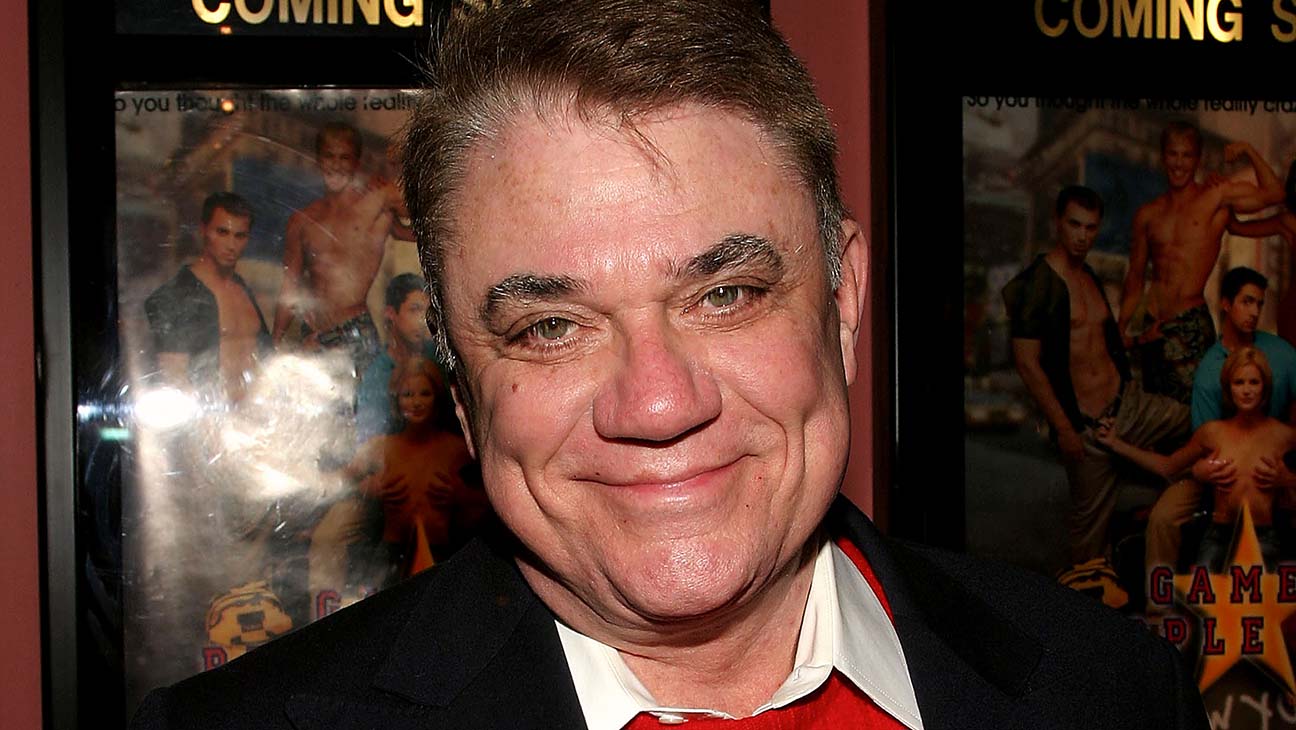
- Rex Reed died Tuesday, May 12, at his Manhattan home following a short illness, surrounded by loved ones
- The film critic was 87 and had written for the New York Observer, The New York Times, GQ, Esquire, and Vogue over a six-decade career
- Reed was known for his razor-sharp, often controversial reviews and his glamorous celebrity profiles of Old Hollywood icons
- His death was confirmed by longtime friend William Kapfer and publicist Sean Katz
- Reed leaves behind no immediate family — he never married, saying in 2018, “I don’t have ‘relationships,’ except friends”
Rex Reed, the acid-tongued, impossibly stylish film critic who spent six decades making Hollywood stars sweat and readers laugh, died Tuesday morning at his home in Manhattan. He was 87. His death, following a short illness, was confirmed by longtime friend William Kapfer and publicist Sean Katz.
“Legendary journalist, film and cultural critic Rex Reed died early this morning, Tuesday, May 12, at his home in Manhattan after a short illness, surrounded by his closest loved ones,” Kapfer said in a statement.
That home, for the record, was an apartment in the Dakota — the iconic Upper West Side building he’d purchased in 1970 for $30,000 — where his neighbors over the years included Lauren Bacall, Roberta Flack, Yoko Ono, and Leonard Bernstein. Reed, being Reed, had stories about all of them.
A Voice Unlike Any Other in American Film Criticism
Reed burst onto the criticism scene in the early 1960s, part of a new wave of writers — Pauline Kael among them — who brought a jazzier, more personal style to film reviewing at exactly the right moment: as the old Hollywood studio system was collapsing and something rawer and more exciting was rising in its place. His reviews and celebrity profiles ran in The New York Times, GQ, Esquire, Vogue, the New York Daily News, the New York Post, and Women’s Wear Daily. The Times described his prose as “graceful and evocative but often also the literary equivalent of a poison-tipped dagger plunged between the shoulder blades.”
For four decades, his column at the New York Observer was his home base — from the paper’s founding in 1987 until his final review, published in 2025 for the film Truth & Treason. (There was a brief interruption in 2017 when he was laid off before being rehired — a blip in an otherwise unbroken run.)
He was not the typical behind-the-scenes critic. With his nasally Texas drawl and impeccable fashion sense, Reed was a genuine media personality — a fixture on The Tonight Show with Johnny Carson and The Dick Cavett Show, where hosts prized him for his wit and total lack of filter. He served as a judge on The Gong Show in the ’70s, voiced himself on the animated series The Critic, and sat on juries at both the Berlin and Venice International Film Festivals. He was, in every sense, a star who happened to review other stars.
Born Rex Taylor Reed on October 2, 1938, in Fort Worth, Texas, he grew up moving around with his family as his father, Jimmy, worked oil rigs along the Gulf of Mexico. He found his escape through writing. At Louisiana State University — where he edited the literary magazine, wrote for the campus paper, and won a national short-story contest as a senior — he earned a journalism degree in 1960 and promptly headed to New York.
He applied to The New York Times and was offered only a copy boy position, which he declined. So he scraped by: singing jazz on a local TV show, cooking at a pancake house, selling records at Bloomingdale’s, doing summer stock in Butte, Montana. Eventually he landed a publicity job at 20th Century Fox, writing promotional copy for Elvis Presley and Fabian, before budget cuts — tied, he said, to the Cleopatra debacle — ended that chapter. What came next was the career that made him famous.
The Reviews That Made (and Cost) Him
Reed’s criticism was nothing if not vivid. On Bette Davis in 1968: “Froggy-eyed, lipstick-slashed or glowing like a Tiffany lamp, she is exciting enough, even when photographed through gauze, to make the latest youth idols about as interesting as a withered logarithm.” On Gwen Verdon: one of those performers “rare as blue butterflies, who carry around their own lightning.” On Michelangelo Antonioni, in 1967: “If there is anything more excruciating than sitting through a Michelangelo Antonioni film, it’s sitting through a Michelangelo Antonioni interview.”
He adored the grandes dames of Old Hollywood — the Dietrichs, the Bergmans, the Lansburys — and was openly dismissive of what replaced them. “The old broads are the ones that interest me the most,” he told Newsweek. “Nothing bores me more than these mini-skirted girls with nothing on their minds.”
He sparred famously with Frank Sinatra after writing that a drunk Ava Gardner had quipped about Sinatra’s marriage to Mia Farrow: “Hah! I always knew Frank would end up in bed with a boy.” Gardner herself called Reed “a son of a bitch” who was “either at your feet or at your throat.” Reed’s response was characteristically unrepentant: every word of the piece was true, he said, and written “in as flattering a way as it is possible to write something when the subject will not let you ask questions, take notes or give any semblance of a dignified interview. Also, she was completely drunk.”
That 1966 Gardner piece for Esquire was considered significant enough to be included in Tom Wolfe’s landmark 1973 New Journalism anthology — cementing Reed’s place in the canon of American cultural writing.
But his criticism also landed him in genuine controversy. He called David Lynch’s Blue Velvet “one of the sickest films ever made” and dismissed the Korean thriller Oldboy with a racist crack about kimchi. In 2013, he described Melissa McCarthy as “tractor-sized” and a “female hippo” — a review that drew widespread condemnation. He dismissed Marlee Matlin’s 1987 Oscar win for Children of a Lesser God as a “pity vote,” and he helped spread the rumor that presenter Jack Palance had announced the wrong name when Marisa Tomei won Best Supporting Actress for My Cousin Vinny in 1993 — a claim he stuck to, calling it a “massive cover-up,” well into the late ’90s.
Through all of it, Reed bristled at being called a curmudgeon. “I like just as many films as I dislike,” he told The New York Times in 2018. “But I think we’re drowning in mediocrity. I just try as hard as I can to raise the level of consciousness. It’s so hard to get people to see good films.”
The Actor, the Raconteur, the Friend
Reed also had an acting career — brief, memorable, and mortifying in the best possible way. He starred in the 1970 adaptation of Gore Vidal’s Myra Breckinridge, playing Myron, who becomes Myra (Raquel Welch) after a dream-sequence gender transformation. The film is a reliable entry on Worst Movies Ever lists; Vidal himself disavowed it. Time magazine called it “about as funny as a child molester.” Reed, true to form, agreed — he panned it as “a train wreck.” He later appeared in Superman (1978), Inchon, and Irreconcilable Differences, and appeared in the 2009 documentary For the Love of Movies: The Story of American Film Criticism.
He also wrote liner notes for Liza Minnelli, Lena Horne, Tony Bennett, Mel Tormé, and Barbara Cook. His first book, Do You Sleep in the Nude? — the title itself a Rex Reed provocation — collected his celebrity profiles and became a cultural artifact of the era. He went on to write a novel, Personal Effects, optioned for an NBC miniseries. In 1993, he was inducted into the Louisiana Hall of Fame alongside James Carville.
Off the page, he was something else entirely. His longtime editor at the Observer, Merin Curotto, who described Reed as one of her closest friends, wrote in a tribute Tuesday that he “bore little resemblance to the curmudgeon” of his public image. “What I loved most about Rex was how he told stories,” she wrote. “The kind of anecdote that most people deliver flatly, without drama or color, Rex transformed into something unforgettable. He seized every opportunity to tell a story.”
Those who knew him personally paint a picture of someone who was warmer, funnier, and more loyal than his reviews suggested. Showbiz411 editor Roger Friedman recalled whispering “Rex, shhhh” at screenings when Reed’s running commentary got too loud — and Reed firing back, “Well, really, how can you watch this?” At an Idina Menzel musical, Reed reportedly exclaimed at intermission, “My ears are bleeding! Help!” at full volume. At the Toronto Film Festival every year, the same dynamic played out.
One of his closest friends in life was Angela Lansbury. The two spent time together playing cards, watching old movies, and going to restaurants. When Lansbury died in 2022, Reed was devastated. “I don’t feel like I have friends anymore,” he told Curotto. “They’re all gone.” He was also close to gossip columnist Liz Smith — “Lizzie,” he called her — and actress Polly Bergen.
Reed never married and leaves behind no immediate family. “I don’t have ‘relationships,’ except friends,” he told The Times in 2018. “I don’t know, love is not something that I’ve been really good at. I think people are intimidated by people with opinions.”
He was right about that. And for six decades, those opinions — sharp, sometimes cruel, occasionally transcendent — were exactly what made him worth reading.
Filed in

Comments
0