
Cannes 2026 Opens With ‘The Electric Kiss’ to Mixed Reviews
Pierre Salvadori’s 1920s French romantic comedy opened Cannes 2026 to a divided critical reception — charming cast, overstuffed story.
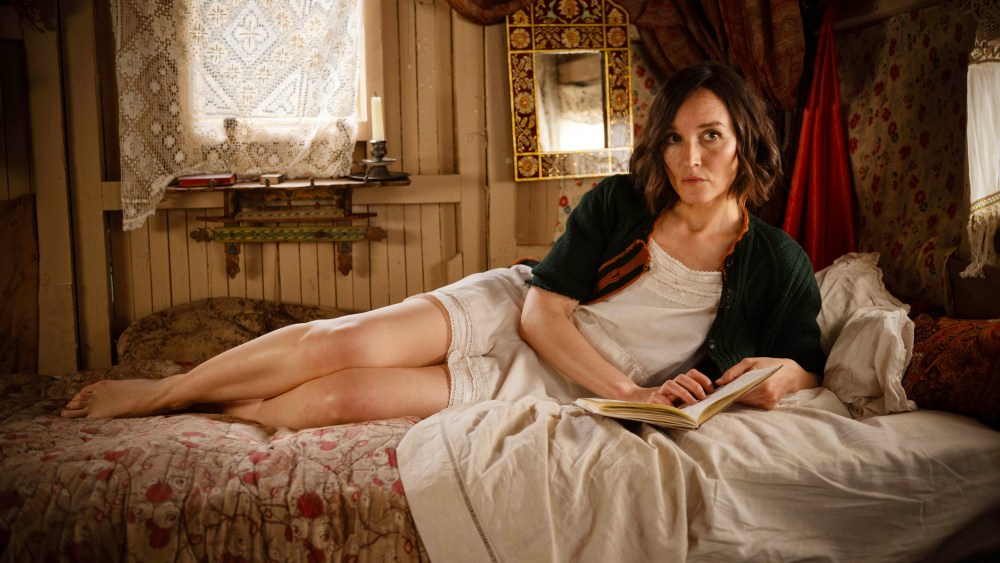
- Pierre Salvadori’s The Electric Kiss opened the 2026 Cannes Film Festival out of competition
- The 1920s-set romantic comedy stars Anaïs Demoustier, Gilles Lellouche, Pio Marmaï, and Vimala Pons
- Critics are divided — some find it a pleasant crowd-pleaser, others call it the worst Cannes opener in a decade
- The film has five credited writers, including Robin Campillo and Rebecca Zlotowski, whose original idea sparked the project
- Salvadori says the opening slot marks a first in his 30-year career and came with “an immense terror”
The 79th Cannes Film Festival got underway Tuesday night with The Electric Kiss (La Vénus Électrique), Pierre Salvadori’s lushly designed 1920s romantic comedy about a carnival performer, a grieving painter, and a con that slowly becomes something more complicated than anyone bargained for. Whether it was the right film to kick off eleven days of cinema’s biggest showcase is, to put it gently, a matter of considerable debate.
The reviews landing out of the Palais are all over the place — which, in its own way, tells you something about a film that can’t quite decide what it wants to be.
What the Film Is Actually About
Set in 1928 Paris, The Electric Kiss centers on Suzanne (Anaïs Demoustier), a down-on-her-luck carnival attraction known as “Venus Electrificata” — a flapper femme fatale who delivers mild electric shocks to paying customers willing to kiss her. She’s been in near-indentured servitude since her father sold her into the carnival business at 15, working for a measly stack of francs under the thumb of the surly Titus (Gustave Kervern).
Desperate for a way out, Suzanne stumbles into an opportunity when she’s mistaken for the carnival’s neighboring medium by Antoine Balestro (Pio Marmaï), a once-celebrated painter who has stopped working entirely since the death of his wife Irène. He wants to make contact with her. Suzanne wants money. Slipping on a pair of milky opaque contact lenses and calling him “my little sausage,” she improvises her way through a séance convincingly enough to get booked for a private session at his Paris villa.
When Antoine’s art dealer, the domineering Armand (Gilles Lellouche), figures out the ruse, he doesn’t shut it down — he cuts himself in. If Suzanne can keep Antoine believing his late wife is communicating through her, maybe the painter picks up a brush again. And a productive Antoine means valuable new work to sell. The scheme clicks into place, and for a while, the film clicks with it.
That’s before it introduces its second major narrative strand: Suzanne discovers Irène’s diaries, and the film plunges into extended flashbacks tracing Irène (Vimala Pons) and Antoine’s relationship years earlier — how a pragmatic artists’ model spotted an undiscovered talent, convinced Armand to represent him, and gradually transformed a dissolute young man into a great modernist painter. Two timelines, two love stories, four main characters, and one film that increasingly strains under the weight of all of them.
The Critical Divide
The warmest read comes from Deadline, which called it “a sweetly old fashioned kind of movie” and praised the cast across the board — particularly Demoustier, Marmaï, and Lellouche — while singling out cinematographer Julien Poupard, production designer Angelo Zamparutti, and composer Camille Bazbaz for giving the film its visual and sonic richness. The verdict: not quite electric cinema, but a functional Cannes opener that “does the job.”
IndieWire landed somewhere in the middle, awarding the film a C and acknowledging its genuine pleasures — particularly the chemistry between Demoustier and Lellouche in the film’s first half — before concluding that it “badly overstays its welcome.” The review noted that both stars carry an almost anachronistic quality that suits the period perfectly: Demoustier framed beneath a Louise Brooks bob, Lellouche fitted with a mustache that “somehow makes him seem even more French.” Watching them scheme together, the review noted, is “like witnessing a pair of Al Hirschfeld caricatures suddenly brought to life.” The problem is that the film keeps adding layers until that easy charm gets buried.
The Hollywood Reporter was less forgiving, calling the film “bland, middlebrow entertainment” that “doesn’t occupy either dimension” — playful fantasy or dramatic reality — “with enough imagination to create much intrigue.” The review also flagged an uncomfortable Amélie-adjacency in Demoustier’s pixie-ish energy that “does the new film no favors,” and concluded that the twin plotlines simply don’t hold together structurally. “While the romance, the deception, the surprise discoveries, the attempted suicides (genuine or fake) and the burlesque comedy should be gathering steam, it all becomes a tedious muddle.”
Variety was the harshest, calling The Electric Kiss possibly the worst festival opener in a decade — a rough designation given competition that includes Final Cut, Annette, and last year’s celebrity-chef musical Leave One Day. The review took particular issue with Pio Marmaï’s painter, describing him as “a quaintly uninteresting sap” and the film’s lush cinematography as looking like it was “shot through a filter of rosé.” The central conceit — that a man could fall in love with a woman through her “channeling” of his dead wife — was called “so strenuous and conceptual that it never takes wing.”
Five Writers and a Lubitsch Problem
Part of what makes the film so uneven may be its unusually crowded screenplay. The Electric Kiss carries story credits for five writers: Zlotowski (A Private Life), Campillo (BPM), Benjamin Charbit (The Beast), and longtime Salvadori collaborators Benoît Graffin and Salvadori himself. The original idea, it turns out, came from an unexpected place.
Salvadori told Deadline that Zlotowski gave him the film’s premise as backstory for a character he was playing in her 2019 film The Summoning — he was cast as a director shooting a film in 1938, and she handed him a loose story description to help him improvise on set. “She told me it was the story of a young woman, a fake psychic, who makes a young man believe she can put him in contact with his deceased wife, and in the process falls in love with him,” Salvadori recalled. He was immediately hooked. Zlotowski didn’t want payment for the idea — “Ideas belong to those who take them on,” she told him — but Salvadori gave her and Campillo credits anyway.
The Lubitsch comparison, which the Cannes website itself invited, is the one critics keep returning to — and not always kindly. Salvadori has spoken at length about how seeing Lubitsch’s Heaven Can Wait was the film that made him understand what directing actually was. “I understood that ultimately, it was the formalists who interested me,” he said, namechecking Howard Hawks, Mitchell Leisen, and Raoul Walsh alongside Lubitsch as foundational influences. “Directors who work with genre, but with a very strong point of view.”
The problem, as Variety put it, is that Lubitsch and Wilder “were magicians who knew how to lure in an audience” — and that quality of real magic underlying the fakery is precisely what The Electric Kiss can’t quite manufacture. The film is about illusion, but the illusion doesn’t hold.
Joy, Terror, and Thirty Years in the Making
Whatever critics make of the film itself, there’s something genuinely moving about what opening Cannes means to Salvadori personally. In his Deadline interview, the director — who has been making films since 1995 — described the experience as “a gift, something that has not happened to me across the 30 years of my career.” He admitted to feeling “a mixture of elation and terror” and joked that the fear would only lift once the screening ended at 10:30pm.
Notably, he said he didn’t want to be in competition. “This is a film for a party, a celebration… it’s a film that talks about my love for cinema.” He suggested earlier works — like In the Courtyard with Catherine Deneuve or The Trouble With You, which played Directors’ Fortnight in 2018 — would have been stronger Palme d’Or contenders. This one, he seemed to know, was built for the opening-night room.
He also revealed that the film’s art dealer character, Armand — the charming, slightly manipulative operator played by Lellouche — was directly inspired by his own producer and longtime collaborator Philippe Martin, with whom he’s worked for thirty years. “There has always been this dimension of friendship and work, and sometimes a lot of tension,” Salvadori said. “There’s this unbreakable friendship, almost a brotherhood, and then this other dimension of our relationship around making a film work together, which can be very chaotic and difficult.”
The decision to set the film in 1928, he explained, was deliberate: the era’s genuine craze for spiritualism — séances, psychics, the belief that the afterlife was reachable — makes Antoine’s credulity feel earned rather than foolish. Salvadori even pointed to Thomas Edison, who reportedly invented a machine intended to communicate with the dead, as evidence that the period’s fascination with the supernatural went all the way to the top.
The Electric Kiss is now in the Cannes official selection out of competition. Whether it finds its audience beyond the Croisette remains an open question — but for one night at least, it gave the festival its opening spark.
Filed in

Comments
0