
Julia Louis-Dreyfus’ ‘Tangles’ Hits Cannes With Heart
Julia Louis-Dreyfus, Abbi Jacobson, and Bryan Cranston lead the animated Alzheimer’s drama ‘Tangles’ at Cannes — and the subject hits close to home.
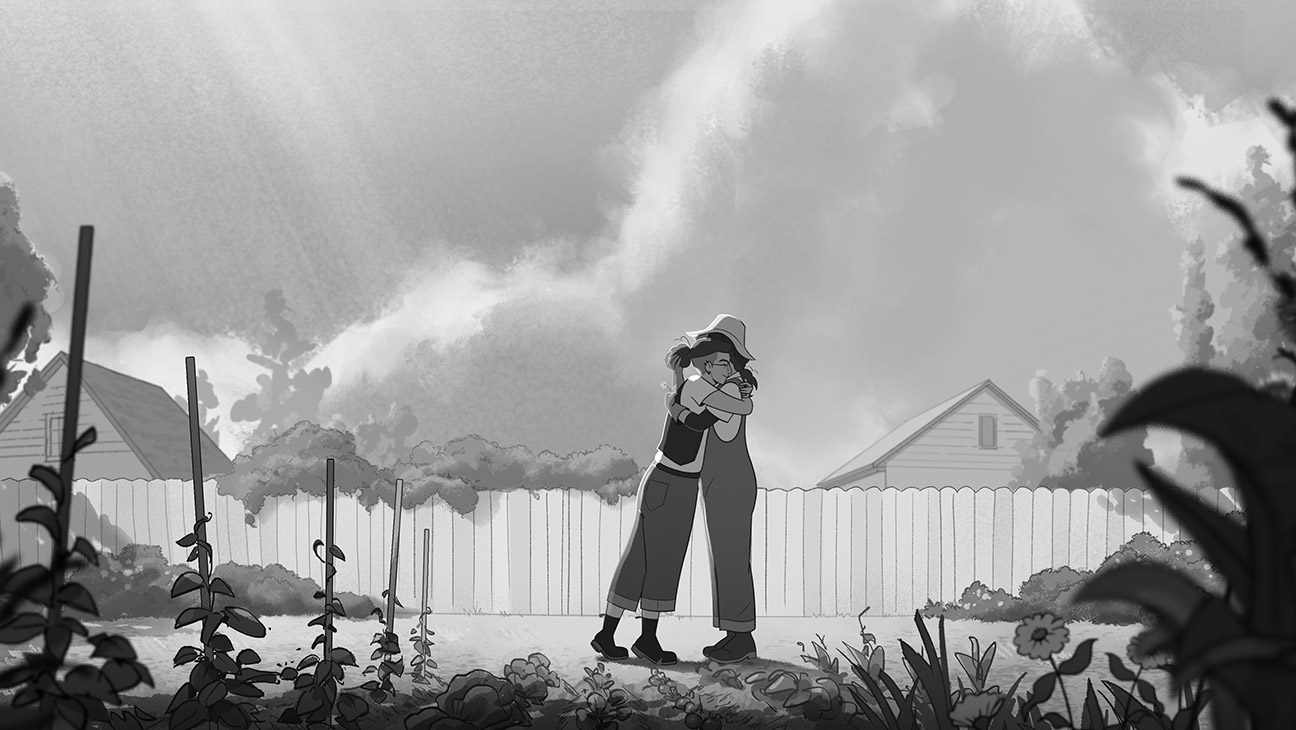
- Tangles, an animated film about a daughter caring for her Alzheimer’s-stricken mother, made its world premiere at Cannes 2026
- Julia Louis-Dreyfus voices the mother and co-produced alongside Seth Rogen and Lauren Miller Rogen
- Louis-Dreyfus revealed the subject is deeply personal — her grandmother died of Alzheimer’s and her mother-in-law is currently living with the disease
- The film is adapted from Sarah Leavitt’s 2010 graphic memoir and directed by Leah Nelson in her feature debut
- Critics find it warm and earnest but slightly surface-level compared to heavier dementia dramas like The Father or Amour
Julia Louis-Dreyfus didn’t take on Tangles just because it was a good script. She took it because she’s living the story.
The animated film — which made its world premiere at the Cannes Film Festival this week — follows a young woman named Sarah who leaves her blossoming life as a queer artist and activist in 1990s San Francisco to return to her conservative small-town family home after her mother is diagnosed with Alzheimer’s. Louis-Dreyfus voices the mother, Midge. And when producer Lauren Miller Rogen first sent her the project, the role landed somewhere deep.
“My grandmother died of it and my mother-in-law is currently suffering with it and I understand the disease well and the toll that the disease can take on a family,” Louis-Dreyfus said at a live taping of THR’s Awards Chatter podcast recorded at Meta House inside the Majestic Hotel in Cannes. “I’m living that as we speak.”
That personal weight comes through in her performance. As Midge, Louis-Dreyfus draws out the character’s spunk and warmth and sharp intellect — the full person — before the slow erasure begins. It’s the kind of voice work that makes you forget you’re watching animation, and it makes the deterioration genuinely hard to watch.
Abbi Jacobson is lively and empathetic as Sarah, anchoring the film’s emotional center with real presence. Bryan Cranston brings what might be his best dad energy since Malcolm in the Middle as Sarah’s father. And the supporting cast the production assembled is something else entirely: Seth Rogen, Sarah Silverman, Bowen Yang, Pamela Adlon, Beanie Feldstein, Wanda Sykes, and Samira Wiley all contribute their voices, giving the film a richness that extends well beyond its core family drama.
An Animated Take on a Very Human Loss
Adapted from Sarah Leavitt’s 2010 graphic memoir by director Leah Nelson, Leavitt herself, and Trev Renney, Tangles charts a specific and deeply felt experience — a daughter watching her mother disappear, while also trying to figure out who she herself is supposed to become. The film follows Sarah from the dawning suspicion that something is wrong (her family initially chalks Midge’s behavior up to menopause) through the diagnosis, and then through the long, grinding years that follow.
It’s territory that’s been covered in film before, and often with devastating force — Michael Haneke’s Amour, Florian Zeller’s The Father, Gaspar Noé’s Vortex. What Tangles offers is something different in register: lighter, more accessible, animated in a lovely black-and-white style that feels bespoke rather than corporate. Nelson and her team have done the genuine work of translating Leavitt’s static graphic panels into something that moves — both literally and emotionally. The result looks alternately cozy and forlorn, which is exactly the right visual language for a story about memory.
The film is a feature debut for Nelson, and she handles the tonal balancing act with care, though she tends to favor the lighter side. That’s not a flaw exactly — but viewers who have been shaped by the bleaker European takes on dementia may find themselves wanting a little more grit, a little more depth in the darker passages. Tangles hits the expected emotional notes — grief, devotion, gratitude — but sometimes it presents the idea of those feelings rather than the feelings themselves. The comedy is gentle and warm without ever quite landing a real laugh. There are moments where the story could use a sharper, more specific texture.
The comparison that hovers over the film, perhaps unfairly, is Alison Bechdel’s Fun Home — another queer, family-tragedy memoir that found achingly specific ways to render the complicated love between a daughter and a parent. Bechdel’s work, and the Tony-winning musical it became, had a plainspoken poetry to it. Tangles operates at a slightly more surface level, which doesn’t make it bad — just a little generic given how personal its source material is.
What Louis-Dreyfus Hopes You Take Away
For Louis-Dreyfus, the film is about something beyond its grief. “Ultimately, this movie is certainly about communication and being in community and the value of family,” she said in Cannes. “All of that is sorely needed right now, certainly in our country, and globally, you could argue. I’m hopeful that this film, when people see it, they might take away a new way of approaching those they love during difficult moments.”
That’s a generous and genuine hope — and honestly, it’s the most accurate description of what Tangles is and what it’s trying to do. This isn’t a film that wants to devastate you. It wants to sit beside you. For anyone who has watched a parent or grandparent slip away to Alzheimer’s, there’s real comfort in seeing that experience rendered with this much care and warmth, even if the film doesn’t always push itself as far as it could.
Tangles is produced by Monarch Media, Point Grey Pictures, Giant Ant Films, and LYLAS Pictures. No wide release date has been announced, but the Cannes premiere puts it firmly on the awards conversation radar — and given Louis-Dreyfus’s track record, that’s a conversation worth watching.
Filed in

Comments
0