
‘Jim Queen’ Review: Raunchy Gay Animated Comedy Debuts at Cannes
French animated comedy ‘Jim Queen’ premieres at Cannes 2026 with a wild premise: a virus turning gay men straight. Here’s what critics are saying.
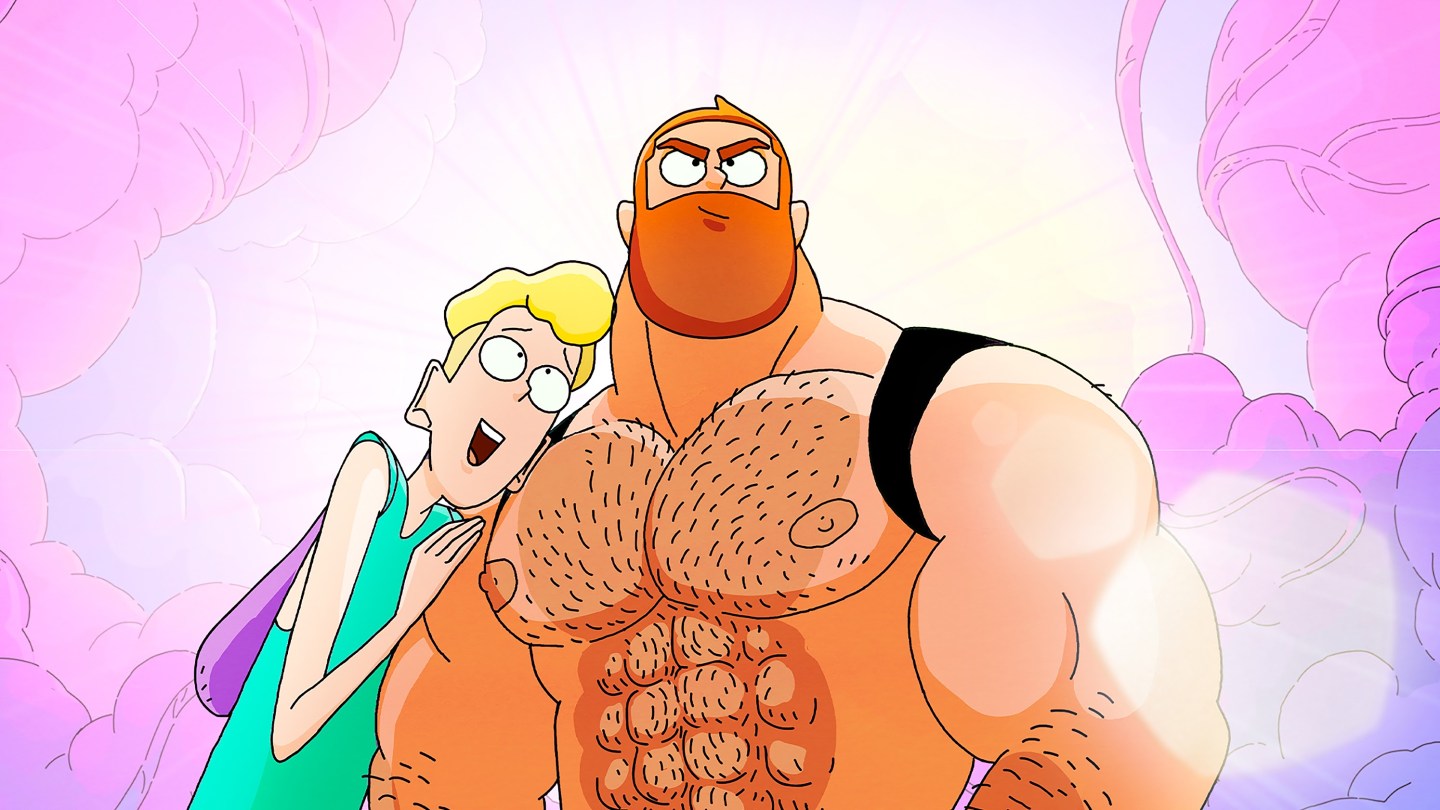
- Jim Queen is a French adult animated comedy premiering in Cannes’ Midnight Screenings program in 2026.
- The film follows a gay Parisian influencer who contracts “heterosis,” a virus that turns gay men straight.
- Directors Nicolas Athané and Marco Nguyen drew from their own lives in Paris’s queer scene to build the story.
- Critics find it raunchy and entertaining but largely agree it doesn’t push far enough beyond familiar gay stereotypes.
- The film is currently seeking U.S. distribution after seven years in development.
Jim Queen, the raunchy French adult animated comedy that world-premiered in Cannes’ Midnight Screenings program, arrives with one of the more audacious premises in recent animation: a mysterious STI called “heterosis” is sweeping through gay Paris, and its devastating side effect is turning men straight. Church weddings. A sudden grasp of soccer. A complete and utter ignorance of queer culture. Mon Dieu.
The film is the feature directorial debut of Nicolas Athané and Marco Nguyen, made with European animation studio Bobbypills — the same studio behind Creature Commandos — and co-written with Simon Balteaux and Brice Chevillard. It took seven years to get here. “Until recently, we were expecting to have this very tiny movie that a couple of people were going to see,” co-writer Balteaux told The Hollywood Reporter. “Cannes changed everything after seven years of people telling us that this will never work.”
The Story: Abs, Algorithms, and an Extinction-Level Event
At the center of it all is Jim Parfait — yes, “parfait” is French for “perfect,” and yes, the joke lands — voiced by Alex Ramirès. Jim is the reigning king of the “Gym Queens” social media ecosystem, a ripped, bitchy, impossibly hot influencer with 20 million followers and a permanent perch at the top of Paris’s gay social hierarchy. His 24-pack of abs, maintained via a daily intake of 2kg of protein, is basically his entire personality and his entire career. So when heterosis starts chipping those abs away, one by one, it registers as nothing short of catastrophe.
Opposite him is Lucien (Jérémy Gillet), a sheltered, virginal twink who is the son of the city’s Thatcher-esque prime minister Christine Bayer (Elisabeth Wiener). His mother has no idea that his bedroom contains a walk-in closet of sex toys arranged around a full shrine to Jim Parfait. In a musical number that deliberately echoes “Part of Your World” from The Little Mermaid, Lucien’s longing for the out-and-proud life is laid out in all its pent-up, satin-lined glory.
When heterosis forces Jim out of his social throne — he loses his followers, his abs, his entire identity — Lucien becomes the only person still willing to help him. The odd couple sets off through the Marais district, Paris’s beating heart of queer life, chasing a rumored cure called “chloroqueer” held by a nefarious Dr. Ragoult. Along the way they encounter Jim’s Insta-famous archenemy Pavel (voiced by gay porn icon François Sagat, a casting choice that will register loudly with those in the know), a sneaker-sniffing scally who points them toward their next destination, and a drag queen named Glamydia (Harald Marlot) who dispenses comic wisdom with appropriate flair. Even Lady Gaga had to cancel her concert. It’s that serious.
Where It Came From — and What It’s Really About
The film is, at its bones, a personal one. “The inspiration comes from our own lives,” director Nguyen told THR. “I am gay, and when I arrived in Paris, I was 17, and I discovered a whole new world. The gay culture was so rich and had so many communities, including the fetish scene, which were all great inspirations for the movie.”
Co-writer Balteaux has his own parallel origin story. “I came to Paris from the countryside when I was 20, and I can definitely recognize myself in Lucien,” he said. The characters across the film were drawn from the creators’ real lives — friends, exes, people they met at the kinds of parties depicted onscreen. Real Paris bars and venues are woven into the backdrop. The creative team also made a deliberate effort to get the representation right, sharing scripts widely with members of the communities they were depicting. “We were so relieved when we found that they loved it and really recognized themselves,” Athané said.
The film began development during what Balteaux describes as a more optimistic moment. “The French parliament had just accepted gay weddings. I was definitely feeling very comfortable with my sexuality. We had the feeling we were living a Golden Age,” he said. “But over the years of struggling to make the movie, everything changed. And now [parts of the film will] sound very political. But we never wanted to be too political or lecture people.”
The result is a film that wears its AIDS allegory on its sleeve — heterosis spreading through gyms and sex clubs the way a certain other disease moved through Paris in the 1980s — while trying to keep the overall tone fizzy and irreverent. It’s a needle that critics largely feel the film doesn’t quite thread.
What Critics Are Saying
The reviews out of Cannes are consistent in their warmth toward the ambition and their reservations about the execution. IndieWire gave it a C+, calling it “always entertaining if uninspired” and noting that while the film’s satire of gay tribes, steroid culture, and social media hierarchies will resonate with its target audience, it “isn’t very insightful or illuminating.” The AIDS allegory framing, the review notes, makes the film feel like it’s reaching for something heavier than its comedy can fully support.
The Hollywood Reporter was similarly affectionate but pointed, calling Jim Queen “a crass, profane, giddily stupid romp” that arrives at Cannes as a welcome relief from the festival’s weightier fare — but ultimately wishing it were “funnier and fresher.” The critique that stings most: “If you’ve watched any edition of Drag Race, from anywhere in the world, in the last 17 years, you already know these jokes by heart.”
Both reviews flag the film’s conservative undercurrent around drug use as an odd tension against its otherwise liberatory message. And both note that Jim Queen is, at its core, a coming-out story — one where the arc from shallow to self-aware is predictable enough that the emotional payoff doesn’t quite land. “Jim Queen along the way becomes a kind of I Spy for gay tropes that those in the audience will laugh at and recognize,” IndieWire wrote, “but won’t be left to feel much about after gay humanity has been saved.”
Where critics do agree: the animation, produced on a fraction of what a Pixar film would cost, punches above its weight. The 2D style from Bobbypills — bright, colorful, flat, retro — draws comparisons to Steven Universe and Rick and Morty. The action sequences in the film’s third act, in particular, take on a genuine mock-blockbuster energy that suggests Athané and Nguyen have real cinematic instincts when the material gives them room to stretch.
The voice cast is rounded out by singer Philippe Katerine and drag performer La Briochée, alongside Shirley Souagnon as Nina, Jim’s best friend whose running commentary on his increasingly questionable decision-making provides some of the film’s sharpest laughs.
Jim Queen is currently seeking U.S. distribution. As for what comes next, Nguyen isn’t ruling anything out. “If the film is a success and people want more,” he said, “I would be more than ready to go for a number two.”
Filed in

Comments
0