
Nicolas Winding Refn’s ‘Her Private Hell’ Stuns Cannes
Nicolas Winding Refn returns to cinema after a near-death experience with ‘Her Private Hell,’ starring Sophie Thatcher — and Cannes gave it a 12-minute ovation.
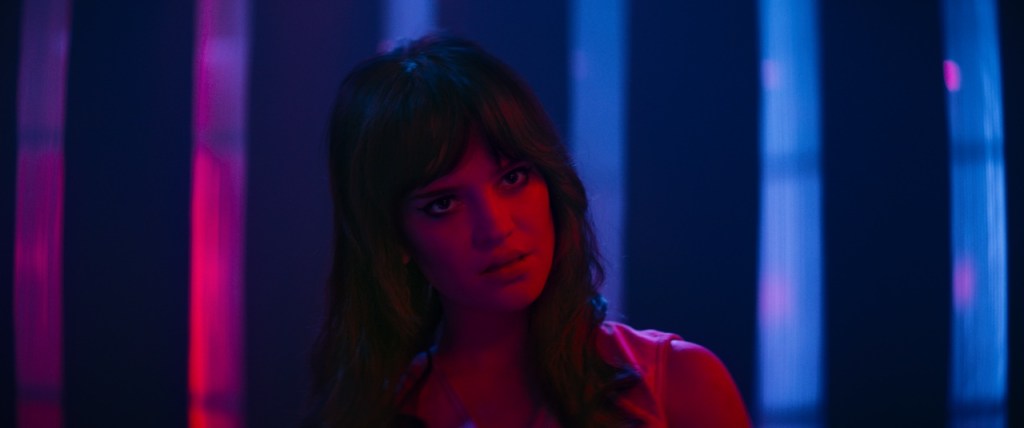
- Nicolas Winding Refn’s Her Private Hell premiered out of competition at Cannes 2026 to a 12-minute standing ovation
- The film is Refn’s first feature in 10 years, made after he clinically died for 20 minutes from a heart condition
- Sophie Thatcher delivers what critics are calling her most daring performance yet; Charles Melton co-stars
- Backed by Neon, the film opens in theaters on July 24, 2026
- Early reviews call it a neon-soaked, divisive fever dream — Refn’s most uncompromising work to date
Nicolas Winding Refn is back — and he came back from the dead to do it. Her Private Hell, the Danish auteur’s first feature film in a decade, premiered Monday night at the Cannes Film Festival to a standing ovation that, depending on which room you were in, lasted either seven or twelve minutes. Either way, the crowd wasn’t letting him go.
The late-night screening at the Grand Théâtre Lumière was preceded by a downpour — Refn and his stars, including Yellowjackets‘ Sophie Thatcher and Riverdale‘s Charles Melton, braved the rain to make their way into the Palais. When the credits rolled, Thatcher burst into tears while Refn paced back and forth, working the crowd into a frenzy. It was the kind of Cannes moment that reminds you why Cannes still matters.
Then Refn told the audience why he made this movie at all. Three years ago, he died. He was gone for roughly 20 minutes before being resuscitated. “That changes you, when I was brought back by electricity,” he told the crowd. “Now that I’m alive again, I only have 25 years left of my life to live. But I’m going to make damn use of that to live life to the fullest.” He added: “To make this film again and to be back here at Cannes, where I came from, is a huge step for mankind. And I am here to lead the torch but it’s not just me.”
In a separate interview, Refn elaborated on the experience that reshaped everything. “I had a leaking heart, which means the blood was running backwards,” he said. “It was very poetic, in a sense.” When he came back, he had to relearn how to move his own body — arms, legs, all of it. But somewhere in that process, the desire to make movies came roaring back. “I had a very specific mantra,” he said. “I will make things that come to me instinctively.”
What ‘Her Private Hell’ Is Actually About (Sort Of)
Set in a surreal, mist-swallowed futuristic metropolis — somewhere between Los Angeles and a fever dream — Her Private Hell centers on Elle (Thatcher), a troubled young movie star navigating grief, desire, and what may or may not be a supernatural threat. She’s preparing to shoot a Barbarella-style sci-fi film with an influencer-type named Hunter (Kristine Froseth), who is obsessed with both fame and Elle herself. The complication arrives in the form of Dominique (Havana Rose Liu), Elle’s former lover — who has since married Elle’s father.
Meanwhile, a serial killer called The Leather Man stalks the city’s towers, murdering young women. And then there’s Private K (Melton), an American GI whose own daughter has gone missing, hunting the killer in a quest that echoes the myth of Orpheus descending into the underworld. How these threads connect — or whether they’re meant to connect at all — is very much left to the viewer.
Refn drew the Orpheus and Eurydice parallel deliberately. The film co-written with Esti Giordani riffs on the idea of a figure who travels into hell to retrieve someone lost, only to be undone by doubt at the crucial moment. But Refn being Refn, you won’t find any togas or laurel wreaths. You’ll find neon, blood, and Pino Donaggio’s extraordinary score threading it all together.
That score deserves its own conversation. Donaggio, the composer best known for his work with Brian De Palma, delivers something that critics are already describing as a revelation — achingly emotional, guiding the film the way music guided the early silents, or the Powell and Pressburger era. It gives Refn’s visual overload a heartbeat it might not otherwise have.
Sophie Thatcher Is the Whole Movie
Refn has always been a director who finds the right face and builds a world around it. He did it with Ryan Gosling in Drive, with Elle Fanning in The Neon Demon. With Her Private Hell, that face belongs to Sophie Thatcher — and by all accounts, she’s never been better.
Refn says he’d been searching for his lead for seven or eight months when Thatcher finally came in for a meeting. “Sophie has that thing when the camera turns on — she becomes the center of everything,” he said. “She looks like a classic movie star from the 1930s and ’40s when there was a spunkiness to the female-driven characters. At the same time, there’s a gentleness and punk attitude.” He also noted, with characteristic Refn logic, that the character’s name — Elle — is a nod to Elle Fanning, “an important person in my life.”
Thatcher, who broke out on Yellowjackets and has been quietly building one of the most interesting careers in her generation (see also: the underrated sci-fi gem Prospect, and her recent turn in Companion), goes to genuinely unhinged places here. She moves from wounded and isolated to vindictive and almost feral in the blink of an eye, and then pulls you back in close for a finale that’s both macabre and unexpectedly moving. One critic described her end-of-film spiral as channeling Jack Nicholson in The Shining — cackles and all — before landing on a final expression that is, somehow, both a smile and a threat.
Charles Melton, who reinvented himself at this very festival in 2023 when Todd Haynes’ May December premiered, continues that career recalibration here. His Private K is described as a scene-stealer — a haunted, shirtless American soldier who exists slightly outside the main story’s reality, possibly summoned into being by Elle’s grief as a surrogate for the father she’ll never have. Refn cast him after his youngest daughter introduced him to Riverdale. “I saw him in one of the latter seasons, which was set in the ’50s with his leather jacket and hair,” Refn said, “and I was like, that’s the G.I.”
Divisive? Obviously. But That’s the Point.
This is a Nicolas Winding Refn film. Expecting consensus is like expecting Drive to have a happy ending. His Cannes history alone tells the story: Drive in 2011 won him the Best Director prize and a near-15-minute standing ovation. Only God Forgives in 2013 split the room. The Neon Demon in 2016 generated boos, walkouts, and people literally yelling at the screen. Her Private Hell is playing out of competition — so no Palme d’Or is in the cards — but the ovation it received suggests this one lands somewhere closer to the Drive end of the spectrum, at least in the room.
The reviews are warm but honest about what this film is and isn’t. It’s not Drive. It’s not even trying to be. It’s looser, stranger, more openly indebted to Ingmar Bergman’s Persona, to the experimental films of Kenneth Anger, to the kind of art-cinema provocation that critics used to applaud when Luis Buñuel cast two actresses as the same character and now struggle to process when it arrives without a pedigree they recognize. One critic noted pointedly that Her Private Hell was excluded from Cannes’ official competition in favor of films that “look very much like 20th-century television” — a dig that feels very much in the Refn spirit.
For those who’ve appreciated the way Refn has steadily stripped away plot to get closer to pure visual experience — through his TV series Too Old to Die Young and Copenhagen Cowboy — this is his most committed version of that instinct yet. The film blurs flashbacks with flash-forwards, real events with half-remembered dreams, a film-within-the-film with the film itself. At one point there’s an extended riff on Star Trek. It nearly loses itself several times. And then a stunning image pulls you back.
“So, the film became many things for me,” Refn said. “You can say there’s everything from horror, to sci-fi, to melodrama, to musical, to camp, to kitsch, to action, to color, and yet, you can’t put your finger on it. That’s a wonderful experience.”
Is it pretentious? Absolutely. But the kind of pretension that feels earned — or at least honestly pursued — by a filmmaker who literally came back from the dead and decided to stop making movies for anyone but himself.
Neon, which has backed Palme d’Or winners every year since Parasite in 2019, is distributing Her Private Hell in 800 to 1,200 theaters starting July 24. It arrives right between Christopher Nolan’s The Odyssey on July 17 and Marvel’s Spider-Man: Brand New Day on July 31 — which is either very brave scheduling or a very Refn kind of joke.
When asked at Cannes whether fans would have to wait another decade for his next film, Refn didn’t hesitate. “No, we’re not. I want to make another movie very soon.”
Twenty minutes dead, and he’s got more to say than ever.
Filed in

Comments
0