
Cannes 2026: ‘Strawberries’ Review
Laila Marrakchi’s Cannes drama follows Moroccan women exploited on a Spanish strawberry farm — and it’s powered by a fearless lead performance.
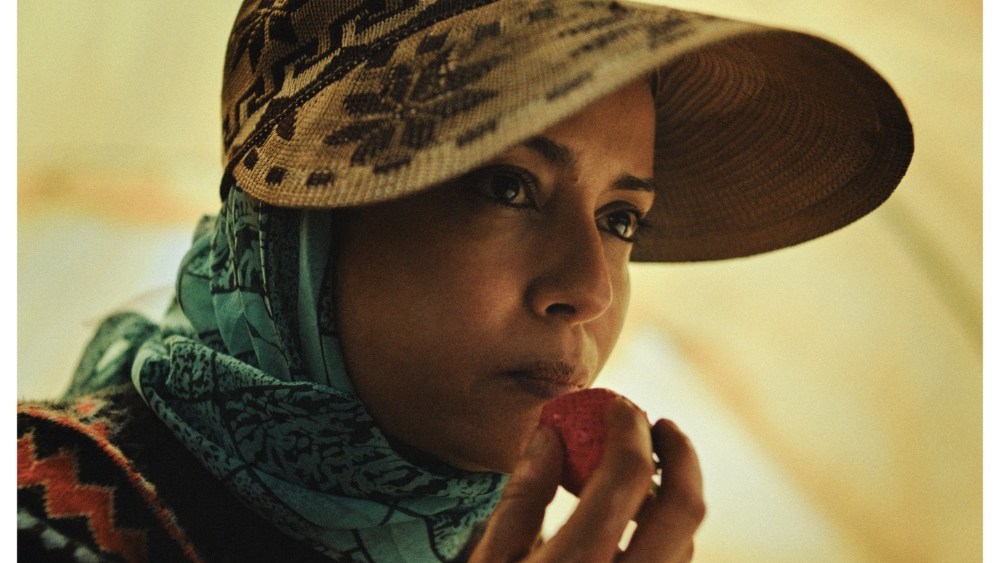
- Strawberries premiered in Un Certain Regard at the 2026 Cannes Film Festival and is currently seeking U.S. distribution.
- The film follows Moroccan women working on a Spanish strawberry farm who face wage theft, sexual assault, and modern-day exploitation.
- Director Laila Marrakchi was inspired by a New York Times article written by a journalist friend, then traveled to Andalusia to meet the real women.
- Lead actress Nisrin Erradi carries the film with a performance critics are calling compellingly fierce and emotionally layered.
- The greenhouses were shot in Morocco after Spanish farms grew wary of cameras following news coverage of labor abuses in Andalusia.
\n\n
There’s a moment early in Strawberries that tells you everything you need to know about the world Laila Marrakchi has built. Hasna, freshly arrived from Morocco to pick fruit at a Spanish farm, faces her first task in a greenhouse row: what do you do with the unripe strawberries? Skip them and you look incompetent. Pick them and you’re wasting product. You have seconds to decide, and either answer might cost you the job — and the job is the only thing standing between your family back home and nothing. She guesses wrong. The supervisor moves on. And just like that, the rules of this world are established: there are no good choices here, only less catastrophic ones.
\n\n
That scene is something of a skeleton key for the whole film. Strawberries, which premiered in the Un Certain Regard section at Cannes this week, is not a simple story of oppressed workers and villainous bosses, even if those elements are very much present. It’s a film about the weight of impossible decisions — and about what happens to a person’s sense of self when every option available to them has already been designed to fail.
\n\n
A Story Rooted in Real Lives
\n\n
Marrakchi, the Paris-based Casablanca-born director behind Marock and Rock the Casbah — and television work that includes Damien Chazelle’s Netflix series The Eddy and French spy thriller The Bureau — came to this story through a journalist friend who was reporting on Moroccan seasonal workers in Andalusia for The New York Times. Marrakchi went with her to Huelva, spent three days meeting the women, and came home changed.
\n\n
“I really discovered another world,” she said. “I was really moved by this woman. That’s why I decided to do this film.”
\n\n
The result, co-written with Delphine Agut, is a fictional drama inspired by real cases — a choice Marrakchi made deliberately. “In the end, with my screenwriter, we decided that it was best to take some distance from all that we had seen and read and work on it also with our imagination,” she explained. Real strawberry pickers appear as extras, but the central roles went to professional actresses. The greenhouses themselves were shot in Morocco after Spanish farms, skittish from recent press coverage of labor abuses, refused to cooperate. “People get scared when they see a camera,” Marrakchi noted.
\n\n
The film’s original Spanish title, La más dulce — “The Sweetest” — captures the central irony with quiet precision. “I like the idea of playing with these two things,” Marrakchi said. “The thing that is very sweet is also hard at the same time. The dream of having a better life comes with the difficulty of the hard work.”
\n\n
What Happens on the Farm
\n\n
The opening sequence is a masterclass in economical filmmaking. Close-ups of women’s hands being inspected, shot from above, communicate everything: these workers are interchangeable labor, assessed like produce. They’re promised up to €35 a day — wages that amount to very little in Spain but represent meaningful money for families in Morocco. Tense, driven Hasna (Nisrin Erradi, Everybody Loves Touda) arrives on the crossing with quiet, hijab-wearing Meriem (Hajar Graigaa), and they’re assigned cramped prefab container quarters alongside giggly Zineb (Hind Braik) and older Khadija (Fatima Attif). Pinned above Hasna’s bunk: a newspaper clipping about her winning a taekwondo gold medal, and a photo of a boy. The backstory will come later — and it’s worth the wait.
\n\n
The farm, “Fresa del Carmen,” runs on a logic designed entirely to benefit the owners. Paychecks arrive on no discernible schedule. Hours are calculated after the fact, with supervisors guessing how many breaks workers probably took and deducting accordingly. Pay is docked for bathroom breaks. The union rep Antonio (Nando Pérez) speaks no Arabic and appears to function as a management tool. Street vendors outside the camp sell blankets and prepaid phones at exploitative markups, knowing full well that the women have nowhere else to go. Nobody is rounding down.
\n\n
The film’s most difficult narrative turn comes early: when owner Iván (Paco Mora) enters the shower room with clear intent toward Meriem, Hasna chooses to leave rather than intervene. It’s a genuinely hard scene to sit with — Marrakchi doesn’t soften it or let Hasna off the hook. We understand the calculus. Using her taekwondo skills on Iván could mean losing everything. But understanding a choice and forgiving it are different things, and the script doesn’t always give us enough of Hasna’s interior life to fully bridge that gap. The revelation of her backstory comes too late to fully recalibrate our feelings about what she did.
\n\n
What follows is a cascade of Catch-22s. Meriem ends up working as a cleaner inside Iván’s house, with additional expectations attached. When she becomes pregnant and nearly dies from a miscarriage before being taken to a doctor, the farm owners respond by filing a kidnapping complaint against the aid workers who helped her. Police side with the owners and characterize the women as engaging in prostitution voluntarily. The legal system, as depicted here, isn’t indifferent to these women so much as it’s actively structured against them.
\n\n
The Performance at the Center
\n\n
What keeps Strawberries from collapsing under the weight of its subject matter is Erradi. She is, simply put, extraordinary — and the film knows it, keeping the camera close and trusting her to carry scenes that the script occasionally under-serves. Her Hasna moves through confusion, shame, anger, and something approaching defiance, and every transition feels earned even when the writing doesn’t fully explain it. “She’s powerful,” Marrakchi said of casting her. “She was the character that I wrote.”
\n\n
The supporting ensemble is strong throughout. Graigaa brings a quiet, devastating dignity to Meriem — a character who absorbs trauma largely in silence, which makes her suffering no less visible. The moments of warmth between the women, the laughter and teasing in their cramped quarters, are crucial to the film’s humanity. Marrakchi was insistent about including them. “It’s really important to humanize these women,” she said. “We live in the Western world and sometimes don’t realize that these people can love, can be funny and can be women just like everybody else.”
\n\n
The one significant weak link is Pilar (Itsaso Arana), the young human rights lawyer Hasna eventually approaches through sympathetic local organizer Ali (Mohamed Larbi Ajbar). Pilar’s naïveté about conservative Moroccan society tips from realistic into caricature — a one-dimensional do-gooder in a film that works hard everywhere else to resist easy characterizations.
\n\n
The Look of Exploitation
\n\n
Cinematographer Tristan Galand, whose recent work includes Souleymane’s Story, shoots the farm with a restless, slightly nervous camera that trails along the endless rows of plastic-covered greenhouses and settles alongside the women without ever quite letting them feel at rest. The visual grammar shifts noticeably inside Iván’s house — neutral lighting, fixed frames — and the contrast is exactly right: two worlds separated by a few kilometers and an unbridgeable power gap.
\n\n
Marrakchi also makes pointed use of the strawberries themselves. At first they’re gorgeous, evidence of what the land can produce. As the film progresses, the fruit rots and draws flies. The metaphor isn’t subtle, but it doesn’t need to be.
\n\n
“Speaking out is a privilege,” Marrakchi said, describing the real women whose stories feed the film. “For these Moroccan women, it’s difficult to speak up and speak out, because they can lose everything in Spain and in their home country.”
\n\n
Strawberries has its flaws — the pacing is fragmentary, the lawyer character is a genuine problem, and the script’s reluctance to fully excavate Hasna’s psychology leaves the film’s most ambitious emotional gambit only partially landed. But it’s also a work of real moral seriousness and considerable craft, anchored by a lead performance that commands your attention from the first frame to the last. Marrakchi set out to make an homage to women who are rarely seen. She’s done that, and then some.
\n\n
Strawberries is currently seeking U.S. distribution.
“,
“category”: “Movies
Filed in

Comments
0