
Prince Harry Calls Attenborough a ‘Secular Saint’ at 100
Prince Harry led the tributes to Sir David Attenborough’s 100th birthday with a glowing Time magazine essay — and the celebrations didn’t stop there.
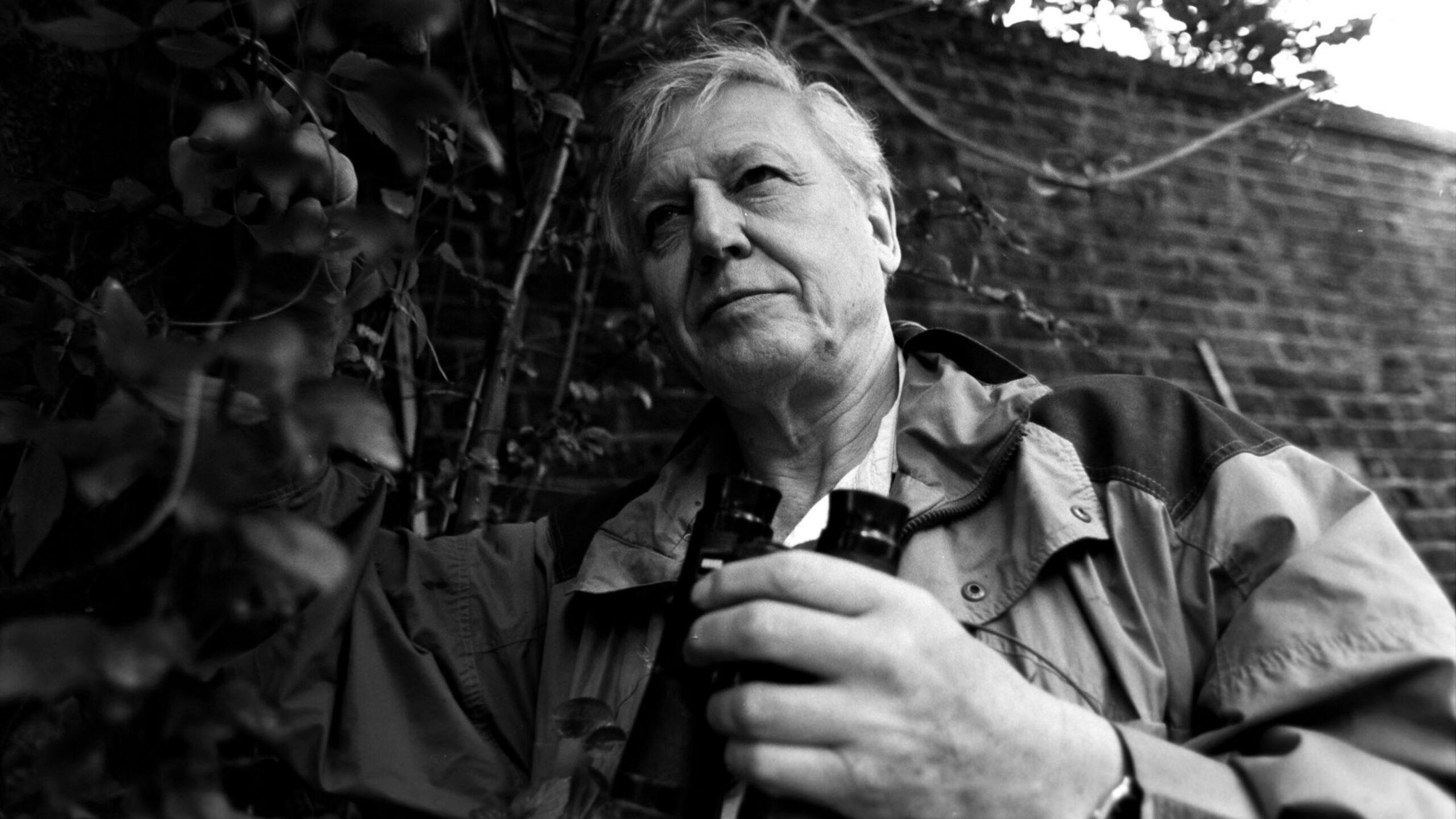
- Sir David Attenborough turns 100 on May 8, 2026, sparking a wave of global celebrations
- Prince Harry wrote a heartfelt tribute in Time magazine, calling Attenborough a “secular saint” and “the Voice of Nature”
- A star-studded concert at the Royal Albert Hall airs on BBC One, with a full week of special programming
- Scientists named a newly discovered parasitic wasp Attenboroughnculus tau in his honor — the latest of over 50 species to carry his name
- Attenborough himself said he’d hoped to celebrate “quietly” but has been “completely overwhelmed” by the outpouring of love
Sir David Attenborough turns 100 years old on May 8, 2026, and the world — from royals to rock stars to researchers — has made absolutely sure he knows it.
Prince Harry was among the first to mark the milestone, publishing a deeply personal tribute in Time magazine that stopped well short of the usual celebrity birthday platitudes. The Duke of Sussex called Attenborough “more than a broadcaster” — he called him “a secular saint.”
“He is an institutional pillar as essential to the national fabric as a cup of tea,” Harry wrote. “His almost-whispers have been the soft soundtrack of the home — a shared experience that turned the weekend nature documentary into a national ritual.”
Harry, who has long championed environmental causes and first met Attenborough during his time as a working royal, referred to the naturalist throughout the piece as “the Voice of Nature” — a title he clearly feels has been thoroughly earned. The last time Harry, King Charles, and Prince William appeared together as a trio at an official engagement was in April 2019, at the Natural History Museum premiere of Attenborough’s Netflix documentary Our Planet.
In the essay, Harry zeroed in on what he sees as Attenborough’s most lasting achievement: making the climate crisis feel personal rather than distant. “His most significant contribution has been the systematic dismantling of the notion that climate issues are happening ‘somewhere else,’” he wrote. “Attenborough has made that distance impossible to maintain, and his work has helped us to connect the dots, showing that distant glaciers, forests, and rivers are far more than beautiful landscapes — they are part of the delicate systems upon which our own communities depend.”
He also praised Attenborough’s rare ability to reach younger audiences without condescending to them. “He doesn’t preach or lecture but shares a perspective that spans a century. To a generation overwhelmed by noise and uncertainty, Attenborough represents credible authenticity.”
Harry closed with a challenge as much as a tribute: “The question now is whether those with the power to act will choose to lead before more of our world — our life support system — is lost.”
A Century of Wonder, and a Week to Match
The birthday itself has been surrounded by an extraordinary week of programming on the BBC — a mix of repeats, new projects, and an extensive archive made available on iPlayer. The centerpiece is David Attenborough’s 100 Years on Planet Earth, a live celebration from the Royal Albert Hall airing at 8:30pm on BBC One on May 8, hosted by Kirsty Young and featuring Sir Michael Palin, Steve Backshall, Liz Bonnin, and Chris Packham, with music drawn from Attenborough’s most beloved programmes.
“It’s impossible to overstate what Sir David Attenborough has given us,” said Jack Bootle, the BBC’s head of commissioning for specialist factual. “His programmes have not only defined Science and Natural History broadcasting, but they have also changed how we see our planet and our place within it.”
In London, the Natural History Museum’s immersive experience Our Story with David Attenborough has been adapted into a free five-minute show at Outernet London on Tottenham Court Road from May 8 — a version of the exhibition in which Attenborough guides viewers through the history of people and Earth, ending with a vision of London’s future.
Meanwhile, on PBS in the United States, the documentary Life on Earth: Attenborough’s Greatest Adventure premiered on May 6, revisiting the landmark series that transformed wildlife filmmaking. The doc includes footage of one of Attenborough’s most iconic moments — his encounter with mountain gorillas in Rwanda, during which two young gorillas climbed on top of him while he sat perfectly still. “Next thing we know, two youngsters come out and actually sit on him,” recalled producer John Sparks. “My jaw dropped — you didn’t expect this at all.”
Attenborough himself addressed the fuss in a pre-recorded audio message shared the night before his birthday. “I had rather thought that I would celebrate my 100th birthday quietly,” he said, “but it seems that many of you have had other ideas. I’ve been completely overwhelmed by birthday greetings, from pre-school groups to care home residents, and countless individuals and families of all ages.”
Animal charity PETA also got in on the act, naming a rescued bull “Sir Attenbullock” in his honor — one of the first animals saved through PETA India’s Delhi mechanisation project.
The Wasp That Made History
But perhaps the most unexpected birthday gift came from the scientific community. Researchers at London’s Natural History Museum announced the discovery of a brand-new genus and species of parasitic wasp — named Attenboroughnculus tau — in his honor.
The tiny insect, measuring just 3.5 millimeters, was originally collected in 1983 in Chile’s Valdivia Province and had been sitting, unrecognized, in the museum’s collections for over 40 years. It was volunteer Augustijn De Ketelaere, a graduate student at Ghent University, who finally spotted its unusual characteristics during a detailed examination of the ichneumonid collections. Researchers confirmed it had a unique combination of traits — a strongly curved abdominal segment, toothlike structures on its egg-laying ovipositor, and distinctive wing and leg morphology — that made it impossible to fit into any existing genus. The species name “tau” refers to a striking T-shaped marking on the insect’s abdomen.
The study, published in the Journal of Natural History, was led by Dr. Gavin Broad, the museum’s principal curator of insects — a man who credits Attenborough’s Life on Earth series with inspiring his entire career. “When I was far too young, I learned about taxonomy from David Attenborough’s Life on Earth series and resolved to be a taxonomist,” Broad said. “Amazingly, I ended up a taxonomist, so I have Sir David to thank for that.”
Fittingly, Attenborough has actually featured parasitoid wasps in his own documentaries — memorably in The Trials of Life, where he described them as “body snatcher wasps.” According to National Geographic, more than 50 species now carry Attenborough’s name, ranging from a carnivorous pitcher plant to a fungus that turns spiders into zombies to a ghost shrimp known from just one specimen. But Attenboroughnculus tau joins the more exclusive club of genera — entire new branches of the tree of life — that bear his name.
“We hope to inspire global scientists to take another look in their collections to see if there is something small that could contribute to our collective understanding,” said co-author Jennifer Pullar, the museum’s science communications manager.
A Voice That Changed Everything
At 100, the scope of what Attenborough has accomplished is almost impossible to absorb in one sitting. He helped shape British television before he ever became the face of wildlife documentaries — serving as controller of BBC Two in the 1960s, where he championed ambitious programming including Monty Python’s Flying Circus and Civilisation. He also, somewhat improbably, is the reason Wimbledon switched from white tennis balls to yellow ones (he pushed for the change after the first color broadcasts in Europe to improve visibility on screen).
His career as a broadcaster spans more than 70 years, from his first BBC program in 1952 — about the rediscovery of the coelacanth, a fish scientists thought had been extinct since the dinosaurs — to his 2025 feature-length documentary Ocean with David Attenborough, timed around the United Nations Ocean Conference. He still receives up to 70 letters a day from fans and tries to answer them.
Climate scientist and energy advocate Saul Griffith once put it plainly: “There wasn’t any religion in the house other than Attenborough documentaries. When I started to see signs of damage, I realized: holy shit, we’ve got a lot to lose.”
Billie Eilish, promoting her new concert film with director James Cameron, summed it up more simply. She called Attenborough “the GOAT” — and honestly, it’s hard to argue.
https://youtube.com/watch?v=IZDRwxgPsg8%3Fversion%3D3%26rel%3D0%26showsearch%3D0%26showinfo%3D1%26iv_load_policy%3D1%26fs%3D1%26hl%3Den-US%26autohide%3D2%26wmode%3Dtransparent
“At 100, Sir David Attenborough has spent a lifetime delivering us the facts with patience, honesty, and wonder,” Harry wrote. “He has shown us the world in all its brilliance and fragility, and in doing so has left humanity with both a gift and a responsibility.”
Filed in

Comments
0