
Singer Eli’s Taylor Swift Feud, Explained
Trans pop singer Eli went from a joke TikTok to a full Instagram manifesto calling out Taylor Swift over Olivia Rodrigo’s publishing rights.
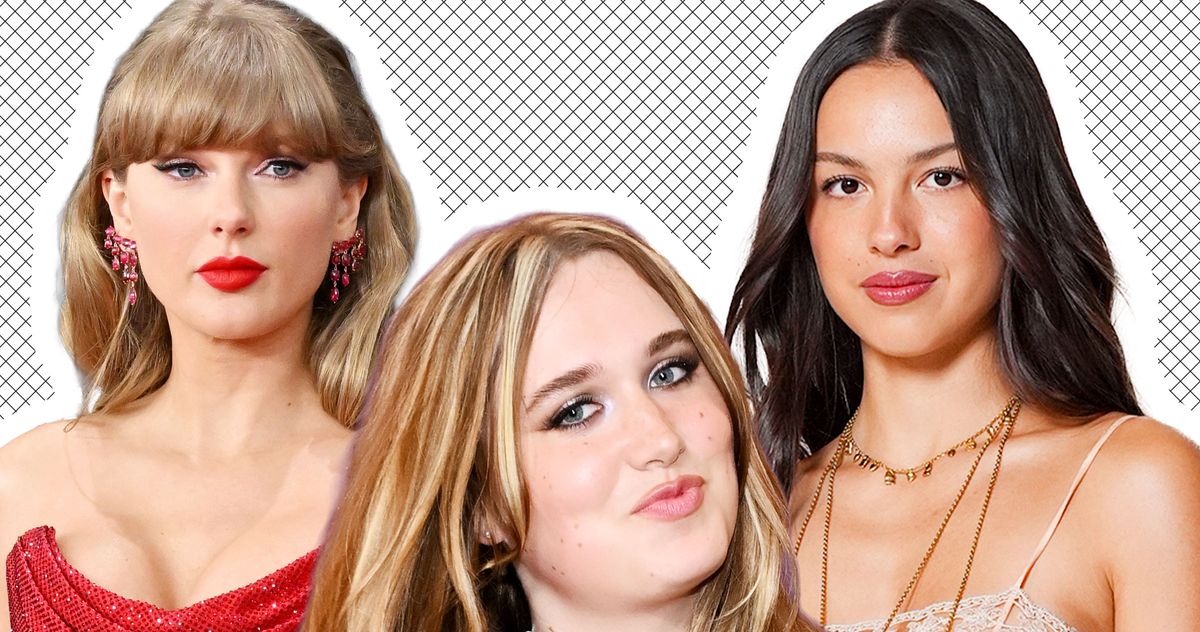
- Trans pop singer Eli started a mock “beef” with Taylor Swift on TikTok while promoting her album Stage Girl, joking that Swift “will never be trans.”
- When Swifties flooded her DMs with insults, Eli escalated — calling out Swift over Olivia Rodrigo’s publishing credits on “Deja Vu.”
- Eli published an open letter asking Swift to use her influence to fight exploitative royalty structures across the music industry.
- Swift has not responded; she’s currently in Europe watching Sadie Sink on the West End and attending a wedding in Greece.
- Eli has 263K Instagram followers — but her letter is making a lot of noise well beyond that audience.
It started as a bit. It became something else entirely.
Trans pop singer Eli — full name Eli Miller — has spent the last several days in an increasingly intense back-and-forth with Taylor Swift’s fanbase, and what began as a cheeky TikTok promo stunt has since turned into a genuine conversation about artists’ rights, publishing credits, and whether the most powerful woman in music has a responsibility to use that power for the greater good.
Here’s how we got here.
The TikTok That Started It All
Back in October, Eli was in full album-promo mode ahead of her debut record Stage Girl. Like every artist trying to break through right now, she was living on TikTok — and she leaned into it with a concept that was equal parts self-aware and chaotic: unnecessary beef season.
In one video, she looked directly into the camera and declared, “Taylor Swift, you will never be trans,” before launching into her track “Girl of Your Dreams.” She also told Zara Larsson to produce their collab already and informed Sabrina Carpenter that she, in fact, is trans. It was absurdist, funny, and very much the kind of content that gets a rising artist some attention without burning any real bridges.
@journalofadoll @Zara Larsson send me files now or good luck sleeping without ur black out curtains 🌅 #popmusic #eli #originalmusic #singersongwriter #livemusic
That first wave passed without incident. No one responded. The video went a little viral. Life went on.
When the Swifties Showed Up
Then, last week, Eli posted a new TikTok — herself at a photo shoot, decked out in a kitschy showgirl costume with a plastic karaoke mic — and repeated the line. This time, it landed differently. The clip found its way to Swifties, and they were not amused.
The video has since been deleted, but the response it triggered was very much still online. Eli took to her Instagram Stories and didn’t hold back.
“Swifties are so similar to maga,” she wrote on one slide. On the next: “They are mad at me rn because Taylor Swift will never be a trans woman.” She said she had “100+ swifties” flooding her DMs, “calling me fat and a man because I said she will never be trans.”
And then she pivoted.
“I am not afraid of the predatory establishment upheld by that calculated fame fucking billionaire,” Eli wrote. “Give Olivia Rodrigo her publishing back and then we’ll talk!!”
Where Olivia Rodrigo Comes In
If you need a refresher: when Rodrigo released “Deja Vu” off her debut album Sour, fans quickly clocked similarities to Swift’s “Cruel Summer.” Rodrigo acknowledged being inspired by the song, and Swift — along with collaborators Jack Antonoff and St. Vincent — was eventually added as a songwriter on the track, entitling them to royalties from one of the biggest pop songs of that year.
Rodrigo has been careful about how she discusses it publicly. When promoting her second album Guts, she told The Guardian, “I was so green as to how the music industry worked, the litigious side … I feel like now I know so much more about the industry and I just feel … better equipped in that regard.” She’s also visibly distanced herself from Swift in the years since.
Eli’s read on the situation — and she makes clear it’s her read — is that Swift wielded her power unfairly against a younger, less established artist. “How are you gonna be the face of ‘the great american songwriter’ and completely betray the art of songwriting by unjustly & selfishly using ur power and dominance to steal the rights and royalties of a young up and coming songwriter,” she wrote in her longest Story slide, “because she shouted 4 doubles of a gang vocal in an incredible distinct and singular pop song that is far from [derivative] and DOES NOT EMULATE OR BELONG TO YOU AT ALL.”
It’s worth flagging what Eli herself doesn’t address: no one involved — not Rodrigo, not Swift, not their respective teams — has ever publicly stated that it was Swift who demanded the credit. The specifics of how that publishing decision was made have never been confirmed on the record.
Eli kept going. “How are you gonna degrade the integrity of songwriting and turn your back on a young up and coming woman in the industry because you are greedy and mentally crystallized at 12 years old on that tennessee radio show where they told you ‘you’ll never be good enough,’” she continued, before telling Swifties that all Swift does is “steal your money and buy more houses.”
Then, almost as a footnote: “folklore + evermore is an amazing album.”
The Open Letter
After her Stories blew up as a talking point, Eli took things to her main grid — posting a formal open letter on both Instagram and X.
The tone shifted considerably. Gone was the righteous fury. In its place: a genuine, earnest plea.
“I humbly plead for you to use your power and influence for good,” Eli wrote, asking Swift to encourage her “powerful counterparts and contemporaries” to sit down with the heads of major labels and streaming services to “begin the process of restructuring the exploitative royalty splits that keep us dormant in the industry, from $.003 payout to $0.3 payout” — and to push for fairer record label and publishing deals across the board.
She acknowledged that none of this is Swift’s personal obligation. But, she argued, “the corporation that is ‘Taylor Swift’ holds an extraordinary and INCOMPARABLE cultural and economic power” — and that kind of power “could and should be used to abolish these abusive systemic structures.”
She closed by offering to send Swift a Zoom link. She signed off as “the girl who said you will never be trans (however, always open to the contrary).”
The letter also noted that Eli believes if Swift takes action, it “will only further cement your positive reputation in this world and uphold your legacy of ‘great American songwriter.’” High stakes flattery, but flattery nonetheless — from a singer with 263K Instagram followers addressing one of the most famous people on the planet.
The Irony Here Is Real
Here’s the thing: artists’ rights aren’t some foreign concept to Taylor Swift. They’re practically her brand. The entire re-recording project — reclaiming her masters one album at a time — exists because she was burned by a bad deal early in her career. She’s publicly pushed for better streaming rates for artists. And just recently, a clause in her Universal Music Group contract means other artists will see a payday when UMG sells its Spotify stock.
Eli and Swift, in other words, want some of the same things. The messenger and the message just got tangled up in “you will never be trans” on the way there.
As for Swift herself — she hasn’t responded, and based on her current schedule, she’s been a little busy. She was recently spotted attending Travis Kelce’s teammate George Karlaftis’s wedding in Greece and catching Sadie Sink on the West End. A representative for Swift had not commented at the time of publication.
The Zoom link is still open, though.
Filed in

Comments
0