
Christopher Nolan Opens Up About The Odyssey’s Biggest Controversies
From Travis Scott’s casting to Batman-like armor, Christopher Nolan is defending every bold choice in his $250M IMAX epic — and explaining why Tom Holland is both a gift and a risk.
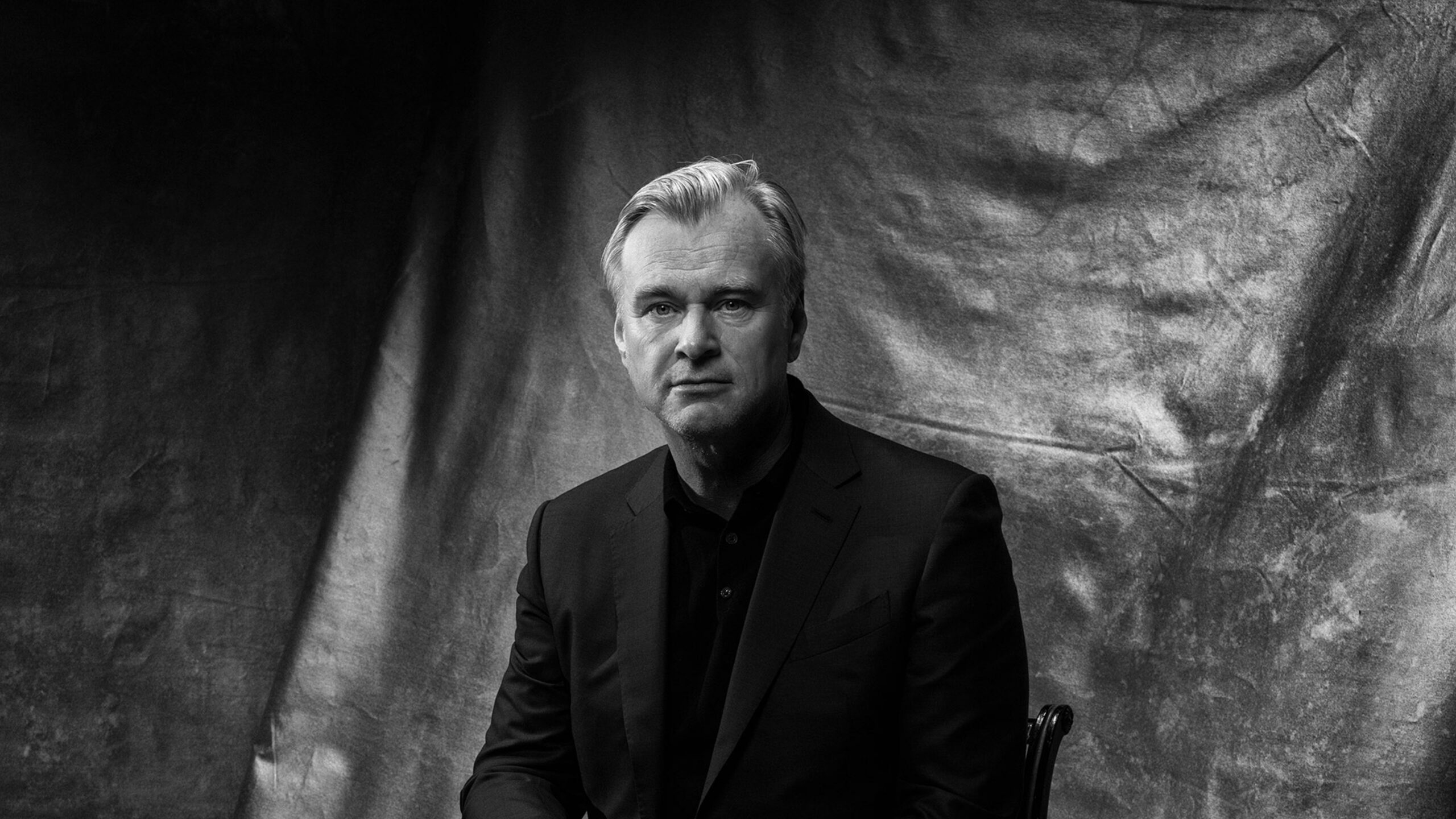
- Christopher Nolan’s The Odyssey opens July 17, 2026 — the first film ever shot entirely on IMAX 70mm cameras
- Nolan defended casting Travis Scott as a bard, saying rap is “analogous” to the oral poetry tradition of Homer
- Lupita Nyong’o has been confirmed to play two roles: both Helen of Troy and her sister Clytemnestra
- The film faces a real box office challenge: Tom Holland’s Spider-Man: Brand New Day arrives just two weeks later
- Producer Emma Thomas confirmed the $250M budget reports are overstated, though she called the film “enormous”
Christopher Nolan doesn’t do small. But even by his standards, The Odyssey is something else — a $250 million sword-and-sandals epic shot entirely on IMAX 70mm cameras, starring what might be the most stacked cast ever assembled for a single film, and carrying the weight of one of the oldest stories in human history. And right now, with its July 17 release date closing in fast, Nolan is doing what he always does when the internet comes for him: explaining himself, calmly and thoroughly, and making you feel like you were the one who didn’t think it through.
In a sweeping new profile with Time magazine, Nolan addressed the wave of online criticism that’s been building since the first trailer dropped — complaints about armor that looks more Gotham than ancient Greece, American accents in Bronze Age Ithaca, and perhaps most divisively, the decision to cast Travis Scott in the film. He took all of it on directly, and the answers are more considered than the backlash probably deserves.
Why Travis Scott Is Playing a Bard in Ancient Greece
When Scott appeared in a teaser trailer earlier this year — dressed as a Greek storyteller, silencing a rowdy mess hall to tell Telemachus (Tom Holland) about his father — the internet had opinions. “Nolan does not know what he’s doing anymore,” one person tweeted. “Pretentious” was a word that came up more than once.
Nolan’s reasoning, though, is disarmingly logical. “I cast him because I wanted to nod towards the idea that this story has been handed down as oral poetry,” he told Time, “which is analogous to rap.”
It’s not a random creative leap. The Homeric epics weren’t written down and read — they were performed, recited by traveling poets called bards, passed between generations through rhythm and repetition. Scott, who plays one of those bards, is a living continuation of that tradition in Nolan’s reading. And the two have genuine history: Scott contributed “The Plan” as the closing track for Nolan’s 2020 film Tenet, a collaboration that Nolan told GQ at the time came from Scott’s “immediate, insightful, and profound” understanding of the film’s musical and narrative mechanics. Nolan even sent Scott a handwritten note raving about his “Franchise” music video, writing: “Love the video (shot on film, no less!). I can’t wait to hear it on the IMAX speakers.”
For what it’s worth, Scott had a scene-stealing moment in that January teaser. “A war, a man, a trick — a trick to break the walls of Troy,” he booms, as images of the Trojan War flash across the screen. “It burning, screaming to the ground.” Some fans pushed back on the critics, pointing out that Tyler, the Creator just appeared in Marty Supreme without this level of hand-wringing. Others noted the Tenet connection as evidence of a real creative relationship, not a stunt.
About That “Batman Armor” Problem
The other major flashpoint has been the look of the film’s costumes — specifically the imposing all-black armor worn by Benny Safdie’s Agamemnon, which drew immediate comparisons to the Batsuit. “Had no idea Ancient Greeks used Batman helmets and sailed in Viking ships,” one commenter wrote after the debut trailer. “Nothing says Ancient Greece quite like wearing black and brown,” said another. “A little colour wouldn’t hurt you, Nolan.”
Nolan’s defense here leans on archaeology. “There are Mycenaean daggers that are blackened bronze,” he explained. “The theory is they probably could have blackened bronze in those days. You take bronze, you add more gold and silver to it and then use sulfur.” As for the design choices more broadly, costume designer Ellen Mirojnick was deliberately trying to communicate Agamemnon’s status above everyone else — and expensive, unusual materials are how you do that in a world without designer labels.
He also made a more philosophical point about the nature of adapting ancient history. The oldest depictions of Homeric characters, he noted, “tend to be depicted in the manner of people living in Homer’s time” — roughly 400 to 500 years after the Bronze Age collapse. So there’s a legitimate case, Nolan argues, for presenting the story the way its first audiences received it, rather than chasing archaeological precision for a period we barely understand. “For Interstellar, you’re looking at, ‘What is the best speculation of the future?’ When you’re looking at the ancient past, it’s actually the same thing,” he said. “What is the best speculation, and how can I use that to create a world?”
“Hopefully they’ll enjoy the film, even if they don’t agree with everything,” he added. “We had a lot of scientists complain about Interstellar. But you just don’t want people to think that you took it on frivolously.”
The Gods Won’t Be Showing Up (But You’ll Feel Them)
One of the more surprising creative choices Nolan revealed: he decided against casting actors to play the Olympian gods. No Poseidon. No Zeus. In a story where divine intervention is essentially the engine of the plot, that’s a bold call.
His reasoning gets at something genuinely interesting about what cinema can do. “I became more interested in the idea that, to people in that period, evidence of gods was everywhere,” Nolan said. “The wonderful thing about cinema, and IMAX in particular, is that you can take an audience to a place of immersion, feeling close to events like storms, turbulent seas, high winds. You want the audience to be on the boat with them fearing the ocean, fearing the wrath of Poseidon, the way the characters do. That to me is so much more powerful than any individual image you can have of a god.”
It’s consistent with how Nolan has always worked — grounding the mythic in the felt, the physical, the human. The Dark Knight trilogy explained every gadget. Interstellar built its wormhole from real astrophysics. Even in a story full of monsters and enchantresses, Nolan wants you to believe in the stakes before you believe in the spectacle.
One exception to the no-gods rule: Zendaya, who is playing Athena. Her role in the story — appearing to Telemachus, nudging events toward Odysseus’s return — apparently works differently enough from the other gods to merit the casting. The details of how Nolan handles that are still under wraps.
Lupita Nyong’o Is Playing Two People, and the Cast Stayed in Budget Hotels
The Time profile also confirmed something fans had been speculating about: Lupita Nyong’o is pulling double duty. She plays both Helen of Troy — the most beautiful woman in the world, whose abduction by a Trojan prince triggers the war — and Helen’s sister Clytemnestra, who is married to Agamemnon. It’s a casting choice that draws a direct line between the two women at the center of the Trojan War’s origin, and it gives Nyong’o one of the film’s most complex dramatic assignments.
Meanwhile, the production’s approach to its enormous budget is apparently less glamorous than you’d imagine. Anne Hathaway, who plays Penelope, revealed that the cast — Holland, Robert Pattinson, and everyone else — was housed in budget accommodation on a small island in Sicily. “There’s no indulgent nonsense,” she said. “It’s just about the work, and we’re all so happy to be there.”
On the budget question, producer Emma Thomas — Nolan’s wife and longtime producing partner — pushed back on reports that the film cost $250 million. “It’s not our most expensive movie,” she told Time, “but the film is enormous.” The current belief is that The Dark Knight Rises, which came in between $250 million and $300 million before tax credits, remains Nolan’s most expensive production.
There’s also a quietly delightful behind-the-scenes connection for Interstellar fans: Bill Irwin, who voiced and physically performed TARS — the sarcastic, boxy robot that became one of that film’s most beloved characters — is back. This time, he’s guiding the performance of the Cyclops. Just like he did with TARS, Irwin will be working to make the creature feel tactile and physically real rather than purely digital. It’s exactly the kind of practical-effects-first instinct that defines how Nolan builds his worlds.
The Tom Holland Problem
All of this would be enough to make The Odyssey one of the most talked-about films of the year. But there’s a box office wrinkle that no amount of IMAX spectacle can fully solve, and it has everything to do with one of the film’s own stars.
Tom Holland plays Telemachus — Odysseus’s son, desperately searching for news of his father while suitors overrun his home. It’s a meaty role in a prestige film, and Holland’s presence is a genuine asset for Nolan: he pulls younger audiences, generates buzz outside the cinephile bubble, and helps sell a Homer adaptation to people who haven’t thought about ancient Greece since high school.
The catch is that just two weeks after The Odyssey opens, Holland is back in the MCU for Spider-Man: Brand New Day. And Spider-Man doesn’t need a perfect trailer or unanimous critical praise to dominate the conversation — it just needs to exist. No Way Home finished at $1.921 billion worldwide. Even a less-electric sequel is a commercial force that will immediately absorb the pop culture oxygen The Odyssey needs to sustain momentum past opening weekend.
Nolan’s films depend on staying power. Oppenheimer made $975.8 million — an extraordinary number for a three-hour biopic — but it still didn’t crack $1 billion, and that mark has eluded him since The Dark Knight Rises in 2012. The Odyssey looks like his best shot in over a decade to get there: epic scale, universal source material, the first film ever shot entirely in IMAX 70mm, and a cast that reads like a Hollywood roll call. Advance tickets reportedly sold out extremely fast when they went on sale, and the first trailer was met with genuine excitement.
But the second trailer landed with a slightly more mixed response — some felt the tone skewed too modern, the dialogue too contemporary Hollywood for a story rooted in ancient myth. Not enough to kill the hype, but enough to raise a question about whether Nolan is threading this needle as cleanly as he did with Oppenheimer.
Universal’s Donna Langley, for her part, sounds confident. “It is a global story that has existed for thousands of years,” she told Time. “That, coupled with Christopher Nolan’s name and what that means for cinema, which we know means a lot, and an all-star cast, it makes for a very worthy and solid commercial bet.”
Nolan himself has acknowledged the scale of what he’s attempting. “Anyone taking on The Odyssey is taking on the hopes and dreams of people for epic movies everywhere,” he said, “and that comes with a huge responsibility.”
The Odyssey opens in theaters July 17, 2026.
Filed in

Comments
0