
Clarence Carter, Blind Soul Legend, Dead at 90
Clarence Carter, the Southern soul singer behind ‘Patches,’ ‘Slip Away,’ and ‘Strokin’,’ has died at 90 after battling stage 4 prostate cancer.
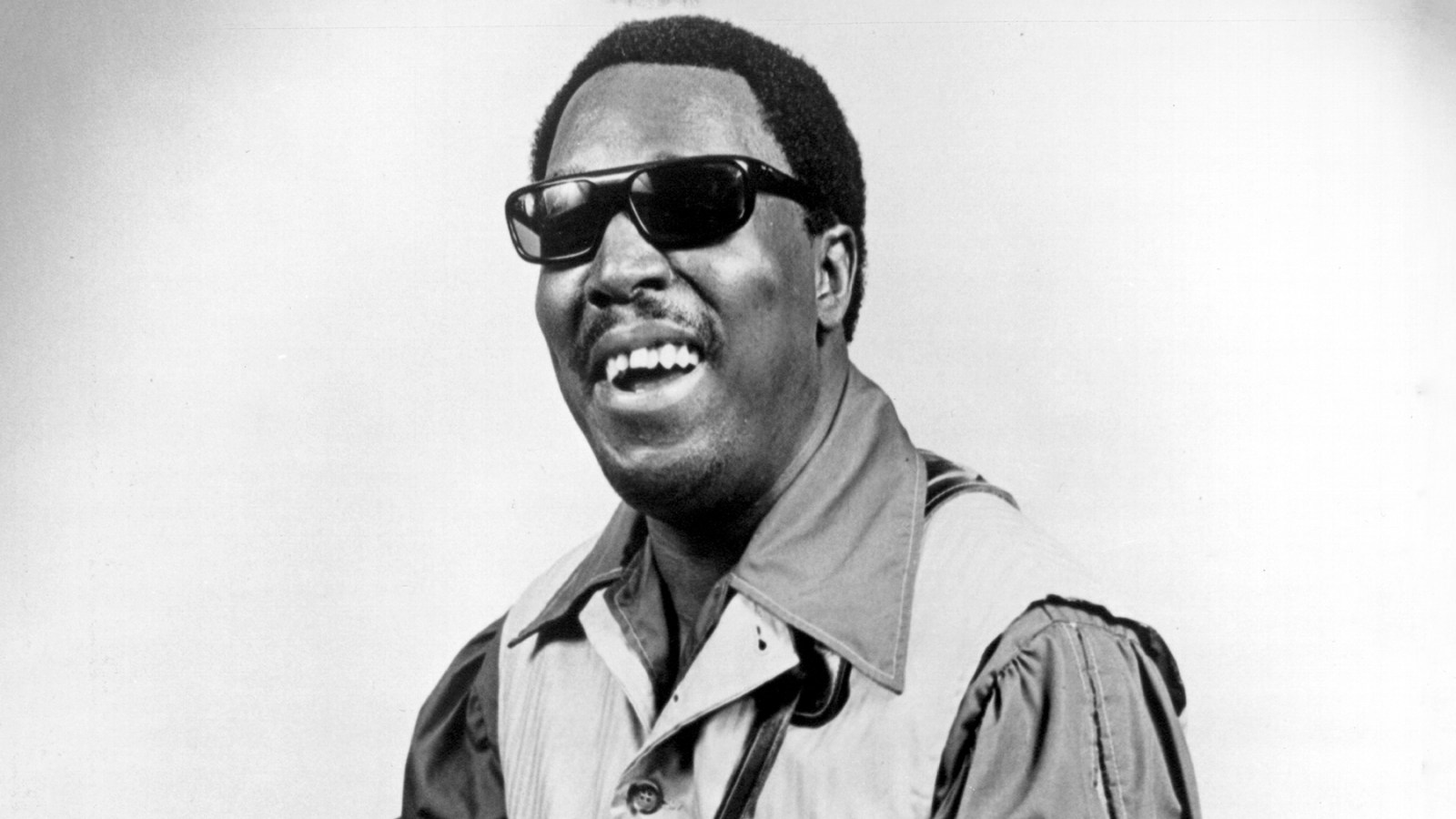
- Clarence Carter, the blind Southern soul singer behind “Patches,” “Slip Away,” and “Strokin’,” died Thursday, May 14 — he was 90.
- His death was confirmed by Rodney Hall, president of FAME Studios in Muscle Shoals, Alabama, after speaking with the family of Carter’s ex-wife, singer Candi Staton.
- Carter had recently been diagnosed with stage 4 prostate cancer and was also battling pneumonia and sepsis.
- His 1970 hit “Patches” reached #4 on the Billboard Hot 100 and won the Grammy for Best R&B Song.
- Carter continued writing, recording, and releasing music well into his eighties — his last single, “Danger Point,” dropped in 2024.
Clarence Carter, the blind soul singer whose unmistakable baritone carried generations of R&B listeners through heartbreak, humor, and everything in between, has died. He was 90.
Rodney Hall, president of FAME Studios in Muscle Shoals, Alabama — where Carter recorded some of his most enduring work — confirmed the news to Rolling Stone after speaking with the family of Candi Staton, the gospel and soul singer who was Carter’s ex-wife. Carter had recently been diagnosed with stage 4 prostate cancer and was battling pneumonia and sepsis at the time of his death on Thursday.
Over more than six decades in music, Carter built a catalog that swung effortlessly between the deeply moving and the delightfully raunchy — sometimes within the same record. He was a constant presence on the R&B charts throughout his late-’60s and ’70s heyday, and he crossed over into the pop Top 10 twice, with songs that couldn’t have been more different from each other.
The Songs That Defined Him
“Slip Away,” released in 1968, peaked at number six on the Billboard Hot 100 — a yearning, gorgeously aching appeal to a married woman for a stolen moment together. “Could you just slip away without him knowing you’re gone? / Then we could meet somewhere, somewhere where we’re both not known.” Carter’s voice didn’t just sing the words. It lived inside them.
Two years later came “Patches,” and with it, a place in music history. The song — written by General Johnson and Ron Dunbar and first recorded by Johnson’s group Chairmen of the Board — climbed to number four on the Hot 100 and won the Grammy for Best R&B Song in 1971. It’s the story of a boy named Patches, raised in hardship, holding onto his dying father’s final plea: “Patches, I’m depending on you son / To pull the family through / My son, it’s all left up to you.” Carter opens the track with a spoken word intro — “I was so ragged that folks used to call me Patches…” — and from there, it’s impossible to look away.
“I think ‘Patches’ really etched me into the music world,” Carter said in 2010. “Where people are probably going to remember me for a long time to come. Which I always wanted — but I never knew it would happen that way.”
Then there was the other side of Clarence Carter. “Back Door Santa,” a wickedly raunchy 1968 novelty track, was later sampled by Run-D.M.C. for their 1987 holiday classic “Christmas in Hollis.” And “Strokin’,” released in 1986 and too explicit for mainstream radio, became a cult favorite that sold 1.5 million copies largely through jukebox plays. It later appeared on the soundtrack to Eddie Murphy’s The Nutty Professor and in William Friedkin’s 2011 film Killer Joe. Friedkin — an avowed Carter devotee — once called “Strokin’” “one of the great American songs” and Carter himself “the Mozart of Southern Music.”
Carter never saw a contradiction in those two sides of his art. In a 2011 radio interview, he pushed back on the idea that blues and soul had to be mournful. “You could also sing the blues about something happy,” he said. “Usually, when I go to my show, you’re gonna hear me sing more up-tunes that you dance by than you’re gonna hear me sing songs that you’ll cry about.”
From Montgomery to Muscle Shoals
Carter was born on January 14, 1936, in Montgomery, Alabama — blind from birth. As a kid, he received a guitar for Christmas and taught himself to play by listening to records and copying what he heard. He attended the Alabama School for the Blind in Talladega and graduated with a degree in music from Alabama State College in 1960.
His first professional chapter came as half of a duo with fellow blind student Calvin Scott — billed as Clarence & Calvin, later the C&C Boys. They cut several singles in the early ’60s without breaking through, and in 1965 made the trip to Muscle Shoals to record at Rick Hall’s FAME Studios. One of those sessions produced “Step By Step,” which caught the ear of legendary Atlantic Records producer Jerry Wexler and was released on the Atco imprint. It didn’t chart, but it got Carter in the room.
Not long after, a car crash left Calvin Scott severely injured. A dispute over medical bills ended the partnership, and both men went solo. Carter stayed close to Hall and FAME, releasing his debut solo single, “Tell Daddy,” in 1967. It was a modest hit — until Etta James cut a response record called “Tell Mama” that reached number 23 on the Hot 100 and sent listeners back to Carter’s original.
From there, the hits came steadily. Back at Atlantic as a solo act in 1968, Carter placed seven songs in the R&B Top 10 over two years — “Snatching it Back,” “The Feeling Is Right,” “Too Weak to Fight” (Gold-certified), “Looking for a Fox,” “Doin’ Our Thing,” “I Can’t Leave You Alone” — backed by the celebrated session musicians at FAME. Carter wrote all his arrangements in braille and had them transcribed for the band. Duane Allman, then a FAME session player before his Allman Brothers days, said of him in a 1971 Rolling Stone profile: “He’s the most amazingly perceptive man I ever met.”
A Career That Never Really Stopped
After “Patches,” the commercial peaks grew harder to reach. Carter moved between labels — Atlantic, Fame, ABC Records — without recapturing that same crossover momentum. But he never stopped working. In the early ’80s, he built a recording studio in the basement of his Atlanta home and taught himself to program keyboards and work with computers. “I think I got another Top Ten record in me,” he told Rolling Stone in 1986. “With the right amount of exposure, I know I could have it.”
That massive smash never came — but “Strokin’” arrived that same year and moved a million and a half copies anyway, anchoring a late-career resurgence on the independent Ichiban Records label. Carter continued releasing albums, touring, and dropping new music well into his eighties. His last album, Mr. Old School, came out in January 2020 on his own Cee Gee Entertainment label. In 2024, at 88 years old, he put out a new single called “Danger Point.”
In 1998, Carter told The New York Times what had driven him all those years. “Give me a challenge and you’ll make me work,” he said. “I’m determined to do what folks say I can’t, and it has to do with a lot of factors, especially when you’re blind. I remember hearing a lady say to my mother one day when I was a kid, ‘I guess you’re going to have to take care of him the rest of your life.’ I never forgot that because I was determined that before the lady left this earth she’d know my mom wouldn’t have to take care of me.”
She didn’t.
Filed in

Comments
0