
Soderbergh Used AI in His John Lennon Doc — and He’s Not Sorry
Steven Soderbergh’s ‘John Lennon: The Last Interview’ premiered at Cannes using Meta AI for 10% of its visuals — and the director is defending every frame.
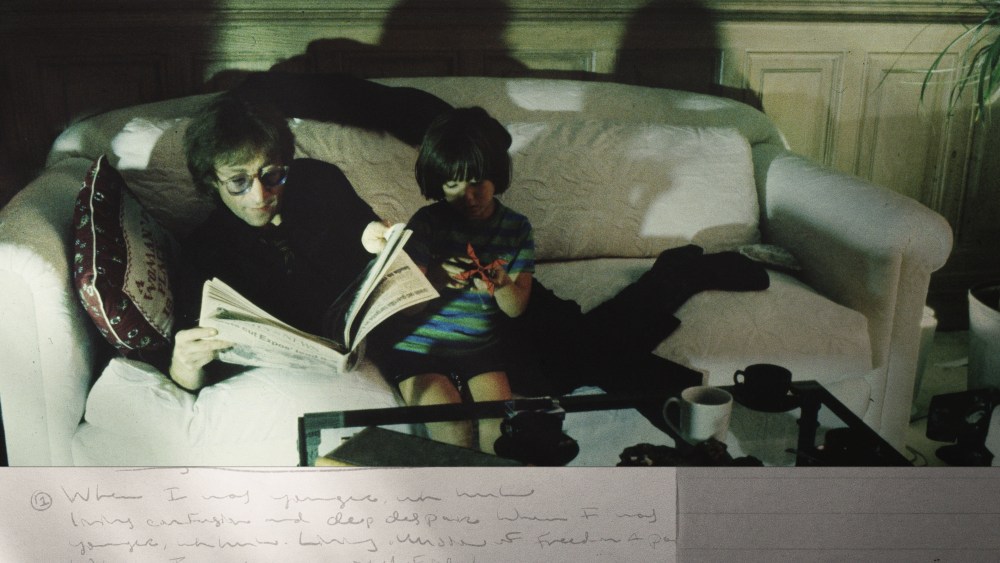
- Steven Soderbergh’s documentary John Lennon: The Last Interview debuted at the Cannes Film Festival, built around audio from Lennon’s final interview on Dec. 8, 1980.
- Soderbergh used Meta’s AI software to generate roughly 10% of the film’s visuals — a decision that drew immediate backlash and critical scorn at Cannes.
- The interview, given to San Francisco radio station KFRC to promote Double Fantasy, took place just hours before Lennon was shot and killed outside the Dakota.
- Soderbergh says he accepted the heat knowingly, calling himself “my own whistle blower” on AI use in filmmaking.
- Critics are divided — some find the film immersive and elegiac, others call the AI imagery ugly and unnecessary.
On the afternoon of December 8, 1980, John Lennon sat in his apartment at New York’s Dakota building and gave what turned out to be the last interview of his life. He was 40 years old, newly back in the world after five years of self-imposed quiet, and by all accounts he was happy. Genuinely, radiantly happy. Hours later, he was dead.
That interview — a two-hour-and-45-minute conversation with a four-person crew from San Francisco radio station KFRC, conducted to promote his and Yoko Ono’s comeback album Double Fantasy — is the foundation of John Lennon: The Last Interview, Steven Soderbergh’s new documentary that premiered Saturday at the Cannes Film Festival. And it would have been remarkable enough on those terms alone. But Soderbergh made a choice in the editing room that has turned the film into something else entirely: a flashpoint in Hollywood’s raging argument about artificial intelligence.
He used Meta’s AI software to generate imagery for roughly 10% of the film. And he’s not hiding from it.
The Interview That Became a Film
The setup is almost unbearably cinematic. That same afternoon, before the KFRC crew arrived, Annie Leibovitz was upstairs at the Dakota shooting what became one of the most iconic photographs in rock history — a naked Lennon curled around Yoko Ono. The interview that followed was, in Soderbergh’s words, similarly naked.
Though the crew had been told no Beatles questions, Lennon and Ono were, as Soderbergh puts it, thrillingly open. Lennon talked about love, fatherhood, the five years he’d spent as a self-described househusband raising their son Sean, his complicated feelings about the ’70s, his excitement about performing live again. He drew a through-line connecting “The Word” to “All You Need Is Love” to “Give Peace a Chance” to “Imagine.” He talked about disco. He talked about Burt Reynolds on Barbara Walters. He talked about wanting to make music “until I’m dead and buried, which I hope isn’t for a long time.”
He would go straight from the interview to a recording session, and then home, where Mark David Chapman was waiting.
“I feel like nothing happened before today,” Lennon said during the interview.
Soderbergh was drawn to the material for obvious reasons. “I was just so compelled by their generosity of spirit throughout the conversation,” he said Saturday in Cannes. “It’s like the world took place in one day, in this apartment.”
The film is his third documentary, after two projects built around monologist Spalding Gray, and the parallel is apt — both are exercises in giving visual life to someone else’s voice. Soderbergh and editor Nancy Main cut the original conversation down to 97 minutes, drawing from more than 1,000 archival photographs and video clips, 64 song excerpts, and present-day interviews with three of the four KFRC journalists who were in the room that day. (The fourth, Warner Bros. Records executive Bert Keane, died during production.) The result, according to Hollywood Reporter, has the feel of a hyperkinetic photo album — images cutting to the beat, the camera panning with every phrase, carefully assembled to feel almost chaotic.
Variety’s critic called it “an ace job” of archival collage. The Wrap noted that Soderbergh slows everything down in the final stretch, letting songs like “God,” “Stand by Me,” and “Grow Old With Me” do the emotional heavy lifting — which, given what the audience knows is coming, lands with the force of a punch.
Where Meta Came In
The problem Soderbergh faced was a practical one. The interview was captured on audio — stereo cassette, high-frequency chromium tapes, excellent quality for 1980 — but there is no video. For most of the film, archival photos and footage could carry the visuals. But when the conversation turned philosophical and abstract, when Lennon and Ono were talking about ideas rather than events, the archive ran dry.
“I worked on everything that could be solved except that for as long as I could,” Soderbergh says. “Then there was the inevitable moment of: OK, but really what are we going to do? We just started playing and ran out of time and money. That’s where the Meta piece came in.”
He accepted an offer from Meta to use their AI video-generation tools for those sequences — what he’s described as roughly 10% of the finished film. The imagery he prompted includes circles of light, a black rose that blooms into a red one in a style he compared to Busby Berkeley, split-screen compositions of couples embracing alongside mixing paint colors, and crying babies dressed in 1960s clothing. There are no deepfakes of Lennon. Nothing is designed to look real.
“I wasn’t very articulate to the people I was working with,” Soderbergh admitted. “It was hard to describe the things I wanted to see. The good part about this technology was at least the ability to have something in front of me quickly that I could respond to.”
He announced the AI use publicly before the film even premiered — a deliberate choice.
“Transparency is so important,” he said. “In the world outside of the creative context, we’re not aware of the extent that this is being used and used to manipulate us. We don’t know because they’re not telling. We find out after, by accident, by some whistle blower. I’m like my own whistle blower: ‘This is what he’s doing.’”
The Backlash — and His Response
The announcement earlier this year did exactly what Soderbergh knew it would. One of Hollywood’s most respected directors, the man behind the Ocean’s trilogy and Traffic and Magic Mike, was using AI? In a film about a Beatle? The reaction was swift and loud, arriving in a cultural moment when directors like Guillermo del Toro have made their opposition to generative AI something close to a moral position.
“I knew what was coming,” Soderbergh said. “I take it very seriously, and I understand why people have an emotional response to this subject. As I’ve said before, I feel like I owe people the best version of whatever art I’m trying to make and total transparency about how I’m doing it. But, yeah, you don’t say yes to Meta offering you these tools and offering to finish the film and not know you’re going to come in for some heat. That was part of the deal.”
At Cannes, critics largely confirmed that the AI sequences are the film’s weakest element. IndieWire called the imagery “universally indistinguishable from the type of slop that gullible Boomers share on Facebook.” Time said the AI parts were “overwhelmingly slammed.” Even Variety, which praised the film overall, noted the sequences could have been done with older technology and nobody would have cared.
Soderbergh doesn’t entirely disagree with the aesthetic criticism — but he pushes back on the principle. His framework is simple: the technology has to be necessary. “Is it the only way to accomplish what I want to see? Is it truly the best way to do it? That’s the real question. You’re going to see a lot of people doing stuff with AI that fail those two challenges.”
He’s also clear about what he thinks AI cannot and will not replace. “I think most jobs that matter when you’re making a movie cannot be performed by this tech and never will be performed by this tech,” he said. “As it becomes possible for anybody to create something that meets a certain standard of technical perfection, then imperfection becomes more valuable and more interesting.”
He sees the industry’s reckoning with AI as something that requires someone credible to actually test the limits. “We haven’t seen yet someone with a certain amount of creative credibility go full-metal AI on something, and see how people react. I think it’s necessary. How do you know where the line is until somebody crosses it? I don’t think what I’m doing crosses it. Some people may disagree. I don’t know where my line is yet. I’m waiting to see.”
What the Film Gets Right
Strip away the AI debate and what remains is a documentary about a man who sounds, in his final hours, like someone who has finally figured out who he is.
Variety’s critic — who describes themselves as a Beatles believer since childhood — notes that Lennon at 40 is at his most captivating and, occasionally, his most messianic. The househusband chapter gets a gentle skewering: Lennon talks warmly about making Sean breakfast and ensuring he watched Sesame Street rather than commercial television, but then mentions that the nanny would take Sean out for most of the day. “For here is John Lennon setting himself up as a new kind of hands-on daddy,” the review observes, “but after all that, his kid was still raised by the help.”
Hollywood Reporter highlights Yoko’s presence in the film as its own reward — her voice “forthright, whip-smart and sensitive” — and notes that the interviewers had some time alone with her while Lennon finished his photo session with Leibovitz. The Wrap points to a moment where Lennon declares, “The ’70s weren’t good. Let’s make the ’80s good,” and another where he says, “We’re going into an unknown future, but where there’s life, there’s hope.” Both lines land like gut punches for anyone who knows what came next.
Soderbergh’s own take on what he hopes audiences take from the film goes beyond the AI conversation entirely. “Especially his burning desire to destroy the male rock star myth — at a time when that was not the mood anyone else was in. That’s inspiring. What I hope young people who see it get out of it is: This guy told the truth about everything from the jump, right up through the last day of his life. He just was built that way. And he was constructive. He was very opinionated but also very thoughtful and all in the aid of: Can we do this better? Can we do a better version of human beings on this planet?”
The film ends with “Grow Old With Me.” He never got the chance.
Filed in

Comments
0