
John Lennon’s Last Interview Gets the Soderbergh Treatment
Steven Soderbergh’s Cannes doc captures John Lennon’s final radio interview — hours before his death — with AI visuals dividing critics.
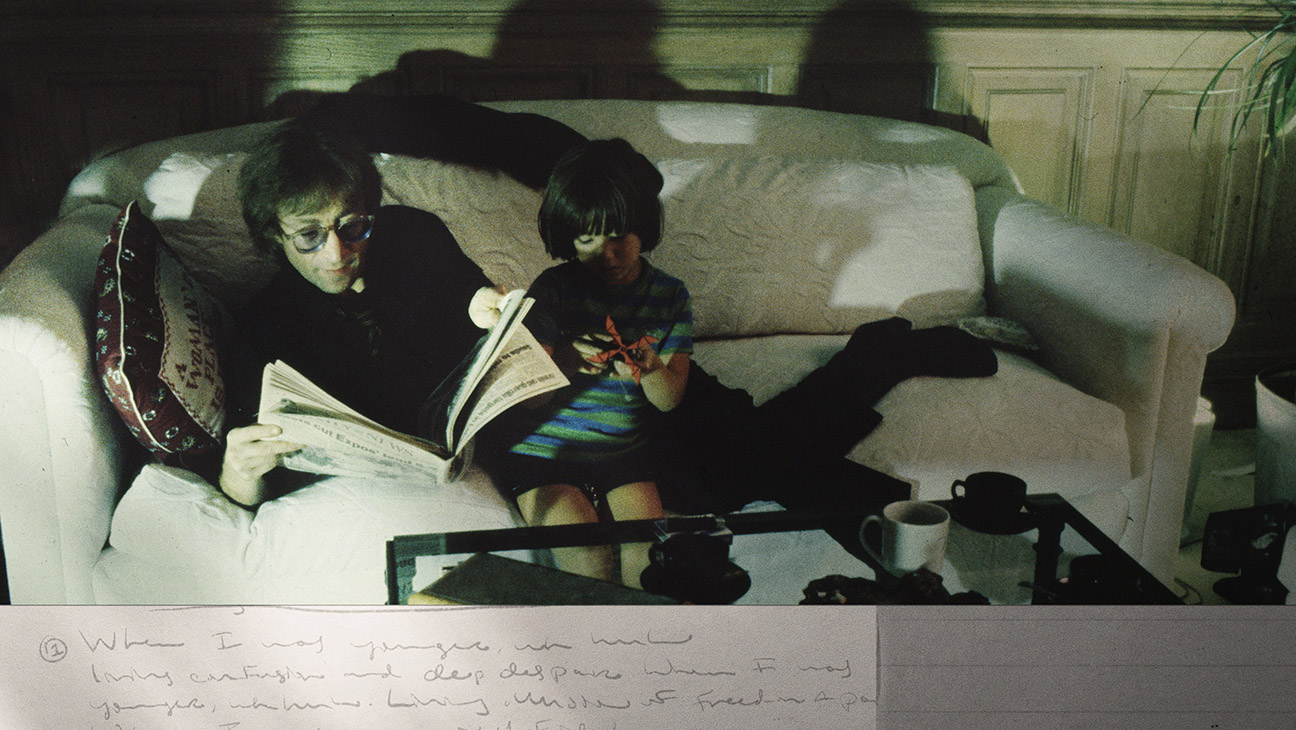
- Steven Soderbergh’s John Lennon: The Last Interview premiered at the Cannes Film Festival as a special screening
- The doc is built around Lennon’s final conversation — a 2hr 45min radio interview recorded hours before his murder on Dec. 8, 1980
- Soderbergh used Meta’s AI tools for roughly 10% of the film’s visuals, making it one of the most talked-about — and contested — docs at Cannes
- Sales are being handled by Patrick Wachsberger’s 193, with CAA Media Finance covering North American rights
- Critics are split: some find it immersive and elegiac, others argue it’s a beautifully packaged audio program that didn’t need to be a film
The last thing John Lennon did before he was killed was talk. For nearly three hours on the afternoon of December 8, 1980, he and Yoko Ono sat in their apartment at the Dakota and gave a radio interview — warm, wide-ranging, full of laughter and philosophy and love — to a small crew from San Francisco’s KFRC. That evening, he was shot dead in the entranceway of his own building. The interview aired as a memorial.
Now, Steven Soderbergh has turned that conversation into a film. John Lennon: The Last Interview premiered at the Cannes Film Festival this week as a special screening, and it has done exactly what a great piece of source material always does: divided the room.
What the Film Actually Is
The setup is straightforward. Lennon and Ono had agreed to one radio interview to promote Double Fantasy, the comeback album they’d released three weeks earlier. The KFRC crew — music director Dave Sholin, on-air host Laurie Kaye, engineer and producer Ron Hummel, and Warner Bros. Records executive Bert Keane — came to the Dakota with a ground rule already established: no Beatles questions. Lennon, of course, talked about the Beatles anyway.
What followed was a 165-minute conversation that touched on fatherhood, peace, politics, disco (he loved it), the drug-fueled “lost weekend” he’d spent separated from Yoko in the early ’70s, and the new chapter he felt he and Yoko were entering together. Soderbergh and editor Nancy Main have cut it down to 97 minutes. Three of the four KFRC interviewers — Keane died during production — appear on camera in present-day framing segments, recalling what it felt like to be in that room. What comes through, even decades later, is that they knew they were in the presence of someone extraordinary. They just didn’t know they were also saying goodbye.
The interview was recorded on high-quality stereo cassette with chromium tapes — state of the art for 1980 — so the audio Soderbergh had to work with is genuinely crisp. But there’s no video. No footage of that afternoon exists. So Soderbergh, working as his own DP under his longtime pseudonym Peter Andrews, built the visual world of the film from more than 1,000 archival photographs and clips, 64 song excerpts, design work from BigStar Motion Design, and — here’s where things get complicated — AI-generated imagery created in partnership with Meta.
Just before the interview began, Lennon and Ono had been upstairs for the now-iconic Annie Leibovitz photo session for Rolling Stone. After the interview wrapped, they went to the recording studio. Then they came home.
The Lennon You Hear
What strikes every critic who’s written about the film, regardless of their overall verdict, is the quality of the man you hear in that audio. Lennon had just turned 40. He’d spent five years largely out of public view, raising Sean and calling himself a “househusband” — a term that was genuinely novel in 1975. He was revving back up. He wanted to tour again, to perform with the musicians he’d made Double Fantasy with, to make music, as he says in the film’s opening minutes, “until I’m dead and buried, which I hope isn’t for a long time.”
He draws a through-line connecting his entire career — from “The Word” to “All You Need Is Love” to “Give Peace a Chance” to “Imagine” — and talks about where he thinks it’s all heading. He reflects on the separation between men and women that the culture had drifted into since the early ’70s feminist movement, and explains that “(Just Like) Starting Over” was meant to speak to that gulf as much as to his and Yoko’s personal reconciliation. He proclaims his love of disco. He cites a Barbara Walters interview with Burt Reynolds. He talks about Sesame Street. He says, “The ’70s weren’t good. Let’s make the ’80s good.”
And later: “We’re going into an unknown future, but where there’s life, there’s hope.”
These lines land like gut punches when you know what’s coming, and Soderbergh knows that. He slows the film’s pace in its final stretch, letting the music do the work — Lennon’s “God,” with its soft coda declaring “the dream is over,” then his cover of “Stand by Me,” then “Grow Old With Me.” Of course, he didn’t get to.
Yoko is present throughout, and her contributions are more than incidental. She speaks about love as “a powerful political weapon” and reflects on their shared activism: “We may have been naïve, but we were always honest.” One of the film’s most tender sequences comes when Lennon recounts how they met — at a London exhibition of her conceptual art — and the bashful courtship that followed. Ono’s significance as a conceptual artist is receiving long-overdue recognition these days, and hearing her voice at this particular moment in her life — forthright, whip-smart, emotionally precise — is one of the film’s quiet pleasures.
The announcement of Lennon’s death, as it happened, came from Howard Cosell on Monday Night Football. Soderbergh includes the clip. It’s the right call — Lennon was an avid consumer of American pop culture, and the moment captures something true about how the news broke into ordinary life.
The AI Argument
Soderbergh has been transparent about his use of Meta’s generative AI tools from the start — the technology partner is credited in the production notes, and he discussed it openly well before Cannes. By his account, AI makes up roughly 10% of the film’s footage, used exclusively for abstract or conceptual sequences where no archival material exists: a split-screen of couples embracing alongside paint colors mixing; crying babies in ’60s clothing; a caveman with a six-pack to illustrate Lennon’s frustration with “primitive” male behavior; an unfolding rose sequence that Soderbergh apparently prompted with a reference to Busby Berkeley; blooming black roses; psychedelic color washes.
None of it is designed to pass as real. Soderbergh has been clear that the line he won’t cross is using AI to put words in Lennon’s mouth or make him appear to say things he didn’t say. What he’s doing is closer to what animation did in Yellow Submarine — using surrealism to illustrate ideas rather than events.
Critics, predictably, are not uniformly convinced. Directors like Guillermo del Toro have made their opposition to AI in filmmaking loudly known, and the technology’s potential to displace entertainment-industry workers is a live concern in Hollywood. At Cannes, the AI sequences became the film’s most-discussed element — which may or may not be what Soderbergh intended.
The Hollywood Reporter finds the AI imagery “organic and involving,” noting that it “never feels intrusive” and praising a particular rose sequence as striking. Variety is more measured, acknowledging that Soderbergh has done “an ace job” with the archival collage overall while noting the AI images wouldn’t raise eyebrows if they’d been made with older technology. The Wrap lands in a similar place — the AI contributes to the film’s style without overwhelming it.
IndieWire is less forgiving. Their critic argues that the AI sequences are “universally indistinguishable from the type of slop that gullible Boomers share on Facebook” and questions whether the abstract passages needed visual illustration at all. It’s a pointed critique, and not an entirely unfair one — though it says as much about the current cultural temperature around AI as it does about these specific images.
Does It Work as a Film?
This is where the reviews genuinely diverge, and it’s worth taking both sides seriously.
For those who find it works, the case rests on immediacy. Hearing Lennon’s voice — unguarded, happy, expansive, occasionally a little preachy — is its own form of time travel. The archival photograph barrage, which sometimes cuts to a new image with every phrase, creates something close to a hyperkinetic photo album, and the needle drops are, by general consensus, impeccable. The use of “Love” over the closing credits gets particular praise from Variety. The Hollywood Reporter calls the whole thing “an immersive experience” that “will be a reminder for some and an eye-opener for others of why John Lennon mattered to people, and why his murder was so shattering.”
For those who find it doesn’t quite work, the problem is structural. The KFRC interview was promotional in nature — Lennon had agreed not to discuss the Beatles or the past, which means the conversation, for all its charm, is essentially a very compelling press junket. Variety notes that it’s “one of the first of a new breed of promotional interview,” and that Lennon’s “relentless bonhomie can be a bit much; on some level he’s marketing his happiness to sell the album.” IndieWire goes further, arguing the interview would “play immeasurably better as a stand-alone audio program than inorganically expanded into a feature film.”
Both positions are defensible. Lennon is such a commanding presence that even a promotional conversation becomes worth hearing. But the film does occasionally strain against the limits of its source material, and Soderbergh — whose previous documentary work includes two films built around Spalding Gray’s monologues — sometimes illustrates too literally. When Lennon talks about anti-war protests, the film cuts to protest footage. When he mentions the Beatles, it’s footage you’ve seen a hundred times. The archival approach is more fluid and inventive when it’s working with photographs rather than familiar clips.
For context: Kevin Macdonald’s One to One: John & Yoko, which covered the couple’s first two years in New York, is a recent and useful comparison point. Multiple reviewers bring it up, and not to the benefit of The Last Interview — Macdonald’s film caught a more complex, tumultuous chapter of the Lennon story. This film catches a happier one. Whether that’s a limitation or the point depends entirely on what you’re looking for.
What Comes Next
Produced by Nancy Saslow for Mishpookah Entertainment Group and Sugar23, the film is now in the market through 193, the Legendary-backed sales and production company founded by Patrick Wachsberger. This marks 193’s first foray into premium nonfiction — the company previously handled international sales for Lynne Ramsay’s Die My Love at last year’s Cannes market. CAA Media Finance is handling North American rights, and no wide release date has been announced.
Lennon will also appear, separately, in the BBC’s upcoming six-part drama Hamburg Days, based on Klaus Voormann’s autobiography, with Rhys Mannion playing him alongside Ellis Murphy as Paul McCartney, Harvey Brett as George Harrison, and Louis Landau as Stu Sutcliffe.
But for now, the conversation is about this film, and about that afternoon in 1980. Lennon was 40, newly returned to music, talking about wanting to tour and record and grow old with his wife. He’d been out of sorts for much of the early ’70s and largely out of view for the second half of the decade. The Last Interview catches him at the moment he was finally revving back up — which is, depending on your tolerance for bittersweet, either the best or the worst time to spend 97 minutes with him.
“He’d only just begun,” Variety writes at the end of their review. It’s hard to argue with that.
Filed in

Comments
0