
Adèle Exarchopoulos Stuns in Cannes Drama ‘Another Day’
Adèle Exarchopoulos delivers a career-best performance in Jeanne Herry’s Cannes Competition entry about a Parisian actress quietly unraveling under alcoholism.
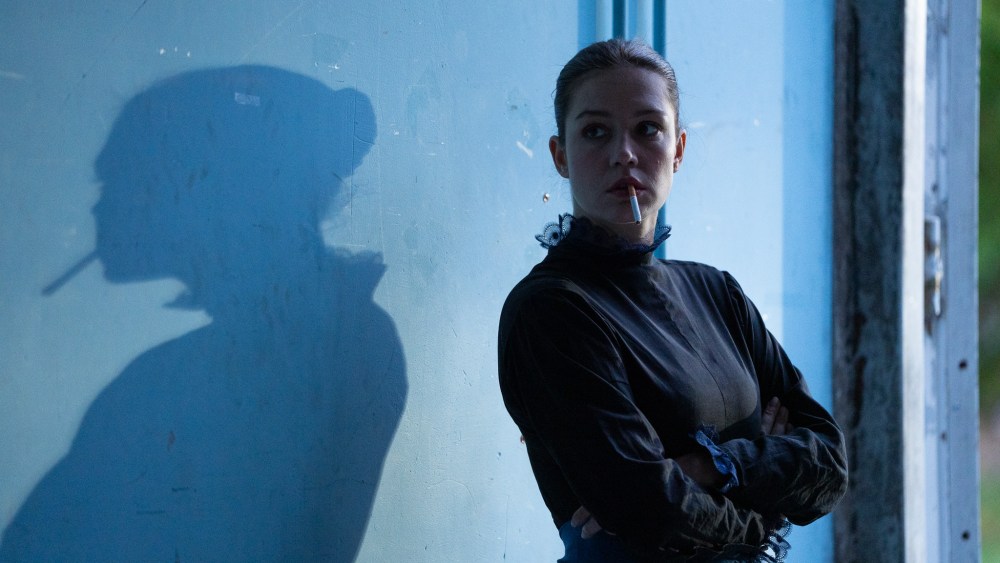
- Adèle Exarchopoulos stars in Another Day, Jeanne Herry’s 2026 Cannes Main Competition entry about a functioning alcoholic actress in Paris
- Critics praise Exarchopoulos’s performance as authentic and deeply lived-in, with director Herry calling her “at the very peak of her acting abilities”
- The film spans eight years of its protagonist’s life, including the COVID lockdown period, without using chapter titles or timestamps
- Reviews are largely positive but note the film’s ending leans too instructional — a stumble in an otherwise graceful drama
- This is Herry’s first film selected for the Cannes Competition, a milestone she describes as “extremely honored, curious and joyous”
Adèle Exarchopoulos has always had the kind of screen presence that makes you forget you’re watching someone perform. In Another Day, writer-director Jeanne Herry’s quietly devastating Cannes Competition entry, that quality becomes the whole film. Exarchopoulos plays Garance, a talented Parisian stage actress juggling auditions, voice work, a terminally ill sister, and a romantic life that keeps stalling — all while slowly, almost invisibly, losing herself to alcohol. It is, by most accounts, the role of her career so far.
Herry, whose previous feature All Your Faces was a sprawling ensemble piece, made a deliberate choice to strip things back here and anchor the entire film to one woman’s face, one woman’s spiral. The gamble pays off. Exarchopoulos carries every scene — the ones where Garance is radiant and in control on stage, and the ones where she shows up to a school visit to talk to children about acting, barely holding herself together in yesterday’s smeared makeup and disheveled clothes.
A Portrait of the Functioning Alcoholic
What separates Another Day from the standard addiction drama — your Lost Weekends and 28 Days — is where Herry chooses to spend her time. Rather than leaning into the cinematic spectacle of the spiral, she’s far more interested in the mundane horror of the in-between: the morning afters, the chronic excuse-making, the way Garance blames a broken bus or bad traffic for her lateness when the real reason is that she can’t move through the world without a drink. There are a couple of throbbing nightclub and house party sequences, but they’re not the point. The point is what comes after.
Herry’s smartest move is presenting Garance, at least initially, as a functioning alcoholic — a realistic state that rarely gets explored on screen, precisely because it’s so easy to miss in real life. For a long stretch, Garance keeps it together. She makes it to work. She pays her bills. She falls into a tender, loving relationship with Pauline (Sara Giraudeau), a soft-spoken artist who lives in the countryside and offers Garance a kind of calm she can’t manufacture for herself. It’s only gradually — through forgotten conversations, slurred lines mid-performance, squandered opportunities — that the cracks widen into something impossible to paper over.
In two separate scenes, Herry also raises the possibility that Garance may have been sexually assaulted during a blackout. She wakes up on a bus, disoriented, her ripped fishnets rolled down to mid-thigh, with no memory of how she got there. Herry doesn’t linger on it or explain it. She just leaves it there, which is exactly right.
The film unfolds over eight years — including the COVID lockdown — without once stopping to announce the passage of time with a title card or timestamp. Instead, Herry and editor Laurence Briaud let makeup, wardrobe, and production design do the work. Costume designer Ariane Daurat dresses Exarchopoulos in a low-key echo of her Passages wardrobe: edgy silhouettes mixed with classically casual pieces that shift almost imperceptibly as the years and the drinking take their toll. It’s the kind of invisible craft that you only notice when you start looking for it.
Herry on Casting Exarchopoulos — and What the Film Is Really About
The two had worked together before, and Herry told Deadline that the professional alliance was obvious from the start. “It needed a young actress as my character falls into alcoholism very young,” she said, “and I needed an actress who could generate empathy on screen. It was also a very demanding role. There were many different moods, many different situations. We really see her in all the different facets of this woman. I needed a very strong actress, and Adèle is at the top of her game right now.”
The film grew out of two separate ideas that eventually fused together. Herry had long been drawn to the subject of addiction — “It’s so widespread, so common, and we all know people who are addicted, or have been,” she said — and she had separately wanted to make a portrait of a working actress, not a star, but the kind of actress she might have become herself if she’d stayed in front of the camera. She met a young woman who shared her story of alcoholism and her broader life journey, and borrowed heavily from her biography. The result is something that feels less like a case study and more like a friendship — a film made with enormous affection for its subject.
“I always think about actors when I write because I love collaborating with them,” Herry said. “It’s always for them that I write, and this film allows me to express even more strongly the love I have for them, for the difficulty of what they do.”
Where the Film Stumbles
Not every critic is fully won over. The Wrap notes that while the film is competently made and powerfully acted, it lacks the visual or thematic identity to fully distinguish itself from similar stories. “Other films that have been half as long have achieved more,” the outlet observed — a pointed critique for a movie that runs two hours and occasionally circles back on itself in ways that mirror Garance’s condition a little too faithfully.
The ending is where most reviewers find their reservations. After two hours of complexity and restraint, the resolution — Garance choosing recovery with the help of a no-nonsense doctor, motivated largely by her love for Pauline — tips into something a little too tidy. Variety called it “all too schematic, like an after-school special,” a disappointment after the film earns so much goodwill with an excellent intervention scene between Garance and her theater troupe that crackles with the kind of uncomfortable truth the rest of the movie handles so well.
Herry herself is clear-eyed about what the ending does and doesn’t promise. “Addiction is a difficult path, and relapses are common,” she told Deadline. “But I wanted to offer my character a way out of this rut. Love isn’t enough — it doesn’t save anyone from addiction, otherwise it would be easy to combat. But the film does show how it requires a combination of favorable circumstances to be able to stop, and how important it is to meet the right person who understands addiction.”
For all its imperfections, Another Day is the kind of film that stays with you — not because of any single dramatic moment, but because of how honestly it captures the slow erosion of a person who is still, in almost every visible way, fine. Exarchopoulos makes Garance someone you root for even at her most infuriating, which is the hardest thing any actor can do. Herry, making her Cannes Competition debut after years of working adjacent to the festival, has made something genuinely graceful. That’s rarer than it sounds.
Filed in

Comments
0