
Lauryn Hill Finally Explains Why She Never Made Another Album
Lauryn Hill responded to an Instagram post speculating about her long absence from the studio — and her answer goes deeper than anyone expected.
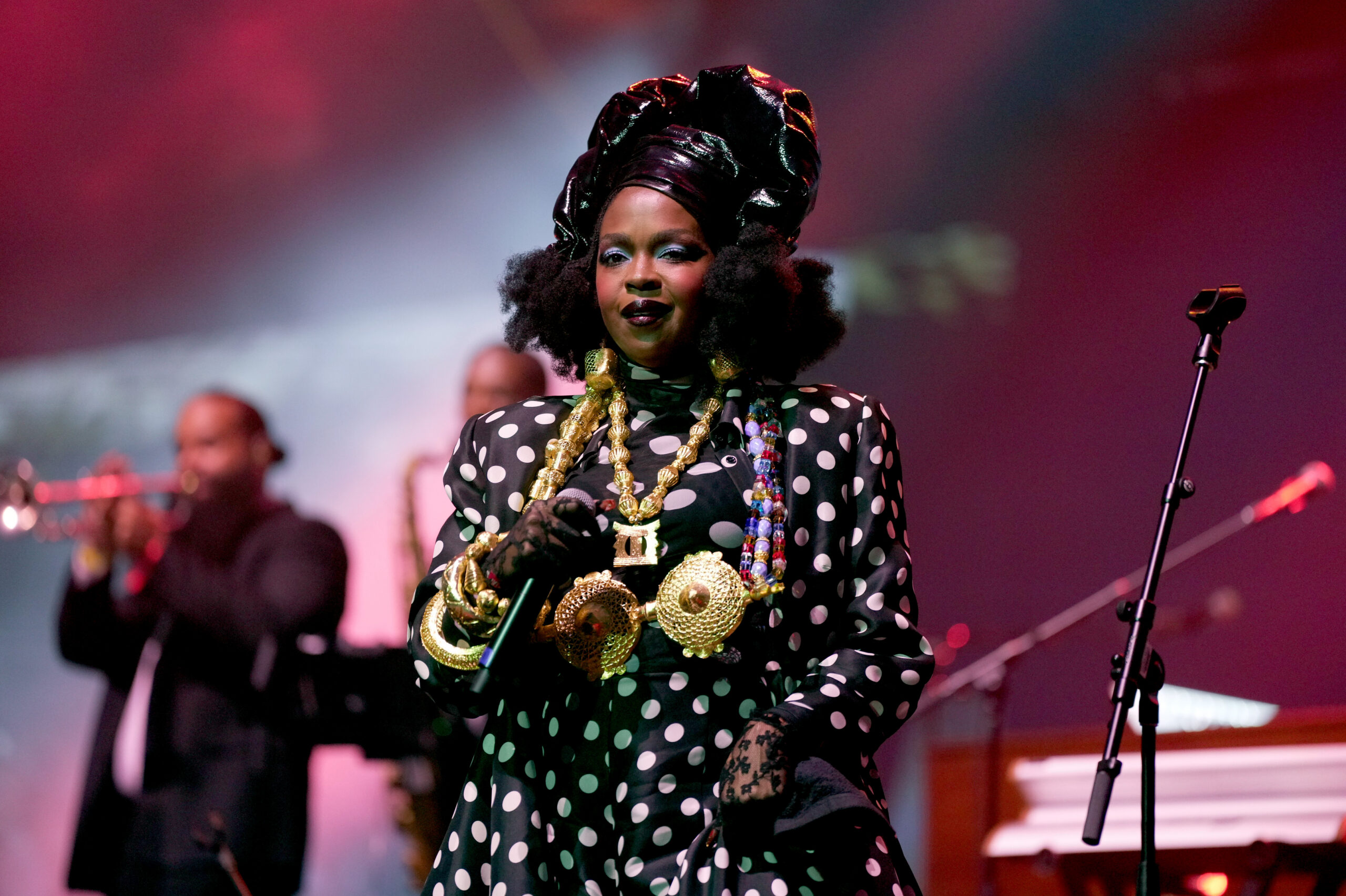
- Lauryn Hill responded directly to an Instagram post theorizing about her decades-long absence from the studio
- She rejected the standard explanations — label drama, burnout, legal battles — and offered her own, more nuanced take
- Hill described the toll of trying to create with integrity inside a system built on greed and control
- She compared herself to Harriet Tubman, saying she was “running to speak difficult truths to power” before doors closed on her
- Her comments echo a 2021 Rolling Stone interview where she revealed her label never once called to help her make a follow-up
Lauryn Hill has broken her silence — not with a new album, but with something that might matter just as much right now: an explanation. After years of speculation, rumors, and fan heartbreak over why one of the greatest debut albums in music history never had a proper follow-up, Hill stepped into the comments section this weekend and said what she’s been sitting on.
It started with an Instagram post from FRAIM.World, a New York-based socially conscious hip-hop and art media platform, that laid out the popular theories for Hill’s disappearance from the studio after The Miseducation of Lauryn Hill: label politics, lawsuits over songwriting and production credits, emotional exhaustion, perfectionism, spiritual transformation, a focus on family. The kind of list that feels thorough until the subject herself shows up to disagree.
Which is exactly what Hill did.
Her first response was short: “I disagree. 🙂” Then she came back with more.
In Her Own Words
“When you’re inspired and desire to be principled, what doesn’t get talked about enough is the drain,” Hill wrote. “Nor the challenge to find safety so that you can create with integrity. Most see opportunity as dollars only and often exclude the ‘sense.’”
She pushed back on the idea that Miseducation — or the Fugees’ The Score before it — happened because the industry gave her room to breathe. “The Score nor the Miseducation were made because we were ‘allowed’ to represent what we did,” she wrote. “We fought for every inch. Wild success can cause greed that begins to denigrate the art for the money. We’re people living through all this.”
That word — safety — comes up in a way that says more than a list of grievances ever could. Hill isn’t just talking about creative differences. She’s describing what it feels like to need a protected space just to make something real, and how rare and fragile that space becomes once you’ve had a diamond-certified album and five Grammys attached to your name.
She pointed to the reception of her 2002 live album MTV Unplugged No. 2.0 as an example of what happens when you try to go somewhere the industry doesn’t want to follow. The album was raw, stripped-down, and deeply personal — and it divided people sharply. “There were people who hated the Unplugged album and yet some today swear by its significance,” she wrote. “I was like a Harriet Tubman figure in some respects running to speak difficult truths to power before certain forces tried to close those doors.”
Then came the line that cuts to the heart of it: “If it was so easy to do, where is that expression now on the world stage? Systems fear what they can’t control. Creativity is most potent when it’s free.”
This Isn’t the First Time She’s Said It
Hill has touched on this before, though never quite this directly in a public forum. In a 2021 interview with Rolling Stone, she laid out the mechanics of what happened after Miseducation became a phenomenon.
“The wild thing is no one from my label has ever called me and asked how can we help you make another album, EVER… EVER. Did I say ever? Ever!” she said. “With The Miseducation, there was no precedent. I was, for the most part, free to explore, experiment, and express. After The Miseducation, there were scores of tentacled obstructionists, politics, repressing agendas, unrealistic expectations, and saboteurs EVERYWHERE. People had included me in their own narratives of their successes as it pertained to my album, and if this contradicted my experience, I was considered an enemy.”
Read that again. Her own label never called. Not once. After one of the best-selling debut albums in history — one that debuted at No. 1, broke first-week sales records for women, produced the first rap album to win Album of the Year at the Grammys, and was named by Apple Music as the greatest album of all time just two years ago — nobody picked up the phone.
What She Wants People to Understand
What Hill seems most frustrated by isn’t the absence of a second album — it’s the flattening of her story into a cautionary tale or a mystery to be solved. “These conversations should allow for more nuance,” she wrote. “Artists go through phases, creativity requires expression, exploration and experimentation.”
She also made clear she doesn’t see her exit from the mainstream machine as a failure or a loss. “If I did nothing else, I introduced standards and possibilities to a generation that didn’t know they could operate on that level before then. I am often doing things outside the support of the system before people can even realize what I’ve done.”
The conversation was reignited, at least in part, by Hill’s surprise appearance at Ye’s SoFi Stadium show earlier this year — a moment that reminded everyone just how magnetic she still is when she steps into a spotlight. Seeing her perform again made the silence around new music feel louder than ever.
But if her Instagram comments are any indication, Lauryn Hill has never stopped working through what it means to be an artist in a system that wants to own what it can’t create. Whether or not another album ever comes, she’s made sure we understand exactly why it hasn’t — on her terms, in her words, in the comments section of someone else’s post.
That’s very Lauryn Hill.
Filed in

Comments
0