
Scarlett Johansson Misses ‘Paper Tiger’ Cannes Premiere
Scarlett Johansson missed the Cannes premiere of Paper Tiger due to Exorcist filming — but James Gray read her heartfelt letter to the crowd the next day.
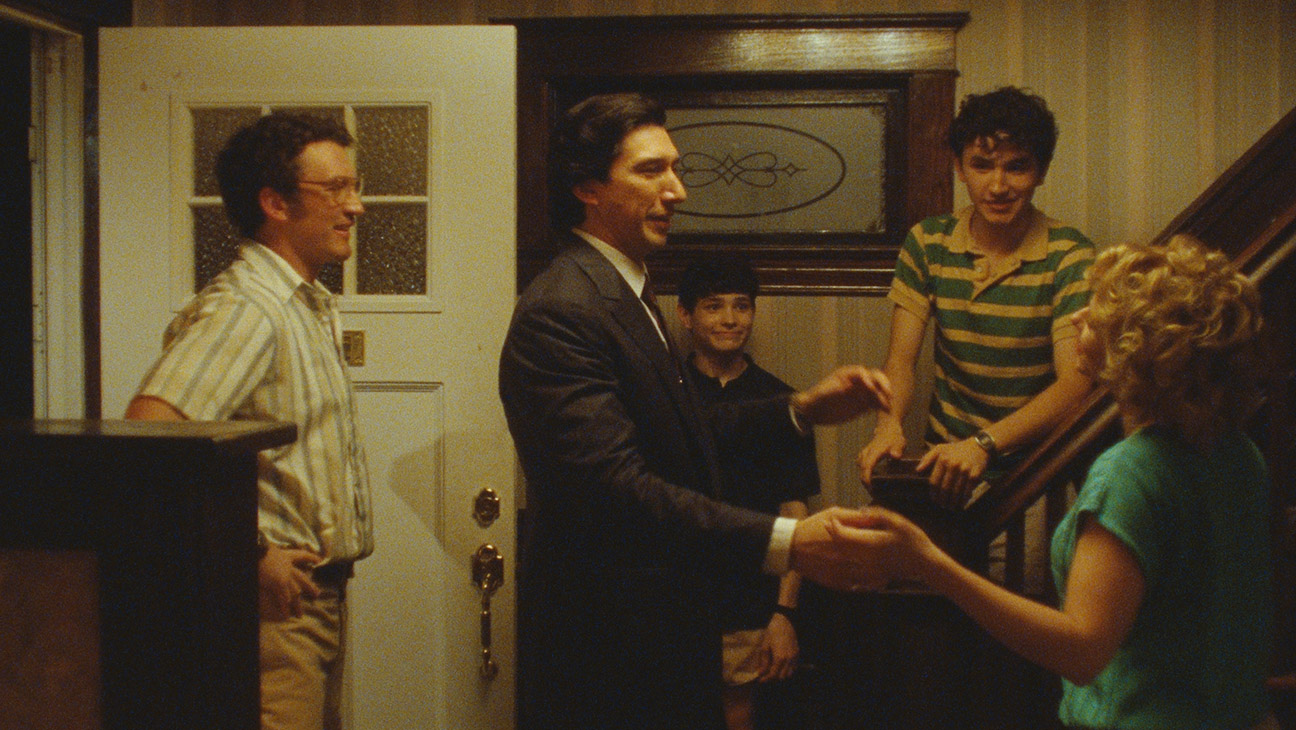
- Scarlett Johansson missed the Cannes premiere of Paper Tiger because she’s currently filming the Exorcist reboot for Universal
- Director James Gray tried to FaceTime her during the standing ovation — she didn’t pick up
- Gray read a heartfelt letter from Johansson aloud at the next day’s press conference
- The film earned a standing ovation of somewhere between six and ten minutes at the Grand Théâtre Lumière
- Critics are calling it Gray’s best film yet, with Adam Driver drawing career-best notices
James Gray’s Paper Tiger arrived at the 2026 Cannes Film Festival to one of the most rapturous receptions of the year — a roaring standing ovation, a crowd that included Cate Blanchett, Julianne Moore, and Demi Moore, and the kind of critical heat that makes awards season conversations start in May. The only thing missing was one of its stars.
Scarlett Johansson was not in the South of France on Saturday night. She’s currently on set filming the Exorcist reboot for Universal, directed by Mike Flanagan — billed as an entirely new story, not connected to the existing franchise — and her schedule simply couldn’t be moved. Adam Driver and Miles Teller flanked Gray on the red carpet, and the crowd showed up for all of them. But Johansson’s absence was felt.
Gray, visibly moved by the response, actually pulled out his phone during the ovation and tried to FaceTime her so she could hear it. She didn’t pick up.
The next morning, at the film’s press conference, he made sure she was there in spirit. Gray read a letter Johansson had written — one that didn’t explain her absence but didn’t need to. What it did instead was something rarer.
Johansson’s Letter to Gray
“Working with James and this extraordinary cast was one of the great pleasures of my career,” she wrote. “I feel so fortunate to have been part of a story so deeply rooted in what matters most: human connection, identity and the way our values evolve across generations.”
Then, addressing Gray directly — who was standing there reading it aloud — she got personal: “James, I know you are reading this right now and this part will make you genuinely queasy. My apologies. But I want you to know how much it means to me to have been part of something that you created with such care and intention that came from the depths of your artistic soul.”
She closed with something that felt less like a standard press quote and more like a genuine statement of belief: “Cinema has this rare and remarkable power to connect us to one another through a shared experience. It happens in the dark, where we can’t see each other’s faces, and yet somehow we can feel each other’s presence, each other’s empathy. That collective empathy is something we could certainly use more of right now.”
Gray, for his part, had said something similar the night before. Standing in front of the cheering Grand Théâtre Lumière crowd, visibly overwhelmed, he told the audience: “Without you there is no cinema. Cinema needs you, and cinema needs you guys more than ever. Really, this is a very important time, and Cannes is so important for that reason.”
What the Film Is About
Paper Tiger is set in 1986 Queens, and it follows two brothers — Gary (Driver), a slick ex-NYPD detective turned security entrepreneur, and Irwin (Teller), a straight-laced engineer living quietly with his wife Hester (Johansson) and their two teenage sons. When Gary convinces Irwin to consult on a lucrative Gowanus Canal cleanup project backed by Russian businessmen, neither of them fully grasps what they’re walking into. By the time they do, the mob has their home address, their family is being terrorized, and there’s no clean way out.
What the film layers on top of that crime thriller engine is something much more devastating: Hester, in the middle of all of it, receives a terminal diagnosis and keeps it from everyone, quietly trying to find a way to protect her family from the outside while unraveling from within.
The film was originally conceived as a companion piece to Gray’s 2022 Cannes entry Armageddon Time — Anne Hathaway and Jeremy Strong were initially attached to play the parents — but scheduling conflicts led to recasting, and Gray took the material in a darker, more heightened direction. Johansson and Teller now play the roles loosely based on Gray’s own parents, and by all accounts the shift worked out better than anyone could have anticipated.
The Reviews Are Extraordinary
Critics have been nearly unanimous in calling this Gray’s finest work. The Hollywood Reporter called it “arguably the director’s best film,” saying the cast is “in blazing form and full command here in a bruising movie that reveals the heavy price of pursuing the American Dream too recklessly.” IndieWire went further, declaring that “Adam Driver gives a career-best performance” in what it called “a devastating tragedy” — “like all of James Gray’s best films, Paper Tiger is both sweepingly mythic and hauntingly personal all at once.”
Time magazine put it this way: “Some thrillers are enjoyable enough, and suspenseful enough, while you’re watching them, and vaporize the instant the credits roll. But there’s another, much rarer kind of thriller: one that follows you home, giving you the feeling you’re being shadowed by a thief, someone or something who stirs in you a fear of loss that wasn’t there before. Paper Tiger is that second kind.”
The Guardian gave it four stars and called it a “heavyweight saga.” The Telegraph, also four stars, singled out Johansson as “terrific in this grubbily engrossing crime thriller.” Deadline’s review highlighted a chase sequence through a wheat field — Gary evading mob pursuers, shot both from within and above the towering stalks — as reminiscent of the crop duster scene in North by Northwest, calling it “the single finest scene Gray has ever staged.”
Not everyone was fully on board. Variety called it a film “engineered to be seen as powerful,” with “more atmosphere than plausibility,” and suggested Gray remains “an ace director who’s still being undercut by the holes in his screenplays.” Next Best Picture found it a lesser entry in his filmography overall, even while acknowledging “flashes throughout of the filmmaker at his absolute best.”
But those dissenting voices are a small minority in what has been an overwhelmingly enthusiastic critical response. Neon — which has won the Palme d’Or six years running — holds U.S. distribution rights, and the awards conversation has already started.
Gray has premiered six films at Cannes — The Yards, We Own the Night, Two Lovers, The Immigrant, Armageddon Time, and now this — and has never taken home a prize. Given what critics are saying, and given the reception in that theater on Saturday night, that streak may finally be about to end.
Johansson, meanwhile, also had another reason to be proud this week at Cannes: her directorial debut, Eleanor the Great, world premiered at the festival. She just couldn’t be in two places — or three — at once.
Filed in

Comments
0