
Oz the Mentalist Exposed by a Single Typo
A fake Google page, a misspelled name, and a wrong NFL player — journalist Pablo Torre’s viral video breaks down exactly how Oz Pearlman’s act works.
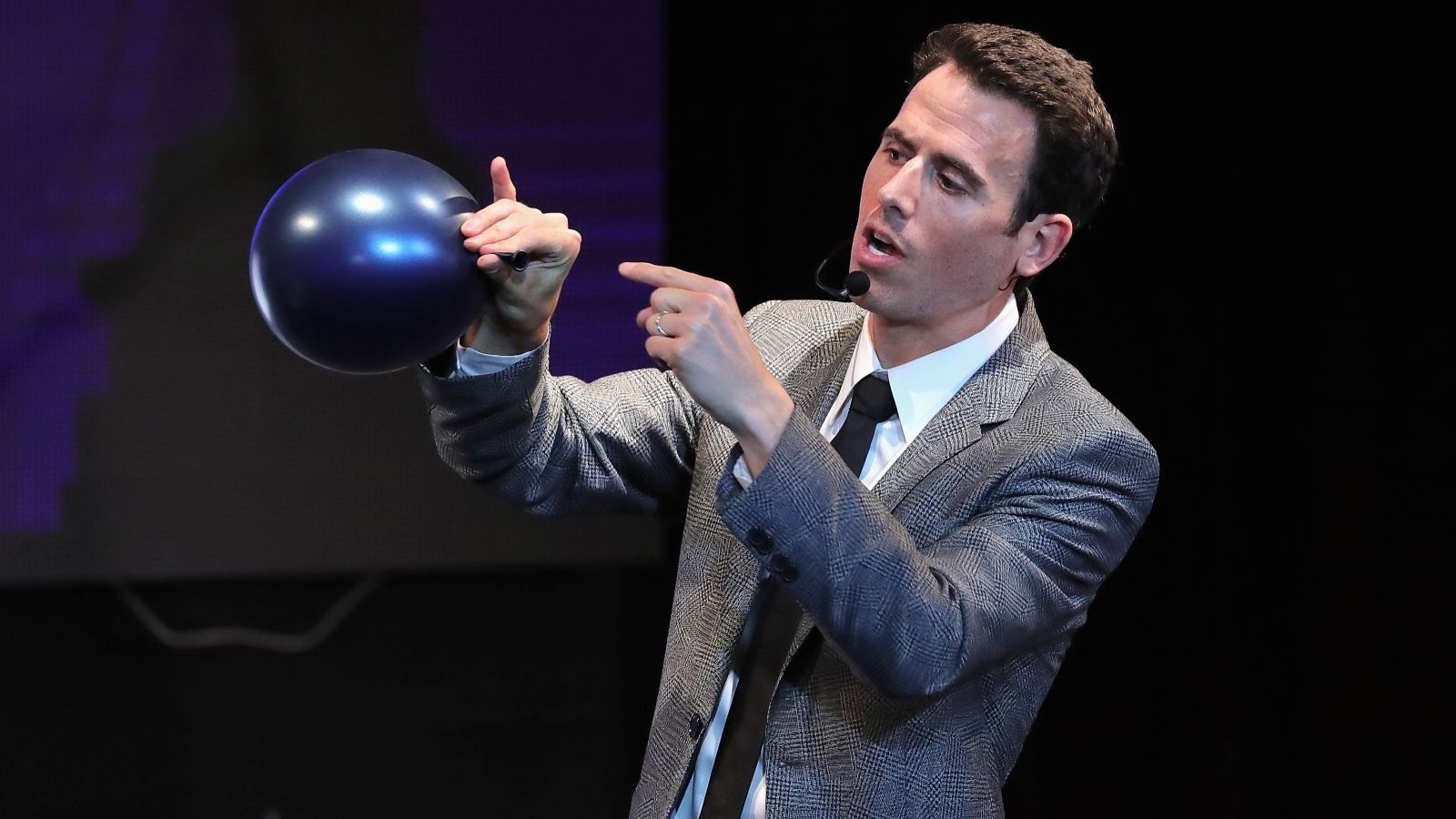
- Journalist Pablo Torre and magician-skeptic Stevie Baskin broke down how Oz Pearlman allegedly uses tech tricks, not genuine mind-reading
- A fake Google search page reportedly transmitted a subject’s keystrokes directly to Pearlman’s phone in real time
- The method unraveled on the Bussin’ With The Boys podcast when a typo sent Pearlman the wrong NFL player’s name
- Pearlman markets himself as a behavioral science expert, not a traditional magician — a distinction critics say crosses into deception
- The magic community was already cool on Pearlman before this, according to Baskin
A single typo is what unraveled it all. Oz Pearlman — the mentalist who has made a career out of appearing on NFL shows, morning television, and viral social clips — is now at the center of a very public exposure, and it started with a misspelled name on a fake Google page.
Pulitzer Prize-winning journalist Pablo Torre devoted the latest episode of his podcast Pablo Torre Finds Out to pulling apart Pearlman’s act, teaming up with Stevie Baskin, an Australian amateur magician who has built a reputation for debunking other performers’ methods. Together, they laid out a detailed argument: that Oz the Mentalist’s celebrated “mind-reading” relies not on behavioral insight or psychological intuition, but on staged digital manipulation.
The Trick, the Typo, and the Wrong NFL Player
The centerpiece of Torre’s investigation was a clip from Pearlman’s 2024 appearance on Bussin’ With The Boys, the popular podcast hosted by former NFL players Will Compton and Taylor Lewan. In the segment, Pearlman asked Compton to think of any NFL player and then attempted to “read” his mind and name the player.
What followed was painful to watch.
Pearlman confidently landed on “Bryce Hall” — not Breece Hall, the New York Jets running back Compton had in mind. “Played for the Jets last year?” Pearlman asked, doubling down with, “Just switched to the Buccaneers.”
Compton gently corrected him: “Breece Hall. Yeah.” Then someone else on set added the final twist of the knife: “He’s on the Jets still.”
Compton and Lewan, clearly not wanting to embarrass their guest, tried to give Pearlman credit for being “close.” But close isn’t mind-reading. And according to Baskin, the mistake didn’t just reveal a bad guess — it revealed the entire system behind the trick.
Here’s how Baskin says it works: before filming, Pearlman allegedly coordinates with a co-host — in this case, Lewan — to set up a fake Google search page that looks completely authentic. When Compton is asked to look up stats on the player he’s thinking of, the page secretly captures his keystrokes and transmits them in real time to Pearlman’s phone. Pearlman then “reads” the subject’s mind — because he already has the answer on his screen.
Except this time, Lewan apparently typed “Bryce Hall” before correcting it to “Breece Hall.” Pearlman saw the first entry. Bryce Hall, for what it’s worth, was a real NFL player — a cornerback who had played for the Jets from 2020 to 2023 before moving to Tampa Bay — which is exactly why Pearlman’s confident follow-up about the Buccaneers made a kind of surface-level sense. But it was still the wrong player, and the wrong answer.
“The beautiful irony that unfolds here,” Baskin said on the episode, “is that the name that Will puts into this Google search, he misspells it.” He didn’t mince words about what that means for the broader act: “Mentalism in terms of body language analysis and nonverbal cues, that’s not real at all. He starts with the answer, and he works backwards.”
Why the Magic Community Was Already Over Him
What makes this story more than just a “magician gets caught” moment is the context Torre and Baskin provided around Pearlman’s standing in the broader magic world. As Baskin explained, Oz isn’t particularly well-liked among other magicians — and not just because exposing methods is typically a serious violation of the community’s unwritten code. It’s also the way Pearlman operates that rubs people the wrong way.
Pearlman doesn’t call himself a magician. He calls himself a mentalist. He has given TED-style talks, written a bestselling book called Read Your Mind, and built an entire brand around the idea that his abilities are rooted in real behavioral science — observation, psychology, nonverbal cues. That framing is what critics say pushes his act past entertainment and into something more troubling.
Torre put the question directly: “What is the argument not only for why Oz is not what he says he is, but why is it a problem?”
The defense you’ll hear from Pearlman’s supporters is a familiar one — that exposing a magician’s methods ruins the fun and can damage a performer’s livelihood. But Torre’s argument isn’t that the tricks shouldn’t exist. It’s that marketing tech-assisted sleight-of-hand as genuine human insight is a different kind of deception than a standard magic show. When someone buys a book claiming to teach them real psychological skills, or books a “mentalist” to speak at a corporate event about reading people, the framing matters.
For a lot of viewers watching the Bussin’ With The Boys clip play out in real time, that argument landed the moment Compton said “Breece Hall. Yeah” — and Oz had nothing left to work with.
Filed in

Comments
0