
The 7 Best X-Men Stories of the ’80s, Ranked
From Dark Phoenix to God Loves Man Kills, these are the X-Men’s most important 1980s storylines — and why they still matter today.
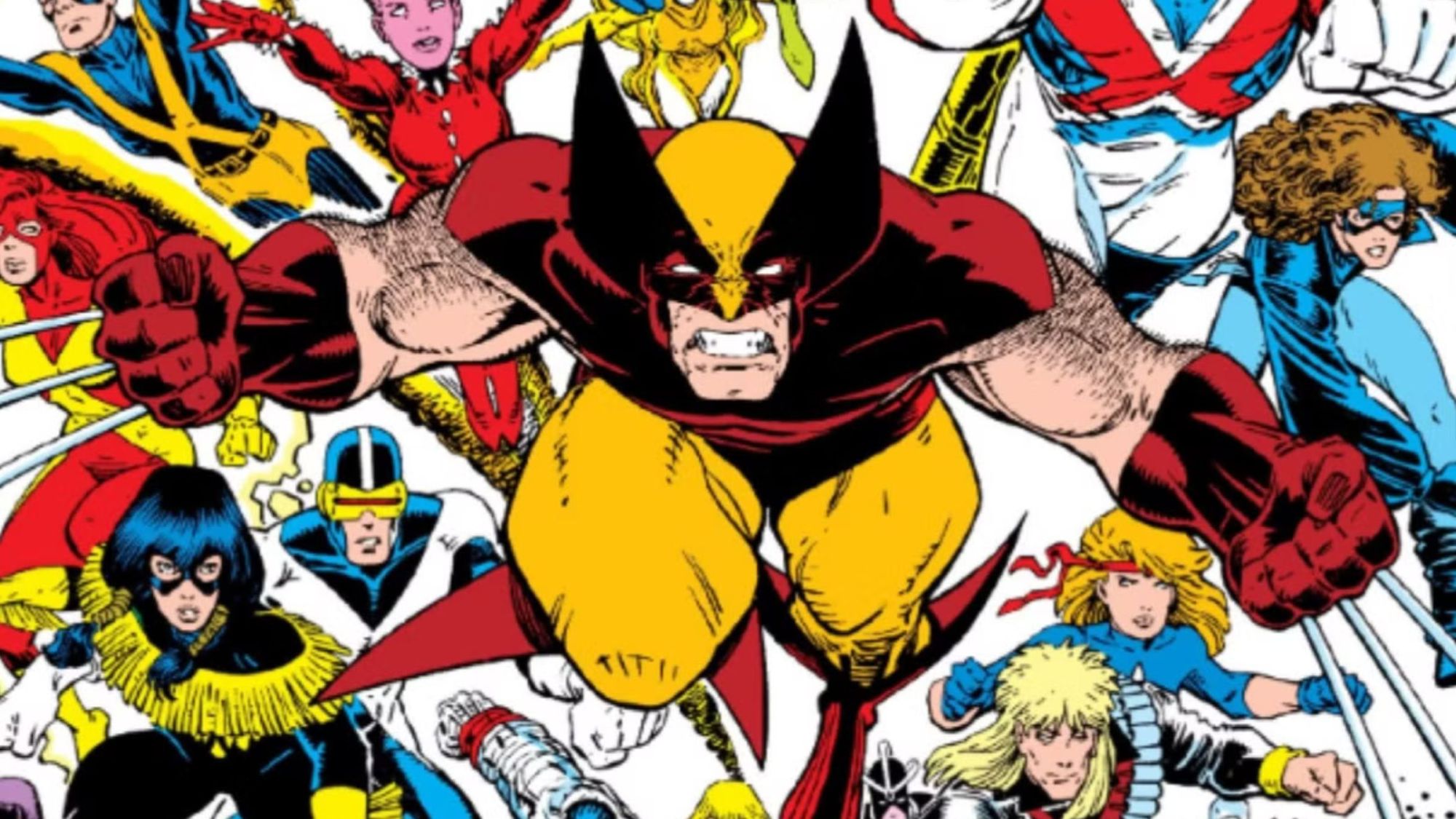
- Chris Claremont guided the X-Men through nearly the entire 1980s, producing some of Marvel’s most enduring stories.
- “God Loves, Man Kills” tops the list for its modern relevance — it inspired the film X2 and still resonates today.
- “Days of Future Past” introduced alternate timelines to Marvel and remains one of the most adapted X-Men stories ever.
- The decade also gave us the Brood, the Mutant Massacre, and the origin of Cable — all still shaping X-Men comics in 2026.
- Several of these storylines directly connect to Marvel’s upcoming DNX event, making now the perfect time to revisit them.
The X-Men didn’t just survive the 1980s — they became the biggest thing in comics. Under writer Chris Claremont, who shepherded the team for nearly the entire decade, the mutant squad went from a cult favorite to a genuine cultural phenomenon. They fought alien empires, explored dystopian futures, and tackled themes that no superhero book had dared touch before. The stories they told in those ten years are still reverberating through Marvel Comics right now.
With Marvel’s next major X-Men event, DNX, spinning out of the current X-Men (Vol. 7) run and pulling in threads that go all the way back to this era, there’s never been a better moment to look back at where it all started. Here are the seven best X-Men storylines of the 1980s, ranked by how much they still matter today.
7. “Duel” — Storm Takes the Throne
It’s a single issue — Uncanny X-Men #201 from 1986 — but what happens inside it changed the team’s entire power structure. Storm had lost her powers by this point, but she wasn’t about to cede the leadership of the X-Men to anyone, including Cyclops. She challenged him to a duel. And then a depowered Ororo Munroe took his visor and made him submit.
Cyclops quit the team. Storm took over. That shift eventually set up the X-Men versus X-Factor rivalry that would define the rest of the decade, and it remains one of the cleanest, most satisfying single-issue character moments Claremont ever wrote.
6. “Mutant Massacre” — Marvel Gets Brutal
The mid-’80s were when Marvel decided the X-Men could handle real darkness, and “Mutant Massacre” was the proof. Mister Sinister sent his Marauders into the tunnels beneath New York City to slaughter the Morlocks — the underground community of mutants who couldn’t pass as human. They nearly succeeded. Thor and Power Pack joined the X-Men in a desperate attempt to stop it, and they still couldn’t prevent the carnage.
Angel had his wings so badly damaged that they had to be amputated. The Morlocks were nearly wiped out. And the story’s shadow stretched all the way into the ’90s, when it was revealed that Gambit had unknowingly helped lead the Marauders to the tunnels — a revelation that briefly got him exiled from the team. Mister Sinister, largely a background figure before this, emerged as one of the X-Men’s most dangerous villains. He still is.
The crossover ran through Uncanny X-Men #210-213, New Mutants #46, X-Factor #9-11, Thor #373-374, Power Pack #27, and Daredevil #238 — a sprawling, brutal event that still holds up as one of the great mutant stories.
5. “Inferno” — Everything Burns
“Inferno” is where the consequences of the entire decade came crashing together. Running from 1988 into 1989 across Uncanny X-Men #239-243, X-Factor #33-40, New Mutants #71-73, X-Terminators #1-4, and Excalibur #6-7, it was the payoff to storylines that had been building for years.
Cyclops had abandoned his wife Madelyne Pryor to reunite with the newly resurrected Jean Grey. Then Mister Sinister sent the Marauders to kill Madelyne and kidnap her infant son Nathan. The twist: Sinister had created Madelyne as a clone of Jean specifically to produce a powerful mutant child. Illyana Rasputin finally gave herself over to her Darkchylde form. Limbo began bleeding into Manhattan. And Nathan — sent to the future to survive a techno-organic virus — would eventually become Cable.
It’s one of the darkest corners of ’80s Marvel, and nearly every thread it pulled on is still being tugged at today.
4. “The Dark Phoenix Saga” — A Hero Actually Dies
Before the Marvel Cinematic Universe made superhero death feel like a temporary inconvenience, “The Dark Phoenix Saga” made it mean something. In 1980, Jean Grey — transformed into the near-omnipotent Phoenix — was manipulated by the Hellfire Club until something inside her broke. She flew into space and consumed a star, killing millions. The Shi’ar Empire arrived to demand justice. The X-Men fought the Imperial Guard for her life and lost.
Jean sacrificed herself. A genuine Marvel hero died on the page, and readers were stunned. The death was eventually retconned, but for its moment, nothing in superhero comics had hit that hard. “The Dark Phoenix Saga” remains the benchmark against which every X-Men story since has been measured — and most fall short.
3. “The Brood Saga” — X-Men as Horror Movie
The Brood arrived in Uncanny X-Men #155-167 (1982), with the core arc running through #161-167, and they were genuinely terrifying. An alien species that implanted queen embryos into living hosts — including Wolverine, whose healing factor meant the embryo couldn’t kill him fast enough — the Brood brought a body horror aesthetic to Marvel that the publisher had never really attempted at this scale.
Professor X died in this story. His mind survived only by being transferred into a cloned body. The Shi’ar, previously enemies of the X-Men, returned as uneasy allies alongside the Starjammers and Lilandra Neramani. Kitty Pryde stepped up into a leadership role. It’s one of the best horror stories Marvel produced in the entire decade, and the Brood have remained a fixture of the X-Men’s cosmic mythology ever since — still showing up to cause problems all these years later.
For anyone who’s never read classic X-Men, this is also one of the best entry points: a perfect blend of superheroes, science fiction, and genuine dread that doesn’t require a thick stack of back issues to understand.
2. “Days of Future Past” — The Template for Every Dark Future
Two issues. That’s all it took. Uncanny X-Men #141-142 (1981), by Claremont and John Byrne, opened in a 2013 America where Sentinels had exterminated most mutants and imprisoned the rest, and surviving heroes were scratching out an existence in the ruins. Kitty Pryde sent her consciousness back in time to try to stop the assassination of Senator Robert Kelly — the event that set the whole catastrophe in motion.
“Days of Future Past” invented the dystopian alternate future as a superhero genre staple. Every dark timeline story that came after it — in comics, in film, in television — owes something to these two issues. The story was adapted as the backbone of the 2014 film X-Men: Days of Future Past, and the timeline itself never went away in the comics. It still exists. The shadow it casts is enormous.
1. “God Loves, Man Kills” — The One That Explains Everything
If you want to understand why the X-Men matter — not just as a superhero team, but as a cultural idea — this is the story to read. Published in Marvel Graphic Novel #5 (1982) by Claremont and artist Brent Eric Anderson, “God Loves, Man Kills” introduced William Stryker: a televangelist who built a movement around the belief that mutants were servants of Satan, and whose Purifiers murdered mutant children to cleanse the world of what he called evil.
The story works as a direct examination of how charismatic leaders use religion and fear to turn society against a persecuted minority. It forces Magneto — a Holocaust survivor who has every reason to despise humanity — into an uneasy alliance with the X-Men, because even he recognizes that what Stryker is doing looks familiar. It ends when Stryker tries to kill a mutant child on live television and the world finally sees him for what he is.
Over 44 years after its publication, it reads like it was written last week. It was the direct inspiration for the film X2, which reimagined Stryker as a paramilitary scientist rather than a reverend but kept the essential engine of the story intact. No other X-Men story from the decade — or arguably from any decade — captures what the mutants are really a metaphor for with this kind of precision and power.
And with DNX on the horizon, pulling in villains and concepts that trace back through decades of X-Men history, the foundation that Claremont built in the ’80s has never felt more load-bearing. These stories aren’t just classics. They’re still the blueprint.
Filed in

Comments
0