
Olivia Rodrigo’s Babydoll Dress Drama, Explained
Olivia Rodrigo’s floral babydoll dress sparked online backlash — but the look has deep riot grrrl roots. Here’s why the outrage doesn’t quite add up.
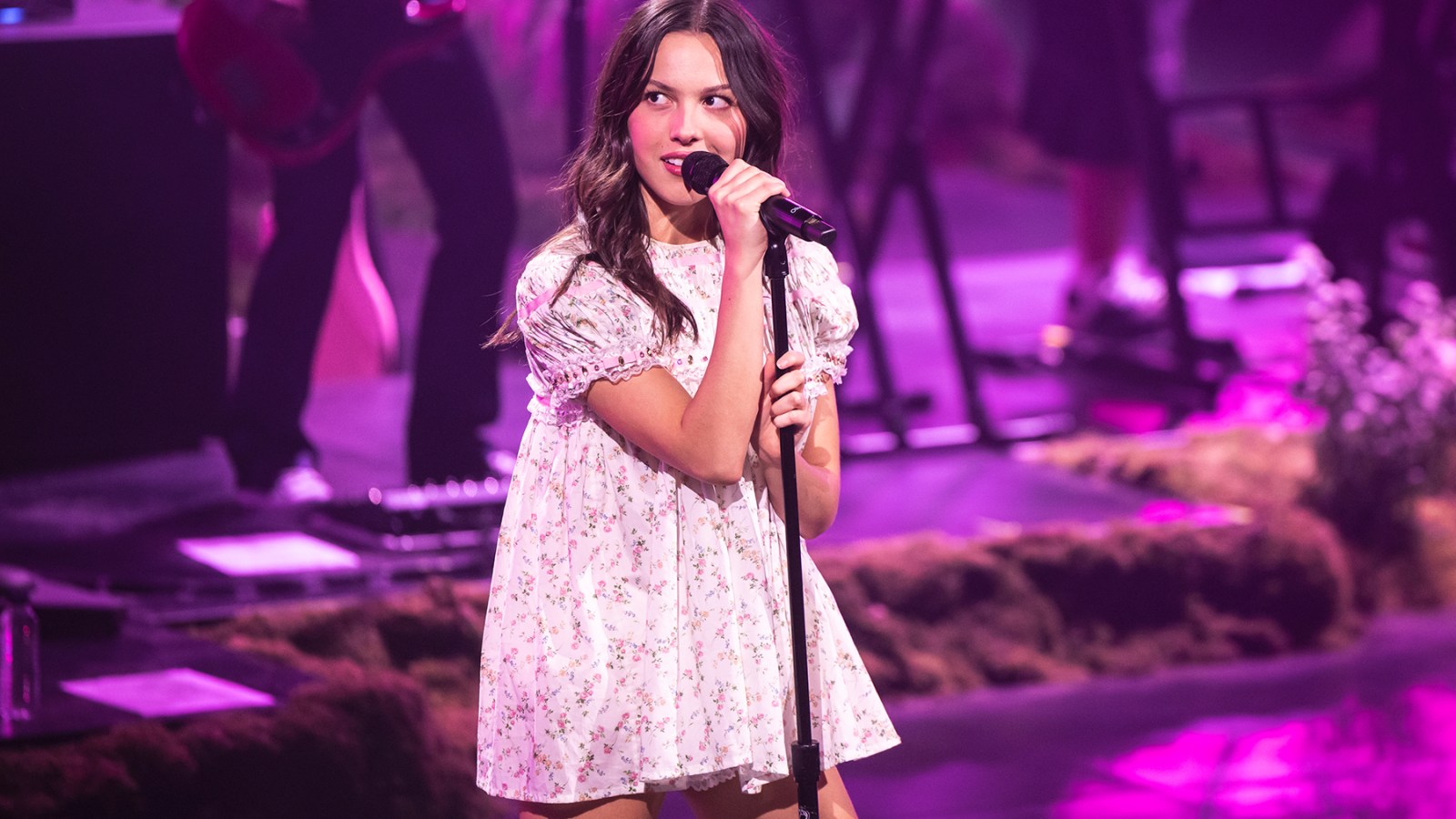
- Olivia Rodrigo’s babydoll dress at Spotify’s Billions Club show in Barcelona ignited a wave of online criticism
- Critics claimed the look “infantilizes” the 23-year-old, while fans pushed back hard with historical context
- The silhouette has deep roots in riot grrrl fashion — think Courtney Love and Kat Bjelland in the ’90s
- Rodrigo has been pairing feminine dresses with combat boots since her 2021 debut, making this a signature look
- Researchers have previously flagged bot-driven smear campaigns targeting pop stars like Taylor Swift and Chappell Roan
Olivia Rodrigo wore a floral dress and the internet apparently couldn’t handle it.
The Grammy-winning singer performed at Spotify’s Billions Club Live in Barcelona on May 8 — a concert series celebrating artists whose songs have crossed one billion streams on the platform. Rodrigo had nine songs to celebrate, including “Driver’s License,” “Deja Vu,” “Good 4 U,” and “Vampire.” She took the stage at the Teatro Greco in a white Génération78 babydoll dress — short-sleeved, floral-patterned, skirt hitting well above the thigh — paired with knee-high black leather Dr. Martens boots and barely visible lace bloomers underneath. She rocked out. She crawled around. She performed nine billion-stream songs.
And then the discourse started.
Posts on X and Instagram piled up, with users insisting the look was inappropriate — simultaneously infantilizing and sexualizing the 23-year-old. “She is wearing pink dresses that are similar to what toddlers wear with frilly underwear beneath it,” one X user wrote. “Can Olivia Rodrigo dress like a normal pop star and stop trying to dress up like a toddler?” wrote another. “A grown woman wearing children’s clothes … she keeps giving me the ick,” a third chimed in. One post referencing the Barcelona outfit racked up 21 million views and simply read, “Maybe I’m too woke.”
One particularly viral take grouped Rodrigo alongside Sabrina Carpenter in a side-by-side photo with the caption: “We have to talk about the weird trend of heavily sexualized pop stars dressing themselves as little girls.”
Except — this is not a new look for Rodrigo. Not even close.
The Look Has a History (and It’s a Good One)
The babydoll dress itself has a history that has nothing to do with children’s clothing. The silhouette was developed by lingerie designer Sylvia Pedlar in 1942 as a response to wartime fabric shortages, popularized in the late ’50s by the Carroll Baker film Baby Doll and Spanish designer Cristóbal Balenciaga, and then reclaimed in the ’90s by the grunge and alternative rock world. Courtney Love wore it. Kat Bjelland wore it. It became a defining aesthetic of the riot grrrl movement — hyper-feminine dresses worn in deliberate, provocative contrast to the rage and punk energy these women brought to their music. The whole point was subversion.
Rodrigo has been transparent about these influences. In 2023, she told Rolling Stone that her mom used to wake her up by putting on Babes in Toyland’s Fontanelle — Bjelland’s band. “Rock in that feminine way, that’s just the coolest thing in the world to me,” she said. She’s been pairing feminine dresses with combat boots since she kicked off her career in 2021, and the aesthetic has always been referential — it’s part of what makes her connect across generations of fans.
As she gears up to release her third album, You Seem Pretty Sad for a Girl So In Love, the babydoll has become even more central to her visual identity. She wore a bubblegum-pink floral collared version for the album artwork. She wore a blue, ruffled one for the “Drop Dead” music video. The Barcelona outfit was a continuation of a fully intentional aesthetic — not a wardrobe malfunction, not a lapse in judgment.
Fans who actually know their fashion history said as much. “Olivia Rodrigo has been making a lot of references to the past during this era, and the babydoll is one of them,” one supporter wrote on X. “Although its name may cause confusion, its history, design and purpose are clearly linked to women’s lingerie and have nothing to do with children’s clothing.” Another put it more bluntly: “It’s literally just a babydoll dress, and they conveniently cut off the photo to not show Olivia Rodrigo is wearing knee-high LEATHER boots. Courtney Love was wearing similar [clothes] a decade ago. Predators are the problem, not pop stars.”
Could This Be More Than Just Misogyny?
The anger has a familiar smell to it. Over the past year, GUDEA — a behavioral intelligence startup that tracks viral, reputation-harming claims online — flagged two separate bot-driven smear campaigns targeting Taylor Swift and Chappell Roan. The playbook: fake profiles flood platforms with incendiary posts, creating the illusion of widespread outrage where none organically existed. No confirmed bot campaign has been identified in Rodrigo’s case — but the pattern of the criticism, its intensity, and the sheer weirdness of the takes have people raising an eyebrow.
Or it could simply be what it’s always been. “Putting out music in the age of social media can be really daunting,” Rodrigo told Alanis Morissette in a 2021 Rolling Stone Musicians on Musicians conversation. “I think people hold young women to an incredibly unrealistic standard.”
She said that five years ago. Apparently it still applies.
Filed in

Comments
0