
How Star Wars Turned One Throwaway Line Into Its Best Storytelling
A single line in A New Hope about the Clone Wars became one of Star Wars’ richest storytelling threads — and 24 years later, it’s still paying off.
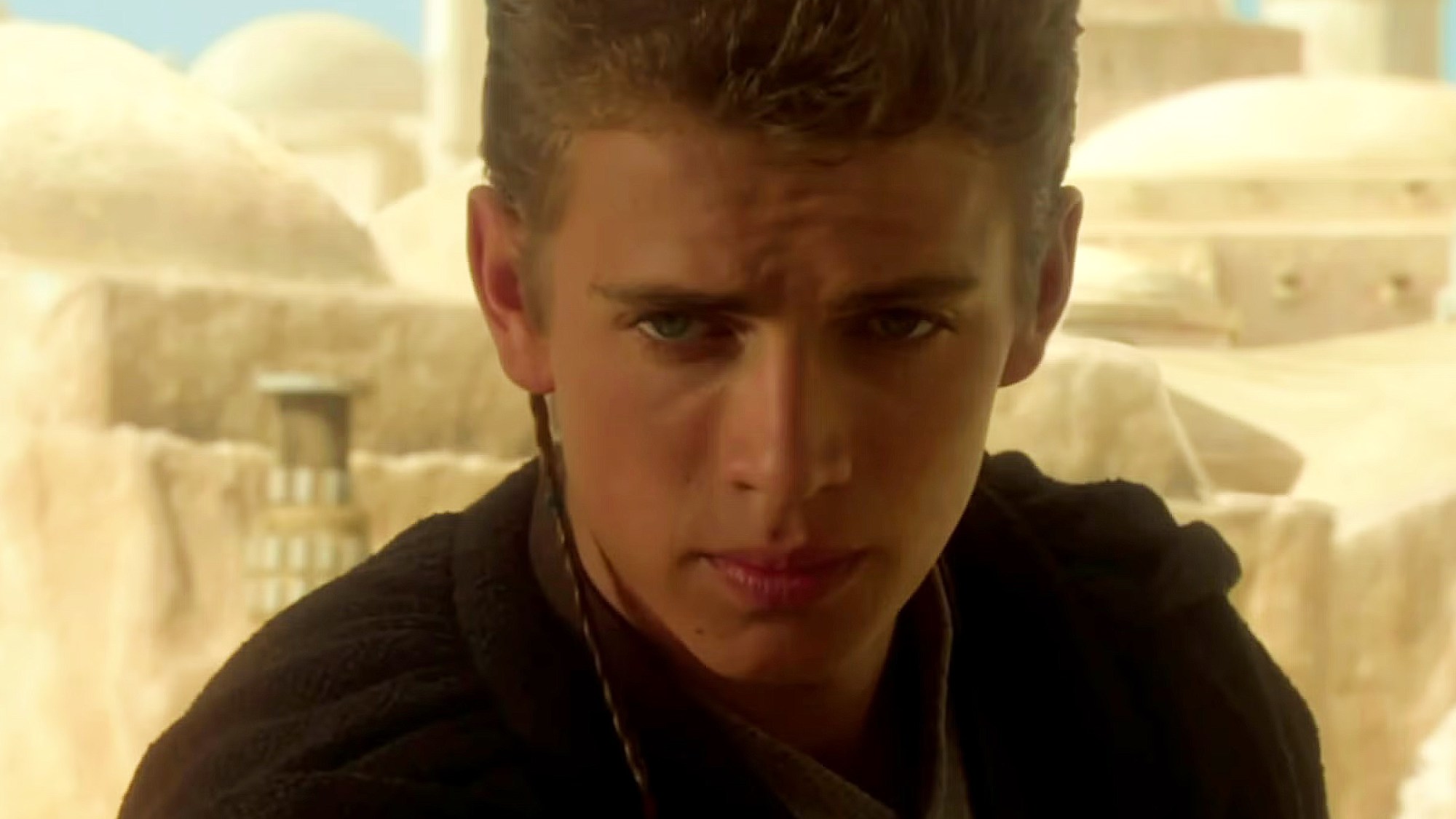
- A brief mention of the Clone Wars in 1977’s A New Hope went unexplained for 25 years before Attack of the Clones finally gave fans answers.
- Attack of the Clones — released May 16, 2002 — introduced clone troopers and depicted the Battle of Geonosis, the war’s opening battle.
- Yoda’s now-iconic line “Begun, the Clone Wars have” capped the film and launched one of Star Wars’ most expansive storytelling eras.
- The animated series Star Wars: The Clone Wars and The Bad Batch have since expanded that single throwaway line into some of the franchise’s most beloved content.
- Revenge of the Sith, which premiered at Cannes on May 15, 2005, brought the prequel era to a close — but the Clone Wars story was just getting started.
When Obi-Wan Kenobi casually mentioned fighting alongside Anakin Skywalker in something called the Clone Wars during a quiet scene in A New Hope, nobody — not even George Lucas — could have predicted where that single line would eventually lead. Twenty-five years of storytelling, multiple animated series, and some of the most emotionally rich content in the entire Star Wars galaxy all trace back to what easily could have been a throwaway piece of worldbuilding.
The original trilogy never elaborated on it. The Phantom Menace didn’t touch it either, which made the Clone Wars feel like a peculiar dangling thread — something referenced but never explained, a historical event that existed only in the margins. Then came Star Wars: Episode II — Attack of the Clones, released 24 years ago, and everything changed.
What Attack of the Clones Actually Had to Do
The prequel trilogy carried enormous narrative weight before a single frame was shot. These films had to explain how Darth Vader was Luke and Leia’s father, how the twins were separated, who their mother was, how the Jedi Order functioned, and how the Republic crumbled into the Empire — all while telling a story whose ending the audience already knew. That’s a staggering amount of connective tissue to weave together without losing the audience along the way.
Attack of the Clones tackled the Clone Wars specifically, and it did so with a kind of structural elegance. The film introduced the clone troopers — mysterious, unsettling, their full purpose not yet clear — and then paid it off with the Battle of Geonosis, the Republic and the Separatists clashing with their armies of clones and battle droids in what amounted to the war’s opening shot. For audiences who had spent decades wondering what this conflict actually was, seeing it ignite on screen carried real weight.
And then Yoda delivered the line that made it official: “Begun, the Clone Wars have.” Simple. Declarative. Enormously satisfying.
The film ended almost immediately after, which meant that the bulk of the war itself — years of battles, politics, sacrifice, and moral complexity — happened off-screen between Episodes II and III. Revenge of the Sith, which made its world premiere at the Cannes Film Festival on May 15, 2005, to a standing ovation, showed the war’s end: the Battle of Coruscant, Order 66, the fall of the Jedi. Directed by Lucas and starring Ewan McGregor, Hayden Christensen, and Natalie Portman, it was his final film as a Star Wars writer-director, and it grossed over $848 million worldwide. But even that film, for all its tragedy and spectacle, could only gesture at the full scope of what the Clone Wars actually were.
Where the Real Story Began
The animated series Star Wars: The Clone Wars is where that throwaway line from 1977 truly found its home. What the prequel films could only sketch in broad strokes, the series filled in with extraordinary depth — the individual clone troopers given names and personalities, the political machinations of the Separatists, the moral ambiguities of a war fought by an army of engineered soldiers who never asked to exist. Most crucially, the show introduced the clone inhibitor chip, the biological failsafe built into every trooper that made Order 66 — previously one of the prequel trilogy’s more confusing plot points — suddenly devastating in a completely new way. These weren’t soldiers who chose to betray the Jedi. They never had a choice at all.
That recontextualization alone transformed how an entire generation of fans understood the prequel era. A line spoken in passing in 1977 had, through decades of patient storytelling, become the foundation for some of the most emotionally complex content Star Wars has ever produced.
The Bad Batch continued that expansion, following a squad of elite clone troopers with genetic mutations that made them resistant to the inhibitor chip — and therefore forced to navigate a galaxy that had just turned against everything they’d fought for. The Clone Wars, as a storytelling engine, showed no signs of exhaustion.
It’s a remarkable trajectory for what Obi-Wan mentioned almost in passing while trying to convince a farm boy to leave his planet. Decades later, that moment is still generating new stories — and the best ones, arguably, are the ones that never made it to the big screen at all.
Filed in

Comments
0