
Anderson Cooper’s Emotional 60 Minutes Farewell
Anderson Cooper signed off from 60 Minutes after 20 years with tears, a tribute to the show’s independence, and a plea for its future.
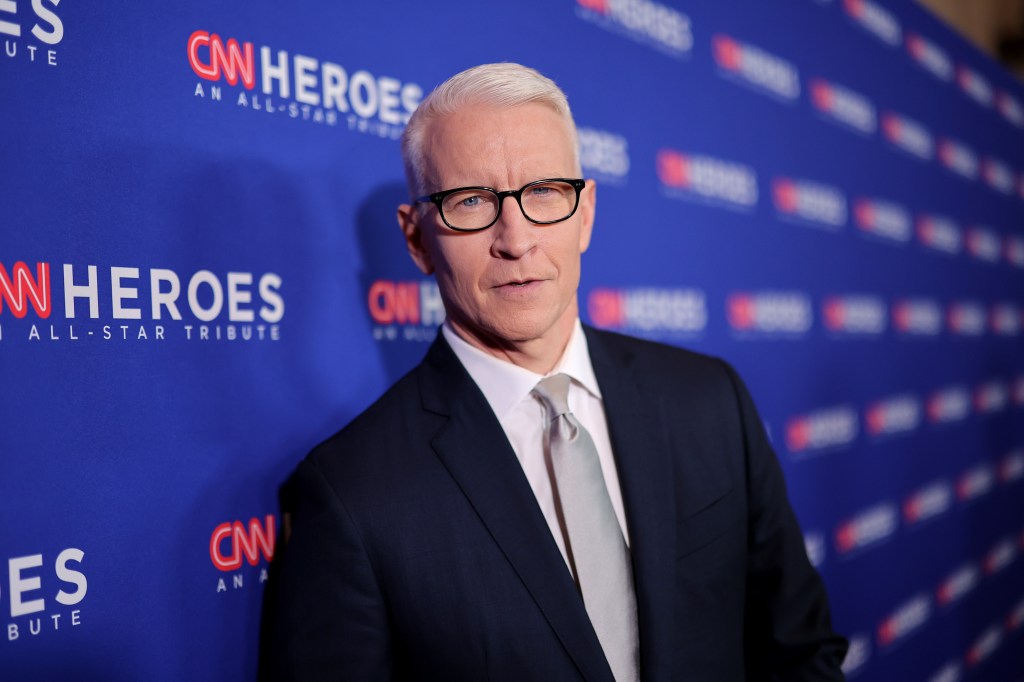
- Anderson Cooper delivered his final sign-off on 60 Minutes on May 17 after nearly 20 years as a correspondent.
- Cooper got emotional saying “I’m Anderson Cooper” for the last time, choking up before saying it three times to camera.
- He cited the challenge of balancing CNN duties with 60 Minutes — using vacation time and weekends to file stories — and wanting more time with his young sons Wyatt and Sebastian.
- His farewell came with a pointed tribute to 60 Minutes’ independence, widely read as a quiet rebuke of recent changes under new CBS News editor-in-chief Bari Weiss.
- Cooper is staying at CNN as anchor of Anderson Cooper 360°.
Anderson Cooper said goodbye to 60 Minutes on Sunday — and he didn’t make it through the goodbye without tears.
The CNN anchor, 58, made his final appearance as a correspondent on the CBS newsmagazine’s May 17 season finale, which featured his report on London’s iconic cab industry facing the rise of autonomous vehicles. After the episode, CBS News released an extended 60 Minutes Overtime farewell segment — and it’s the kind of thing you don’t just watch, you feel.
When it came time to say the words he’s said hundreds of times over two decades, Cooper couldn’t hold it together. He choked up for several seconds, looked down, held back tears, then looked straight into the camera and said it three times — the show’s signature standard. “I’m Anderson Cooper.” Three times. Done.
“I don’t think the reality has really hit me that I’m not gonna be doing this any longer,” he said. “You know, to give up something you’ve watched since you were a kid — yeah, I will miss this.”
The Kid Who Watched the News at Dinner
Cooper joined 60 Minutes in 2006, and the show has meant something deeply personal to him since long before that. He grew up watching it. He knew every correspondent by name. Mike Wallace, Morley Safer, Ed Bradley, Bob Simon — these weren’t just TV personalities to him, they were heroes. He even got Bob Simon’s office after Simon died, a detail that clearly still floors him.
“I was a weird little kid,” Cooper said. “I liked watching news. After my dad died, there was a lot of silence in my house, and we’d watch the news over dinner.” When he was finally hired, he said, “I could not believe that I was on 60 Minutes.”
The Overtime segment played like a love letter to the show itself — clips rolled of Cooper’s interviews with Prince Harry, Lady Gaga, Adele, Timothée Chalamet, the late Donald Sutherland, and Dave Grohl. But Cooper seemed most moved talking about the interviews that didn’t come with famous names attached: a Holocaust survivor, people fighting child malnutrition in Niger, ordinary people carrying extraordinary weight.
“The thing is, it’s never felt like work,” he said. “It’s felt like you’re stepping into people’s lives, and you’re invited into people’s homes. You’re invited into their struggles, you’re invited into whatever it is that has brought them to be on 60 Minutes.”
He also went back through some of the more spectacularly dangerous things he did in the field — scuba diving to find Nile crocodiles, and jet skiing the massive waves of Nazaré, Portugal, with legendary surfer Garrett McNamara, which left him temporarily blinded from UV reflection burning his corneas. “Dangerous and dumb,” he called it, though clearly without regret.
Why He’s Leaving
Cooper announced his exit back in February, and the reasons he gave then are the same ones he laid out in his farewell: it was simply too much to carry.
“The whole time I’ve done pieces for 60 Minutes, my full-time job has been over at CNN and still is,” he said. “CNN doesn’t like it if I take a lot of time off to work on a 60 Minutes piece, so I’ve worked mostly for 60 Minutes on weekends. My vacation time at CNN has been working on 60 Minutes pieces. And I’ve loved it, but it’s been tough.”
The second reason is harder to argue with. His sons — Wyatt, 6, and Sebastian, 4 — are growing up fast.
“I want to spend as much time with them as I can while they still want to spend time with me,” he said. “And those days, that clock is ticking.”
He’ll stay at CNN anchoring Anderson Cooper 360°. CBS, for its part, said in a February statement that they’re “grateful to him for dedicating so much of his life to this broadcast” and that “60 Minutes will be here if he ever wants to return.”
A Farewell That Felt Like a Warning
Cooper’s exit didn’t happen in a vacuum. 60 Minutes has been navigating choppy waters since Paramount Skydance CEO David Ellison hired Bari Weiss as CBS News editor-in-chief last October — a move that raised eyebrows given Weiss’s background as a former New York Times opinion writer and founder of The Free Press, with no prior broadcast news experience.
In December, Weiss pulled a completed 60 Minutes segment on CECOT, the El Salvador prison where the Trump administration sent deportees, just hours before it was set to air. Correspondent Sharyn Alfonsi pushed back hard, writing in an email to staffers: “It is factually correct. In my view, pulling it now, after every rigorous internal check has been met, is not an editorial decision, it is a political one.” Weiss defended the call, saying the story “was not ready” and needed a Trump administration official on camera. The piece eventually aired four weeks later, essentially unchanged. Alfonsi has since said her future at the show remains unclear.
Meanwhile, President Trump scored a legal win when Paramount Global settled his lawsuit over the editing of a 60 Minutes Kamala Harris interview for $16 million, with the agreement requiring the network to release transcripts of presidential candidate interviews post-air. And at January’s Golden Globes on CBS, host Nikki Glaser didn’t let the moment pass quietly, calling CBS News “America’s newest place to see B.S. news.”
Cooper’s farewell segment addressed all of this without naming any of it directly — and that made it land harder.
“I hope 60 Minutes remains 60 Minutes,” he said. “There are very few things that have been around as long as 60 Minutes has and maintained the quality that it has. Things can always evolve and change, and I think that’s awesome. But I hope the core of what 60 Minutes is always remains.”
He went further. “I think the independence of 60 Minutes has been incredible. And I think the trust it has with viewers is critical to the success of 60 Minutes.” Then, measuring every word: “When you see a 60 Minutes story, and you’re like, ‘That was a really good story’ — it was a good story because it requires time, it requires patience, it requires money, and it requires an appreciation of the history and the sacrifices and the hard work of the people here. And I hope that’s known and honored and valued and continues.”
He closed with the dream he’s carrying out the door with him: “I hope 60 Minutes is around for when my kids grow up and have kids of their own, and they can watch it with their kids.”
Twenty years. Nile crocodiles. Burned corneas. Holocaust survivors. A 4-year-old and a 6-year-old at home. And one last look into the camera.
“I’m Anderson Cooper.”
Filed in

Comments
0