
Léa Seydoux’s Body-Swap Thriller Stuns Cannes
Arthur Harari’s ‘The Unknown’ premieres at Cannes with Léa Seydoux in a haunting, genre-defying body-swap film that critics can’t stop arguing about.
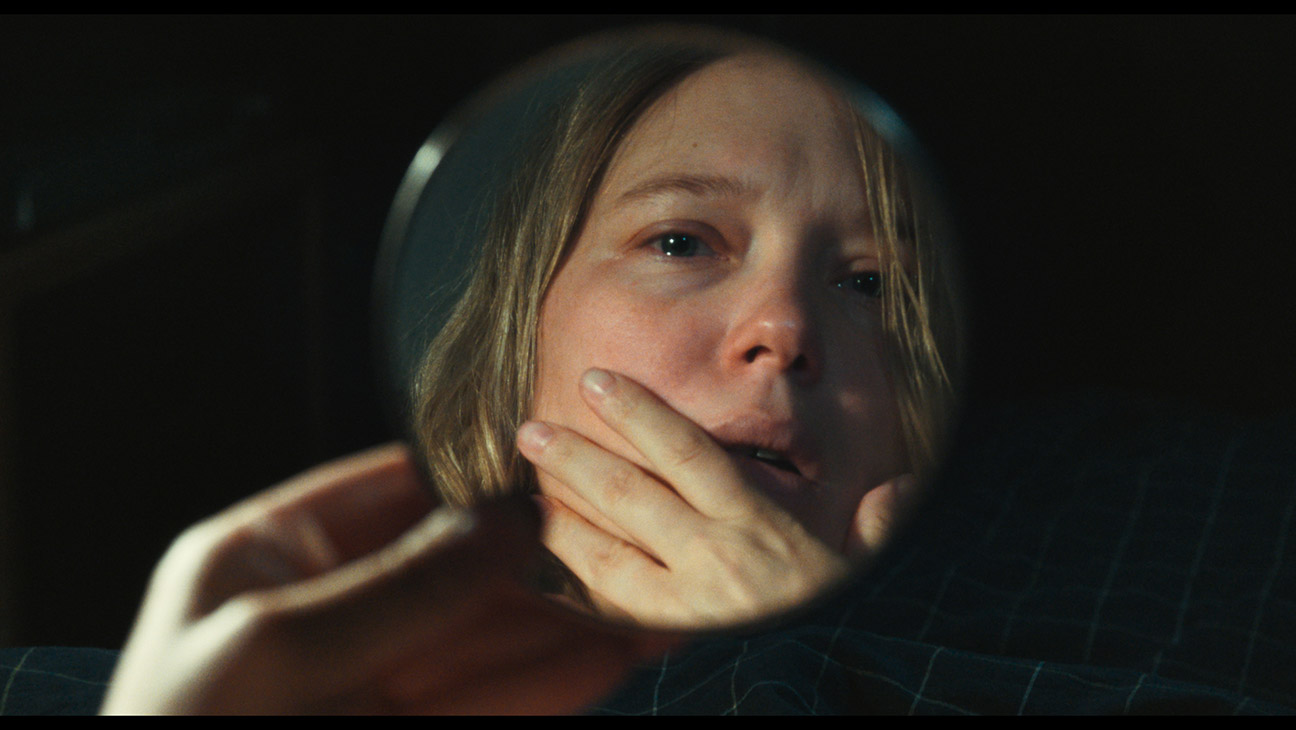
- Arthur Harari’s The Unknown premiered in Competition at the 2026 Cannes Film Festival
- Léa Seydoux stars alongside Niels Schneider in a body-swap thriller adapted from Harari’s own graphic novel
- Harari co-wrote the Oscar-winning Anatomy of a Fall — this is his solo directorial return to Cannes
- Neon will release the film in U.S. theaters
- Critics are split: some find it a spellbinding psychological puzzler, others a frustratingly cold exercise
There’s a moment early in The Unknown where Léa Seydoux, playing a man who has just woken up in a woman’s body, strips down and examines her new form like it’s an alien landscape — methodical, alarmed, queasy. It’s the kind of scene that could tip into camp or comedy in lesser hands. Instead, it lands like a gut punch. That tension between the deeply strange and the achingly real is exactly what Arthur Harari is after, and whether or not he fully pulls it off is the question dividing critics at the 2026 Cannes Film Festival.
The film — titled L’Inconnu in French — follows David (Niels Schneider), a reclusive Paris photographer with a side obsession: documenting how the city’s neighborhoods have transformed over decades, matching old postcards to present-day locations. He’s a man haunted by disappearance before anything supernatural even happens to him. Then one night, dragged reluctantly to a massive costume party — the kind with giant papier-mâché heads of authoritarian world leaders getting pulped like piñatas, Trump included — he locks eyes with a woman standing alone by an exit door. She’s played by Seydoux, and the pull between them is less romantic than gravitational, almost biological.
She leads him into a back room. They have wordless, fully-clothed sex. She climaxes with what one critic described as “the bestial upset of a werewolf under a full moon,” then goes limp. David blacks out. The next morning, he looks in the mirror and realizes he is now her.
What Kind of Movie Is This, Exactly?
That’s the question The Unknown keeps refusing to answer, and depending on your tolerance for deliberate opacity, that’s either its greatest strength or its most maddening quality.
On the surface, it shares DNA with films like It Follows and Under the Skin — stories where sex triggers something monstrous and irreversible. But Harari, who co-wrote the Palme d’Or-winning Anatomy of a Fall with director Justine Triet, isn’t interested in genre mechanics. He’s working from a graphic novel he created with his brother Lucas Harari, adapted into a screenplay with co-writer Vincent Poymiro, and his references skew more toward Kafka and Antonioni than anything in the horror canon. The film cites erasure as its central preoccupation — of cities, of selves, of memory — and then proceeds to enact it on its characters in increasingly destabilizing ways.
The woman David has become is named Eva Heisinger. Her body, vacated, is soon occupied not by Eva herself but by Malia (Lilith Grasmug), a 20-year-old who went missing after a similar encounter at a music festival. When David-as-Eva eventually tracks down his old physical self, he finds Malia inside it — furious, disoriented, and deeply unhappy about having lost two decades of her life by landing in the body of a man pushing 40. The film’s one real flash of dark comedy comes from the Gen Z character being horrified by the age gap but entirely unbothered by the gender switch.
From there, the two join forces, post in an online forum seeking others who’ve experienced a changement de corps, and drift through France in a fog of dysphoria and paranoia that one reviewer compared to vintage Polanski. The entity that caused all of this — if that’s even the right frame — simply disappears once it’s done with Malia, and the film pivots from body horror to something slower and more sorrowful.
Where It Earns Its Strangeness
Two scenes near the end justify everything that’s come before them, and both hinge on the same devastating idea: what it feels like to watch your own life from the outside.
In the first, Malia — still in David’s body — attends her sister’s waterfront wedding reception from a distance. She imagines approaching her father (played by Romanian filmmaker Radu Jude, whose casting as a crane operator who quotes Marcus Aurelius is the film’s most enjoyably eccentric choice) and trying to convince him of who she really is. The scene is genuinely moving. Then Harari reveals it was only in her head, and the film’s more frustrating tendencies reassert themselves — always pulling back from the most dramatically obvious choice.
The second scene is more quietly devastating. David, still in Eva’s body, visits his own mother (Valérie Dréville) knowing she will never recognize him. No confrontation, no revelation. Just the grief of being invisible to the person who knows you best.
Seydoux is extraordinary throughout — hunched, frantic, precise in charting the micro-expressions of a man learning to inhabit a woman’s body. There’s a small but telling moment where, as David, she reacts to a stranger’s unwanted advance in a way that reads unmistakably as a straight man who forgot where he was. It’s a throwaway beat that quietly says more than pages of dialogue could. Schneider, meanwhile, is asked to carry a young woman’s interiority in a middle-aged man’s frame, and he pulls it off with a fragility that’s at once a fantasy and a nightmare of self-negation.
The Debate It’s Already Sparking
Trans readings of the story are, as one critic noted, necessary — and The Unknown is at least self-aware enough to include a charged scene set in a public bathroom that signals it knows exactly what it’s touching. But the film’s refusal to commit to any single interpretation cuts both ways. For some, that amorphousness is the point: Harari is exploring what it means to be estranged from yourself in an age of hyper-connectivity and political chaos, and the body-swap is simply the most visceral possible metaphor. For others, the film’s high-minded evasiveness amounts to a failure of nerve — draining all the life from a premise that has inherent dramatic electricity, then declining to replace it with anything equally urgent.
Variety called it “gratuitously serious” and took pointed aim at the screenplay’s habit of setting up emotionally explosive situations and then sidestepping them. IndieWire found it “mesmeric” and “hypnotic,” a film “pregnant with ideas” that arrives at a “strange but satisfying destination.” The Hollywood Reporter landed somewhere in the middle — acknowledging that some will find it “odd to a fault and too opaque to be satisfying” while admitting it couldn’t wait to see it again.
What nobody disputes is the filmmaking itself. Harari shot The Unknown with his brother Tom Harari as cinematographer — a collaboration that also produced Onoda: 10,000 Nights in the Jungle — and the visual approach is deliberately, almost defiantly undramatic. No stylized interludes. No woozy visual effects. The body-swaps just happen, in the ordinary world, with muted colors and eyes-downcast framing that asks you to accept the impossible as mundane. Andrea Poggio’s score drifts between sotto giallo and something closer to ambient grief, with The Weeknd’s “I Feel It Coming” surfacing at one point in a choice that feels stranger and more correct the longer you sit with it.
This is Harari’s third feature as director and his return to Cannes Competition — a homecoming of sorts after Anatomy of a Fall took the Palme d’Or in 2023. The Unknown is a very different animal: quieter, weirder, less interested in being liked. Neon will bring it to U.S. theaters, where it will find the audience that wants its body-swap movies to feel like an existential crisis rather than a Friday night.
As David’s photography project puts it — he wants to “show what has disappeared.” In the film’s best moments, you feel exactly what that costs.
Filed in

Comments
0