
‘Ben’Imana’ Is a Stunning Cannes Debut About Rwanda
Marie-Clémentine Dusabejambo’s debut feature makes history as the first Rwandan film at Cannes — and it’s one of the festival’s most powerful films.
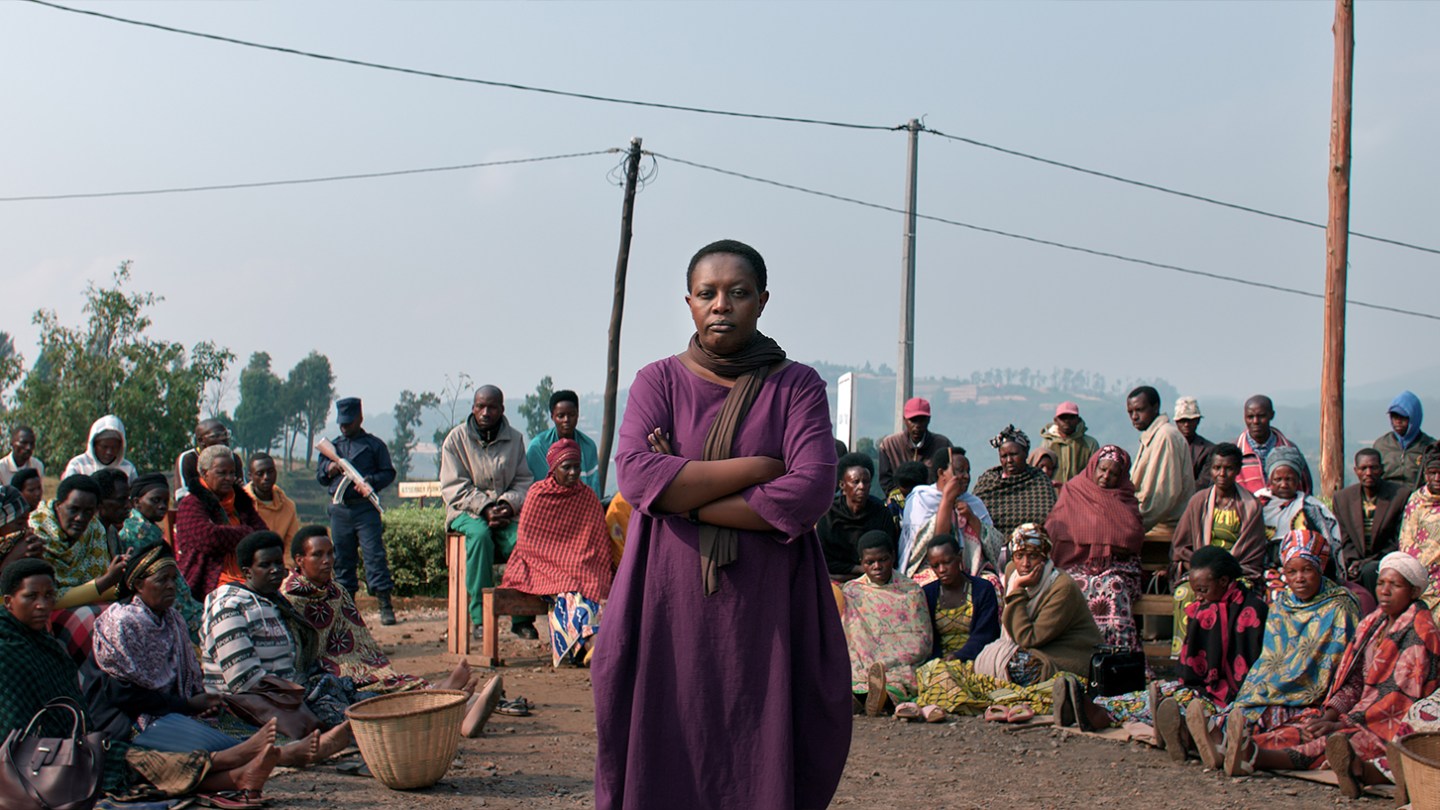
- ‘Ben’Imana’ is the first Rwandan film ever to screen at the Cannes Film Festival, competing in Un Certain Regard.
- Director Marie-Clémentine Dusabejambo spent over a decade developing the film, which explores justice and forgiveness after the 1994 Tutsi genocide.
- The film was mentored into existence by filmmakers Lee Isaac Chung (Minari) and legendary Ethiopian director Haile Gerima.
- Most of the cast are non-professional actors — survivors and community members whose real stories shaped the film.
- ‘Ben’Imana’ is currently seeking U.S. distribution after its Cannes premiere.
Marie-Clémentine Dusabejambo didn’t set out to make history. She set out to make an honest film about her community — about what it means to forgive, and what happens when you can’t. The fact that Ben’Imana became the first Rwandan film to ever screen at the Cannes Film Festival, competing in Un Certain Regard, feels like a byproduct of that honesty rather than any grand design. And after more than a decade in development, Dusabejambo is taking it all in stride.
“I feel relieved,” she said ahead of the premiere, with what was described as a relaxed smile. “This is a real joy and relief, especially when you’ve worked on a project for as long as I have. I’ve had time to really get prepared for this moment.”
That preparation shows in every frame. Ben’Imana is a remarkable debut — patient, formally inventive, and emotionally devastating in the way that only deeply researched, deeply personal filmmaking can be. Set in Kibeho, Rwanda, in 2012, the film unfolds nearly two decades after the 1994 genocide against the Tutsi ethnic group, when extremist Hutu militias killed hundreds of thousands of people — in some communities, roughly half the population overnight. The Rwandan government has since established community-led courts across the country, and the film opens on one of these outdoor trials: a man named Karangwa pleading guilty to murdering the siblings of Vénéranda, a middle-aged woman who stands before the people’s court and calmly, with almost no visible emotion, declares that she forgives him.
The court rules in his favor. And Vénéranda’s sister, Suzanne, is furious.
“She has no right to forgive on behalf of our family,” Suzanne declares — and with that, Ben’Imana announces exactly what kind of film it is. Not a story of tidy reconciliation, but one that asks whether forgiveness can be demanded, distributed, or even meaningful when it comes at someone else’s insistence.
A Story That Lives in Its Contradictions
Vénéranda, played with extraordinary restraint by Clémentine U. Nyirinkindi, is the film’s moral center — and its central contradiction. She leads community testimonial sessions for women preparing to testify, part of a national reconciliation program called “Rwanditude.” The sessions are designed as safe spaces: attendees can cry, shout, stay silent. “We carry wounds which are not of interest to the public or the judges,” Vénéranda tells them in one session. “So no need to overexpose ourselves again.”
And yet, at home, she’s rigid and unforgiving in ways that quietly indict her public grace. When her late-teenage daughter, Tina, turns up unexpectedly pregnant by a young man named Richard — implied to be Hutu, though his family is never connected to the massacres — Vénéranda’s composure cracks. The film’s closest thing to a darkly comic beat is the near-immediate cut between Vénéranda preaching that “forgiveness is the key” and then disparaging Richard to her daughter on the walk home from church.
Dusabejambo doesn’t judge Vénéranda for this. She understands her. That’s what makes it land so hard.
The testimonial sessions themselves generate some of the film’s most gripping sequences — spaces where disparate people attempt to reconcile their individual scars from something they each experienced entirely differently. One of the program’s most complex presences is Madeleine, the mother of men who carried out killings. She attends as part of the program’s push to encourage forgiveness between victims and perpetrators’ families. A single line she delivers — “My babies were like the others” — is among the film’s most quietly devastating moments.
Another standout figure is Victoire, a woman who keeps her face cloaked at all times and who, at home, still prepares food for her long-dead children. They were killed by her own brothers and father. She is present in the sessions but never speaks in the group — opting instead for private conversations with Vénéranda. Through her, and through Madeleine, Dusabejambo and co-writer Delphine Agut explore how wounds travel beyond those who were physically present during the atrocities — how they seep into the next generation, shape silences, become ghosts.
“Darling, why should I remember ghosts?” Suzanne tells Tina at one point, deflecting a question about her niece’s father, of whom the family has no photo. It’s a line that cuts two ways: a survivor’s self-protection, and an unintentional cruelty toward the young woman left to carry unanswered questions into her future.
How a Mathematician Became Rwanda’s Most Important Filmmaker
Dusabejambo was born and raised in Kigali and, in her early twenties, was on track for a career in electronics and telecommunications — not cinema. The pivot came through a series of encounters that feel almost fated in retrospect.
Lee Isaac Chung — who would go on to direct Minari — was living in Rwanda in the early 2000s while his wife worked as a counselor in Kigali. During that time, he began developing and shooting his debut feature, Munyurangabo (2007), in Dusabejambo’s own neighborhood. She had free time and wandered onto the set. The two stayed in contact, and years later, after she’d completed her maths qualification and was heading toward a telecom job, Chung sent her a link to a short film script competition hosted by the Tribeca Film Festival.
She submitted. She won. And then she tried to hand the directing off to someone else.
“I thought someone else could direct it,” she recalled. “But Isaac insisted that I make the film. He said the world needed more women making films. That’s how I got started.” Chung traveled to Rwanda to give her the basics. “I had never looked into a camera,” she said. “I started from scratch with Isaac.”
After a few years on the festival circuit with short films, she began developing Ben’Imana. That’s when Haile Gerima entered the picture. The legendary Ethiopian director behind Sankofa and Teza happened to be sitting in the back of a pitching session where Dusabejambo was presenting the project — and getting demolished by the feedback.
“I got all the bad feedback one can get, so I was sitting down trying to decide whether I would continue or not,” she said. “Then Haile came up to me and said, ‘Oh, sister, I didn’t hear anything you said because you were speaking in French, but go home and send me your script in English.’”
She didn’t know who he was. She looked him up, took him up on the offer, and received a complete DVD collection of his work in return. For five years after that, Gerima invited her annually to his filmmaking workshop in Luxembourg. “He’s very tough and often gives you comments you don’t want to hear,” she said. “But I learned so much, not only about filmmaking but about myself and Rwanda.”
That influence is visible in the film’s structure — or rather, its deliberate resistance to conventional structure. Ben’Imana unravels slowly and from multiple angles, more interested in accumulating emotional truth than in hitting narrative marks. Like Gerima’s best work, it has very little patience for the idea that a story about profound human experience should move at anyone else’s pace.
A Truly African Production
Dusabejambo has been labeled a “self-taught filmmaker” in various press materials — a description she pushes back on firmly. But she is deeply proud of what Ben’Imana represents structurally, beyond her own journey. The film is a co-production between Rwanda, Gabon, France, Norway, and the Ivory Coast, with mk2 handling international sales. It’s also one of the first titles funded by Rwanda’s new state-backed Film Fund — a process Dusabejambo describes as genuinely independent.
“The Fund is completely independent. I submitted like everyone else, and we got the money. There were no strings attached,” she said. The funding allowed her to hire a large local crew, many of whom were heading departments on a major production for the first time. The director of photography is Egyptian; his second assistant is from Gabon.
“We just need more financing from home so we can work without having to apply for foreign funding,” she said. “We can do this ourselves.”
Much of the cast, similarly, came from within the community the film depicts. Dusabejambo spent roughly a decade researching the film, listening to survivors and hearing confessions from perpetrators. In the beginning, she kept crying. Then she noticed that the women telling her these stories weren’t. “They’re not crying when they’re telling me this,” she realized. “Why am I crying?” That shift — from outsider emotion to insider understanding — became the film’s foundation.
She ultimately cast many of those women, despite their having no acting experience. “They bring in something that is real,” she said. Her role as director in those scenes was less about performance and more about language: “I was also trying to find their language: How do they talk about themselves? How do they talk about this history without being too reductive?”
The result is a film that knows exactly what it is — and what it refuses to be. Ben’Imana doesn’t offer the comfort of easy resolution. Forgiveness, as one speaker in Vénéranda’s sessions puts it, is not something we carry around in bags to hand out on demand. But the weight of what we suppress, the film suggests, can become heavier than anything we might say out loud.
Ben’Imana is currently seeking U.S. distribution.
Filed in

Comments
0