
Zvyagintsev’s ‘Minotaur’ Stuns Cannes With 10-Minute Ovation
Andrey Zvyagintsev returns after nine years with ‘Minotaur,’ a darkly gripping thriller about betrayal and war that’s already one of Cannes 2026’s most talked-about films.
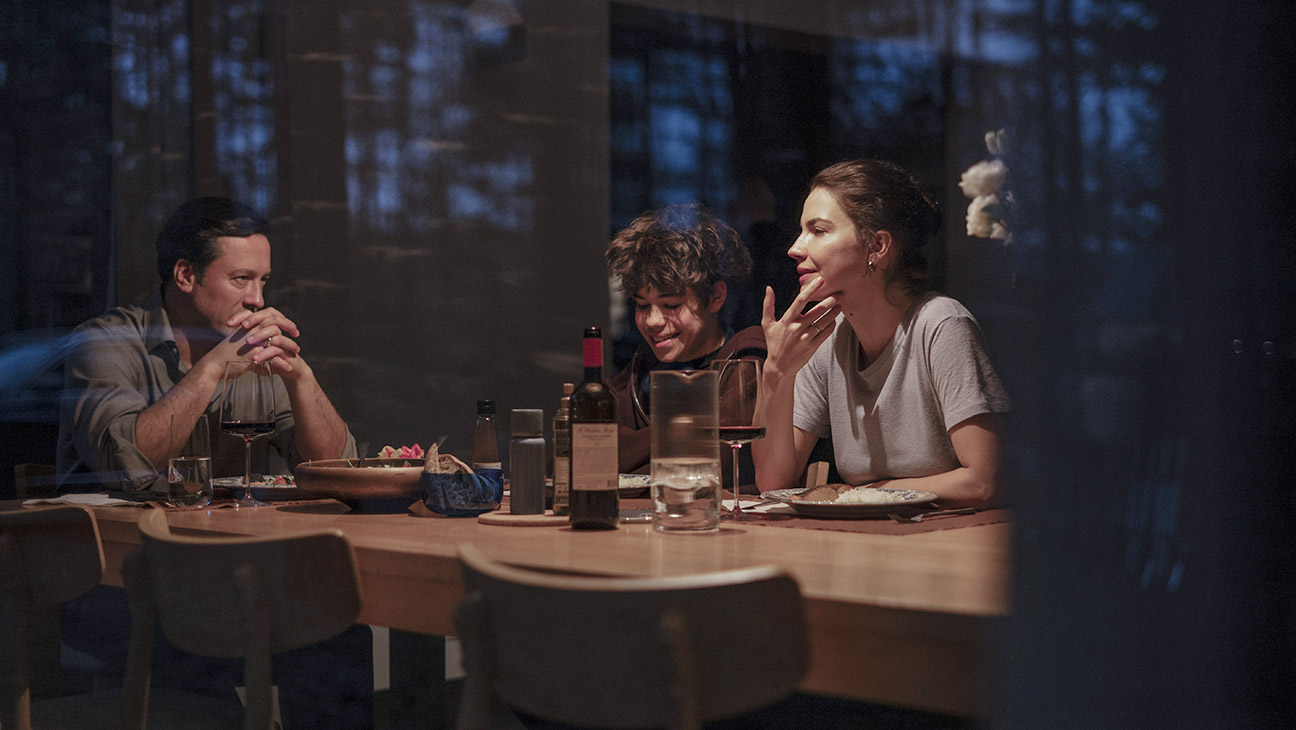
- Andrey Zvyagintsev’s Minotaur received a ten-minute standing ovation at its Cannes 2026 world premiere
- The film is Zvyagintsev’s first in nine years, following a near-fatal COVID illness that left him temporarily paralyzed
- An adaptation of Claude Chabrol’s 1969 thriller, it’s set in 2022 Russia and serves as a searing indictment of Putin’s war against Ukraine
- Shot entirely in Latvia, the film stars Dmitriy Mazurov and Iris Lebedeva, with MUBI acquiring rights for North America, the UK, and beyond
- Critics are calling it one of the strongest films of Zvyagintsev’s career and a frontrunner for Cannes prizes
Andrey Zvyagintsev is back — and Cannes knows it. The Russian auteur’s Minotaur received a heartfelt ten-minute standing ovation at its world premiere in Competition at the 2026 festival, one of the longest of the event so far, and the critical response has been just as emphatic. After a nine-year absence from cinema and a brush with death that few people fully recover from, Zvyagintsev has returned with what many are already calling the defining film about Russia’s war against Ukraine — and he never once uses that word.
That’s part of what makes Minotaur so quietly devastating. Russia calls it a “special military operation,” and so does everyone in this film. The war hums in the background — on laptop screens quickly clicked away from, on propaganda billboards celebrating fallen “heroes,” in the faces of men on the street missing limbs — before it slowly, relentlessly moves to the center of everything.
A Crime Thriller Wearing Russia’s Soul
On the surface, Minotaur is an adaptation of Claude Chabrol’s 1969 melodrama La femme infidèle — the same source material Adrian Lyne turned into the glossy erotic thriller Unfaithful with Diane Lane in 2002. A jealous husband. A restless wife. A situation that escalates, badly. It’s a story we know. What Zvyagintsev and co-writer Simon Lyashenko have done is strip it down to its bones and rebuild it inside the rotting architecture of Putin’s Russia in autumn 2022, finding in a domestic betrayal the exact same logic — entitlement, intimidation, denial — that drives a nation to invade its neighbor.
Gleb Morozov (Dmitriy Mazurov), CEO of a shipping company, lives in a sprawling modernist home on the wooded outskirts of an unnamed Russian city — all tall windows and no curtains, the kind of house where you can watch people eat dinner in silence from the street. His wife Galina (Iris Lebedeva) has been unreachable for months, her otherwise drawn face lighting up only when a text arrives from someone she’s not supposed to be texting. Their teenage son Seryosha (Boris Kudrin) is quietly absorbing everything. When Gleb’s parenting advice to the boy involves grabbing him by the lapels and demonstrating how to physically intimidate a bully — “whoever starts a fight loses for being stupid,” he says, words that will echo back at him — it’s played almost as dark comedy. Almost.
Gleb, it turns out, already knows about the affair. He just tends to let things lie. But the year is 2022, and the town’s mayor (Vladimir Friedman) has just summoned him to submit a list of 14 male employees for military “recruiters” — men who will be shipped to the front with barely any equipment or protection. That detail alone, were the film made inside Russia, could land the filmmakers in prison. The fact that Zvyagintsev put it in anyway tells you everything about where he is now, and what he’s willing to say.
The Personal and the Political, Inseparable
One of the film’s most striking sequences involves Gleb driving with suspicious cargo in his car, stopping at a railway crossing to let a train pass. The train isn’t carrying passengers. It’s tanks. Cinematographer Mikhail Krichman — Zvyagintsev’s longtime DP, who has shot every one of his films — superimposes the reflection of those tanks onto Gleb’s face through the windshield. The political has invaded the personal. Then, in the film’s long, uncomfortably detailed cleanup sequence following a sudden act of violence, the logic reverses: the personal invades the political. Russia, the film suggests, has always been thorough in its silencing — it just calls it sanitation.
Krichman shoots Minotaur with the same meticulous widescreen command he brought to Leviathan and Loveless, though the visual register here is harder, colder. There’s less overt beauty and more desolation — concrete streets, half-empty office suites, housing estates so eerily unpopulated that, as Variety noted, you feel you could practically commit a murder in broad daylight. Latvia fills in for Russia with uncomfortable persuasiveness, conveying both the country’s aggressive vastness and its eerie depopulation, by people either fleeing or being called to battle.
The film runs 141 minutes and doesn’t waste a frame of them. A throwaway restaurant comment about the last time Gleb cleaned his own house becomes a plot thread. Photographs of characters at younger, happier ages become clues and totems simultaneously. A 20-minute mid-film sequence is described by The Hollywood Reporter as “gruesome, comical and crucial.” Nothing is accidental, not even the background figures glimpsed on the street with missing limbs — survivors, perhaps, of Chechnya, Georgia, or Donbass.
Lebedeva Is the Film’s Electric Heart
If Mazurov is the film’s rugged, morally compromised center — and he’s excellent, lending Gleb a dry physical comedy at his most desperate moments — Iris Lebedeva is its most volatile and alive presence. Critics have compared her less to a Chabrol heroine than to someone from Antonioni: a forcefield of ennui wrapped in an elegant trenchcoat, her face transformed only by the private thrill of her secret. She makes her way several times a week to her lover Anton (Yuriy Zavalnyouk), a 33-year-old photographer living in the kind of rundown social housing estate that a woman of her wealth would ordinarily never enter. It’s somewhere to feel something.
Her longest outburst in the film — drunk, abandoned, raging at her husband and son for ordering margherita pizza again, “Order something else for once! I can’t stand this!” — lands somewhere between absurdity and heartbreak. And then there’s the moment, late in the film, when she turns to Gleb and asks, simply: “Where’s me?” She expects no answer. She gets none.
Variety called her “the film’s most electric, volatile presence.” IndieWire said she feels “astonishing” and “cut out of Antonioni.” It’s the kind of performance that tends to stay in a jury’s mind.
A Filmmaker Returned From the Edge
The backstory behind Minotaur is almost as dramatic as the film itself. Zvyagintsev, now 62 and living in exile in France, contracted COVID in 2020 and spent time in a coma before being left temporarily unable to move. He was still recovering when Russia invaded Ukraine in February 2022 — the same month in which his film is set. He has said publicly that he decided while he was ill that he would not return to Russia while it pursued a war that shamed him. He has not.
The film was shot entirely in Latvia and is officially a French-German-Latvian co-production, with MK2 Films handling international sales. MUBI has acquired Minotaur for North America, the UK, Ireland, Germany, Austria, and Latin America, with a release expected later this year. Zvyagintsev has been reunited with most of his regular collaborators — Krichman, production designers Masha Slavina and Andrey Ponkratov, and composers Evgeni and Sasha Galperine — all of whom, notably, now also live abroad.
The Cannes pedigree is formidable. Loveless won the Jury Prize here in 2017. Leviathan took Best Screenplay in 2014. Elena earned the Un Certain Regard Special Jury Prize in 2011. Given that track record, expectations were already high before a single frame screened. The ten-minute ovation, and the reviews that followed, suggest those expectations were met.
Deadline’s Stephanie Bunbury called it “a great piece of work.” The Hollywood Reporter called it “grippy-as-a-live-squid.” IndieWire wrote: “Andrey Zvyagintsev, welcome back. We missed you, and we need you.”
The film ends, as Zvyagintsev films tend to, without comfort or resolution. Two detectives, presented with hard evidence that could break their case wide open, shrug it off. “Why do we bother?” one asks. “F-k if I know,” says the other. “Let’s have lunch.” And then there is a final image — characters floating above clouds, high above everything — that offers the appearance of escape while making clear, with quiet devastation, that things are about to get worse than anyone thought possible.
Filed in

Comments
0