
Nicolas Cage Flips Spider-Man’s Most Famous Line in Spider-Noir Final Trailer
The final Spider-Noir trailer is here — and Nicolas Cage’s Ben Reilly has a very different take on that iconic Spider-Man mantra.
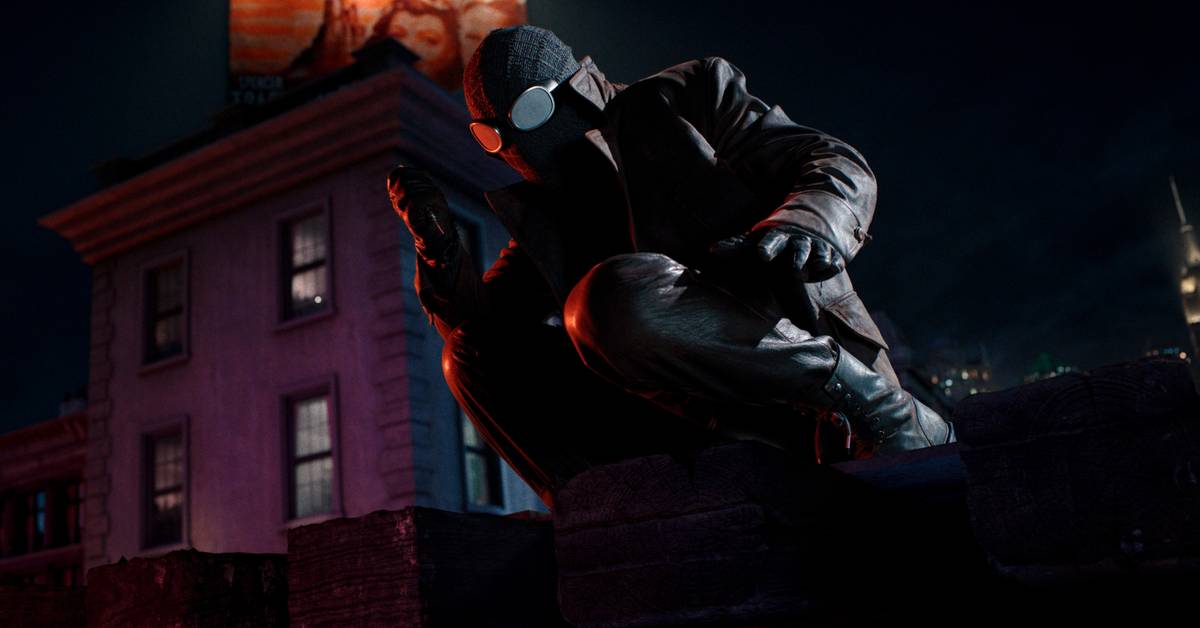
- The final trailer for Prime Video’s Spider-Noir is out, dropping days before the May 27 premiere
- Nicolas Cage’s Ben Reilly signs off with a twist on the classic line: “With no power comes no responsibility”
- The 8-episode series streams in both black-and-white and full color, with Cage saying he designed his performance for B&W
- Brendan Gleeson plays crime boss Silvermane, with alternate-universe versions of Sandman and Electro also appearing
- Cage also revealed he turned down the Green Goblin role in Sam Raimi’s 2002 Spider-Man to do Adaptation instead
The final trailer for Spider-Noir is here, and Nicolas Cage’s version of the wall-crawler has a very different philosophy than the one Peter Parker lives by. As the clip closes out, Cage’s Ben Reilly — a retired vigilante turned down-on-his-luck private eye in 1930s New York — delivers his personal creed with a smirk: “With no power comes no responsibility.” It’s a deliberate, knowing inversion of the most famous line in Spider-Man history, and it tells you everything you need to know about what kind of show this is going to be.
Prime Video dropped the trailer in two versions — “Authentic Black & White” and “True-Hue Full Color” — ahead of the series’ premiere on MGM+ on May 25 and globally on Prime Video on May 27.
The trailer wastes no time establishing the stakes. Reilly has walked away from his life as “The Spider,” but crime boss Silvermane — played with obvious relish by Brendan Gleeson — is assembling a crew of superpowered muscle, including what appear to be 1930s-era versions of Sandman and Electro. Eventually, reluctantly, Ben suits up again.
“With no power comes no responsibility” isn’t just a punchline. It’s a character statement. Showrunner Oren Uziel has been open about the Casablanca DNA running through the show’s DNA. “One of the touchstones of this was Rick from Casablanca,” he explained. “He starts off the movie saying, ‘I don’t stick my neck out for anybody,’ but you know that deep down he’s probably going to stick his neck out for somebody. He’s just trying to convince himself he won’t. I think Ben Reilly is in a similar position. He’s insisting on a thing that we know he doesn’t really believe in his heart.”
Why Ben Reilly — and Not Peter Parker
This is not your standard Spider-Man origin story, and that was entirely intentional. “Peter Parker is so synonymous to me with a young character and a coming-of-age story,” Uziel said. “The Ben Reilly character allows it to immediately distinguish itself from a Peter Parker story.” The name of the hero also got a period-appropriate makeover — he goes by “The Spider,” not Spider-Man, nodding to pulp-era heroes like The Shadow and The Phantom.
In a candid interview with Digital Trends, Uziel described his core creative pitch as deceptively simple: “What if you made a Bogart movie where Bogart just happened to be Spider-Man?” That framing shaped everything — the setting, the tone, the kind of villain Ben faces, and the kind of damage he carries. “He’s way older than we’ve ever seen him,” Uziel noted, “and he’s dealing with very different issues and problems than a high school kid.”
Cage, who is 62, leaned hard into that. According to Uziel, the actor showed up to set every day with a new reference — a movement from Bogart’s The Big Sleep, a line reading from James Cagney, a physicality borrowed from Peter Lorre or Edward G. Robinson. “It was always haunted by the heroes of noir’s past,” Uziel said. “He read the material, responded to the material, and then got off-book immediately. By the table read, he knew every script by heart.”
For Cage himself, this project arrived at a very specific moment. Speaking to Extra, he admitted that after Dream Scenario, he genuinely wondered if he had anything left to say on screen. “I got to a point where I was just like, ‘I think I’ve said everything I’ve had to say with cinema. I don’t know what else to do,’” he said. Spider-Noir — his first television series after four decades in film — gave him a new frontier. “I have great respect for any actor that carries a season of television. It’s harder than movies because it’s a different dynamic, a different process.”
What specifically excited him was the chance to dig into the arachnid side of the character in a way the animated films never could. “What would that do to someone’s physiology and their psychology?” he said. “Let’s see if it would change the way he moves or the way he thinks.”
The Black-and-White Question — And Why Cage Suggested Color
The dual-format presentation of Spider-Noir has been a talking point since the show was first announced, and Cage has a clear answer on which version he prefers. “I’m all about the black and white. I designed my performance for black and white, and I’m glad I saw it that way,” he said.
But here’s the twist: the color version was actually his idea. “It was actually one of my ideas to shoot it in color, because I am aware of teenagers, and I’m aware they don’t have that much experience with black and white,” Cage explained. His hope is that younger viewers start with the color version, then migrate to black-and-white and get curious about the classic films the show is referencing. “They just open a treasure trove of wealth of great American cinema. That’s the dream.”
It’s a thoughtful, almost pedagogical approach — and very on-brand for an actor who has always treated cinema as something to be studied and honored, not just consumed.
The Green Goblin He Never Played
With all the Spider-Man press swirling, Cage also addressed a piece of alternate history that’s been floating around for years. He confirmed to People that he was in serious conversations with Sam Raimi about playing Norman Osborn — the Green Goblin — in the 2002 Spider-Man film. He passed, choosing instead to star in Spike Jonze’s Adaptation, a decision that earned him his second Oscar nomination.
“For me, that was the right choice at the time,” Cage said simply. The role went to Willem Dafoe, whose Green Goblin has since become one of the most memed performances in superhero movie history. “I’ve played plenty of villains. I like both. I think they’re both important parts of cinema. I would not want to get trapped into doing one thing.”
It’s hard to argue with the outcome — for either actor. But it does make you wonder what a Cage Goblin would have looked like.
What’s Coming When Spider-Noir Premieres
The full cast around Cage includes Lamorne Morris, Li Jun Li, Karen Rodriguez, Abraham Popoola, Jack Huston, and Brendan Gleeson, with a deep guest roster featuring Lukas Haas, Cameron Britton, Amanda Schull, and others. Harry Bradbeer, the director behind Fleabag and Killing Eve, directed and executive-produced the first two episodes. Phil Lord, Christopher Miller, and Amy Pascal — the Oscar-winning team behind Spider-Man: Into the Spider-Verse — developed the series alongside Uziel and co-showrunner Steve Lightfoot.
Notably, while Into the Spider-Verse is what put Cage’s voice in the Spider-Noir suit, this isn’t a continuation of that story. “Same character, different universe,” as Uziel put it. “It’s a different flavor of that character, even though it’s still Nic’s voice.”
The show is already being submitted for Emmy consideration, according to reports — a bold move for a first season, but not a surprising one given the pedigree involved.
Spider-Noir premieres on MGM+ on May 25 and globally on Prime Video on May 27. Both formats — black-and-white and color — will be available from day one. The choice, as Cage would say, is yours. But he already knows which one he’s watching.
Filed in

Comments
0