
Bruce Dern Doc ‘Dernsie’ Premieres at Cannes
A new documentary about 89-year-old Bruce Dern just premiered at Cannes — and reviewers say his storytelling alone is worth the price of admission.
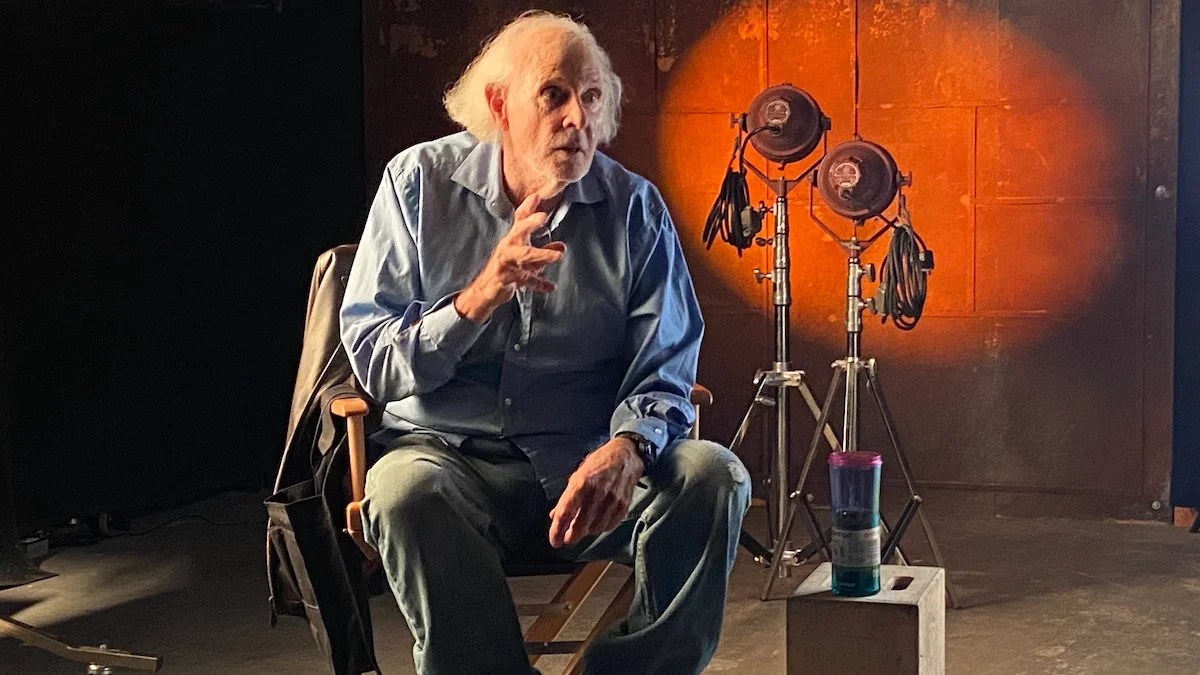
- “Dernsie: The Amazing Life of Bruce Dern” premiered in the Cannes Classics section at the 2026 Cannes Film Festival
- The documentary is directed by Mike Mendez and features Quentin Tarantino, Laura Dern, Billy Bob Thornton, and Walton Goggins among others
- The title refers to an on-set term coined by Jack Nicholson for Dern’s signature improvised moments
- Dern, who turns 90 on June 4, is the film’s primary narrator and reviewers call him a captivating storyteller
- The film is currently seeking U.S. distribution after its Cannes debut
Before Bruce Dern was one of Hollywood’s most beloved character actors, he was a runner. A serious, obsessive, log-200-miles-on-a-weekend runner. And if you watch Dernsie: The Amazing Life of Bruce Dern, Mike Mendez’s new documentary that just premiered at the Cannes Film Festival, you’ll come away understanding that those two facts about the man are completely inseparable.
The film, which screened Wednesday in the festival’s official Cannes Classics section, arrives just weeks before Dern turns 90 on June 4 — and the 89-year-old shows up to his own life story with the energy of someone who still hasn’t quite gotten over how wild the whole ride has been. He’s the film’s primary narrator, and by most accounts, that’s exactly the right call.
“He’s got a crazy story about everybody,” director Joe Dante says in the film — and he’s not wrong. Dern has stories about John Wayne, Alfred Hitchcock, Bette Davis, Elia Kazan, Lee Strasberg, and Quentin Tarantino, among many others. The ones that made it into the documentary are compelling enough. The ones that didn’t — including, reportedly, a legendary Marilyn Monroe/Greta Garbo yarn — apparently didn’t make the cut, which feels like a genuine loss.
From Chicago Privilege to Hollywood’s Perennial Villain
The most disarming thing about Dern’s story, given the weathered, gritty characters he’s spent decades playing, is where he came from. He grew up in a wealthy Chicago family with a maid and a chauffeur. His grandfather was the first non-Mormon governor of Utah and FDR’s Secretary of War. His granduncle was poet Archibald MacLeish. Adlai Stevenson — the two-time Democratic presidential nominee — was his father’s law partner, and young Bruce called him “Uncle.”
When Dern decided he wanted to be an actor, his blue-blooded family essentially showed him the door. “I was persona non grata,” he says in the film. “They said, ‘You don’t need to come home for Christmas.’ They didn’t get it, and they sure as hell didn’t get me.”
He landed at Lee Strasberg’s Actors Studio in New York alongside Marlon Brando, Paul Newman, and Marilyn Monroe. Elia Kazan — whom Dern still refers to as “Mr. Kazan” — took him under his wing and told him his gift was for “behavior.” Kazan made him perform scenes without speaking for an entire year. As it turned out, that was the best possible training for what was coming: years of small background roles, bit parts, and endless guest appearances on episodic Westerns once he got to Hollywood.
“Every show I was in on television, I was playing a prick,” Dern says. “You start to believe that’s all you’re ever going to do.”
He climbed slowly — Roger Corman villain roles, fifth-cowboy-from-the-right stuff — before Jack Nicholson handed him a meatier part in The King of Marvin Gardens. He had a real shot at reshaping his image with Douglas Trumbull’s Silent Running, but then took three days off from that shoot to appear in The Cowboys — and became the first actor in Hollywood history to kill John Wayne on screen. So much for playing the good guy.
What a “Dernsie” Actually Is
The film’s title isn’t a nickname. It’s a term — coined, the documentary explains, by Jack Nicholson — for something that happens when a director knows a scene needs a little something extra, something that isn’t on the page. They turn to Bruce and say, “Gimme a Dernsie on this one” — and something small, unexpected, and unforgettable happens.
Tarantino, one of the documentary’s most enthusiastic talking heads, points to a perfect example from his own work: in Once Upon a Time in Hollywood, when Brad Pitt’s character wakes Dern’s napping ranch owner and introduces himself as Cliff Booth, Dern’s groggy, bewildered response — “John Wilkes Booth?” — was pure improvisation. A Dernsie.
But the definitive one, according to the film, came in Coming Home. In the scene where Dern’s Vietnam veteran strips off his clothes on the beach before walking into the ocean to end his life — knowing there’s nothing left for him in the world his wife (Jane Fonda) has built with Jon Voight’s character — Dern added one tiny, unscripted moment: he made it nearly impossible for his character to get his wedding ring off. It wasn’t in the script. Walton Goggins says it made him want to become an actor.
That scene, and others like it, trace back directly to what Kazan identified all those years ago: Dern’s gift isn’t dialogue. It’s behavior. The glances, the hesitations, the physical life he gives characters that exists entirely outside what’s written. The documentary clips chosen to illustrate this — from Coming Home to Alexander Payne’s Nebraska, the 2013 film that gave him the richest role of his career — are well-selected and make the case without overstatement.
The Personal Stuff He Doesn’t Shy Away From
Dern’s personal life gets real in the documentary, even if some of it goes by quickly. He tells a colorful, intentionally vague story about a first marriage involving two women he describes as call girls who took all his money. His more famous marriage, to actress Diane Ladd, is harder to hear about: their 18-month-old daughter drowned in their swimming pool while both parents were out and the child was in a maid’s care. He and Ladd stayed together longer than they should have, he says, “because we shared a tragedy” — but those extra years produced Laura.
He also cops to having “lost a decade to Vicodin” in the ’90s, and mentions a heart attack three years ago. He’s continued working steadily through all of it. Runner’s World once estimated that Dern has covered more than 104,000 miles on foot over his lifetime — a number that tracks given that he was still running well into his eighties before doctors finally slowed him down (he kept going more than they advised anyway).
The running metaphor is the documentary’s structural spine, and it’s an apt one: Dern built his entire career on endurance, on outlasting everyone who might have given up. While his close friend Nicholson found stardom early, Dern just kept showing up. The film leans on this idea perhaps a few dozen times more than necessary, and most reviewers agree that a tighter cut would have made the point just as well.
What the Critics Are Saying
The consensus out of Cannes is warm but clear-eyed. The documentary is straightforward — Mendez, best known for horror films including Big Ass Spider!, doesn’t reinvent the form here — but Dern himself is so naturally compelling that it barely matters. His “no-nonsense attitude cuts through most of the treacle,” as one critic put it, and his deep, almost ferocious love of cinema gives the whole thing genuine weight. (“The reason I never went back to the theater,” he says at one point, pointing directly at the camera recording him, “is because what we’re doing here — is forever.”)
Mendez does try a few stylistic flourishes — animated puppets of Nicholson and Hitchcock, a live-action recreation of Dern on a hospital gurney after his heart attack — with mixed results. The puppets work as visual grace notes. The gurney scene is widely described as just a bit creepy. But the film’s core, which is essentially an old man with wiry grey hair and a gravelly voice sitting close to a camera and talking, is more than enough.
Dernsie: The Amazing Life of Bruce Dern is currently seeking U.S. distribution. In the meantime, Dern and Mendez appeared on Deadline’s Doc Talk podcast — hosted by 12 Years a Slave writer John Ridley — ahead of the Cannes premiere, where Dern tells stories about nearly everyone he’s ever worked with. Given what reviewers are saying about the man’s storytelling, that’s probably worth your hour.
Filed in

Comments
0