
Cannes 2026: ‘Parallel Tales’ Review — Farhadi’s Best in Years
Asghar Farhadi returns to Cannes with ‘Parallel Tales,’ a twisty voyeuristic thriller starring Isabelle Huppert. Critics are divided — here’s everything you need to know.
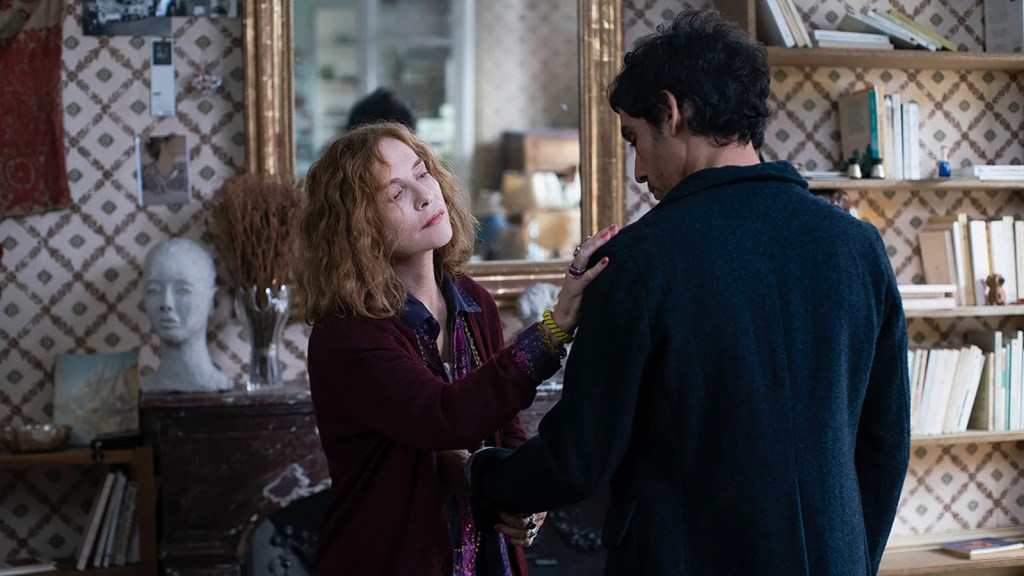
- Asghar Farhadi’s Parallel Tales is competing at Cannes 2026 — his fifth time in competition and first film in five years.
- Isabelle Huppert stars as a reclusive Parisian novelist who spies on her neighbors for creative inspiration, with Vincent Cassel, Virginie Efira, and Pierre Niney.
- The film is loosely inspired by Krzysztof Kieślowski’s Dekalog Episode Six, reimagined as a meditation on voyeurism, fiction, and creative theft.
- Catherine Deneuve appears in a single scene as Huppert’s publisher.
- Critical response is sharply split — some calling it Farhadi’s finest since A Separation, others finding it muddled and airless.
Five years is a long time to wait for a new Asghar Farhadi film. The Iranian director who gave the world A Separation and The Salesman — both Academy Award winners for Best International Feature — has finally returned to Cannes competition with Parallel Tales, a French-language thriller that is already generating some of the most divided conversation of the festival. Some critics are calling it his best work in over a decade. Others are calling it a handsome mess. Both camps make a case worth hearing.
What everyone agrees on is the setup, which is genuinely irresistible. Sylvie (Isabelle Huppert) is a novelist whose better days may be behind her. She lives in a stately but deteriorating Paris apartment — rat-infested, every surface buried under a lifetime’s worth of books and manuscripts — and her whole existence has the texture of an analog crank who refuses to modernize. She still smokes. She still types on an ancient Olivetti electric typewriter. And she still stares out her window through a small telescope at the fifth-floor apartment directly across the avenue.
What she sees there is not what she expects — or what we expect. The apartment isn’t home to a love affair. It’s a sound-effects studio, where three colleagues, Nicholas (Vincent Cassel), his brother Theo (Pierre Niney), and Nita (Virginie Efira), are busy creating foley and sound design for a National Geographic-style wildlife documentary. Footsteps on sandy beaches. Flapping bird wings. Entirely mundane, entirely professional. But Sylvie can only watch — she can’t hear — so she fills in the silence with her imagination, conjuring a torrid love triangle that has nothing to do with reality.
Those imagined characters — Pierre, Christophe, and Anna — come to life in fantasy sequences, played by the same three actors in a kind of parallel version of events. It’s a clever structural conceit: we’re watching a novelist write in real time, her fiction layered directly over the lives she’s quietly stealing from.
When the Assistant Becomes the Problem
Things get genuinely complicated when Sylvie’s co-owner niece Céline pushes her to clean up the apartment for a potential sale and hires a young drifter named Adam (Adam Bessa) to do the heavy lifting. Adam quickly develops his own obsession with Sylvie’s creative world — and takes it much further than anyone should. He starts spying on the neighbors himself, engineers a meeting with Nita at a neighborhood café, and then palms off a manuscript Sylvie had discarded in frustration, presenting it as his own work. He leaves it behind deliberately, hoping she’ll pick it up. She does. And it doesn’t take long for Nita to recognize herself in the character of Anna.
Adam’s scheme sets everything — and everyone — careening. It’s a plot that escalates with the kind of controlled dread Farhadi does better than almost anyone working today, and the screenplay, which he co-wrote with his brother Saeed, keeps its secrets close until exactly the right moment.
Farhadi has spoken about the film being “freely” inspired by Episode Six of Krzysztof Kieślowski’s legendary ten-hour television series Dekalog — later expanded into the standalone film A Short Film About Love — which centered on a young man spying on a woman across the street and falling in love with her. But where Kieślowski made a love story, Farhadi has made something about creativity and imagination, about the ethics of turning real people into raw material. The voyeurism is the same. The meaning is entirely different.
The bones of Hitchcock’s Rear Window are unmistakably present — some critics have also clocked Claude Chabrol’s cool French menace in the film’s DNA, and the fantasy sequences carry a faint echo of the 1964 comedy Paris When It Sizzles, in which Audrey Hepburn helped screenwriter William Holden act out scenes as he wrote them. Farhadi has also been compared to the voyeuristic tradition of Blow-Up, The Conversation, and De Palma’s Blow Out and Body Double. But however many reference points you want to map onto it, Parallel Tales ultimately feels like its own thing.
Where Critics Agree — and Where They Don’t
The warmest reviews are enthusiastic in a way that’s rare at Cannes. One assessment called it “wickedly entertaining,” “crackerjack,” and possibly Farhadi’s finest film since A Separation — high praise given that A Separation is widely considered one of the best films of the 21st century. The same critic wrote that “there isn’t a false step even in a tricky scenario like this one,” and praised Farhadi’s picturemaking as the most assured of his career.
Variety’s review lands in a very different place. That critic found the film “a meandering and rather amorphous mess” — a “rigorously muddled” experience that “manages to stymie” rather than engage the audience. The complaint isn’t with the concept but with the execution: that the characters feel thin outside of their roles in the fiction-versus-reality architecture, and that the film, unlike its obvious cinematic ancestors, never quite plays the audience so much as it confuses them. The observation that Huppert’s novelist types “a few letters at a time” — when a veteran writer’s fingers would be flying — is raised as a small but telling sign that Farhadi is reaching for archetype rather than truth.
Both readings are coherent, which is itself interesting. This is a film that clearly means something, even to its detractors.
A Cast That Earns Every Frame
Whatever you make of the film’s structure, the performances are not in dispute. Huppert, who has made a career of playing women of fierce interior life and prickly exterior, is completely in her element here — the crankiness, the creative obsession, the cigarettes. Cassel, in his parallel roles as both the real Nicholas and the fictional Pierre, is described by multiple critics as delivering some of the best work of his career. There’s a “no-longer-young sense of regret” to the character that Cassel makes entirely believable.
Virginie Efira, who is having a remarkable Cannes — she also appears in Hamaguchi Ryusuke’s Soudain — plays both Nita and Anna with enough differentiation that the film’s structural games never feel like a burden on the viewer. Pierre Niney, fresh off The Count of Monte Cristo, brings an edgy energy to his double role. And Adam Bessa, as the slippery, ambitious Adam, is the piece that makes the whole machine run — a young actor who manages to make his character’s wrongdoing feel genuinely unsettling without tipping into caricature.
Then there’s Catherine Deneuve, in for exactly one scene as Sylvie’s publisher. It’s a small role. It doesn’t need to be more than it is. And it’s always something to see her.
The Sound of the Thing
One dimension of Parallel Tales that deserves particular attention is its sound design — not just as a craft element but as a thematic one. In a film whose central characters are professional sound designers, and whose entire premise hinges on a woman who can see but cannot hear, the work of sound designer Pierre Mertens, editors Paul Heymans and Mathieu Michaux, and mixer Thomas Gauder becomes part of the story itself. Farhadi has said he was especially drawn to the question of what lies on the other side of that telescope — not just visually, but aurally.
With 2027 marking the 100th anniversary of the first talking picture, Parallel Tales arrives as something of an accidental tribute to the art of sound in cinema. Whether or not that was the intention, it’s a resonant coincidence.
Guillaume Deffontaine’s cinematography — particularly the rain-soaked Paris exteriors — gives the film a lush, slightly melancholy atmosphere, and production designer Emmanuelle Duplay’s rendering of Sylvie’s apartment, stuffed to the ceiling with the evidence of a literary life, is the kind of detailed world-building that makes a character feel inhabited rather than invented. The score comes from Zbigniew Preisner, the composer who worked regularly with Kieślowski himself — a connection that feels like a quiet nod to the film’s origins.
Parallel Tales is produced by Alexandre Mallet-Guy, Asghar Farhadi, and David Levine, with Memento handling French distribution. Whether it walks away with a Palme or leaves empty-handed, it’s already one of the most talked-about films in the Cannes competition — and the fact that serious critics can’t agree on whether it’s a masterpiece or a muddle makes it exactly the kind of film worth seeing for yourself.
“,
“category”: “Movies
Filed in

Comments
0