
Cate Blanchett: #MeToo ‘Got Killed Very Quickly’
Cate Blanchett opened up at Cannes 2026 about the state of #MeToo, gender imbalance on film sets, and why shutting down that conversation is so dangerous.
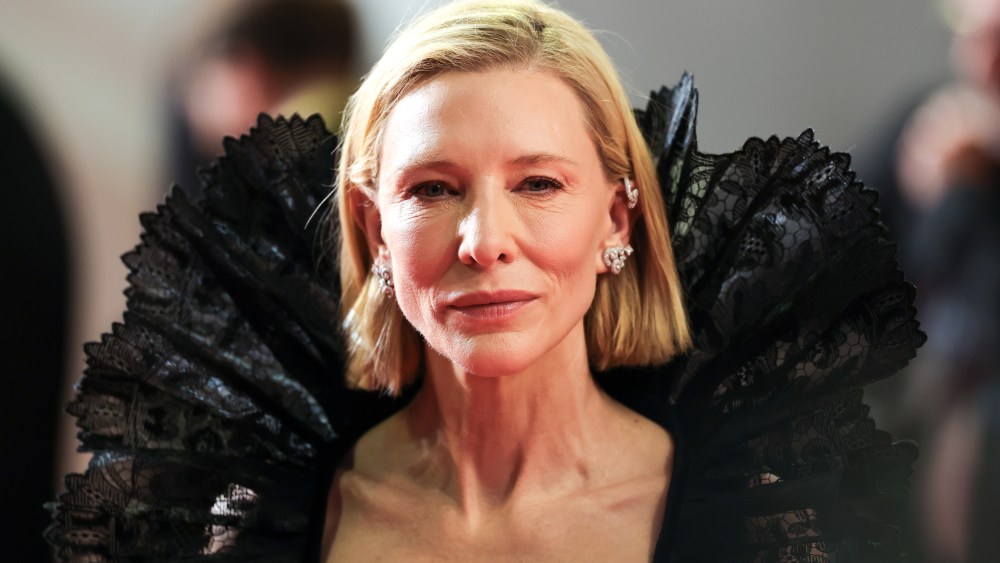
- Cate Blanchett said the #MeToo movement “got killed very quickly” during a talk at the 2026 Cannes Film Festival
- The two-time Oscar winner said she still counts 10 women to every 75 men on film sets each morning
- Blanchett warned that silencing the conversation means the underlying “systemic layer of abuse” can never be addressed
- Julianne Moore echoed the sentiment at Cannes, saying she’s been on sets where she and one other woman were the only females present
- Blanchett also revealed she’s set to work with Brady Corbet, director of The Brutalist, on his next film
Cate Blanchett didn’t come to Cannes to mince words. Speaking Sunday at the 2026 Cannes Film Festival during a Rendez-vous with… conversation alongside moderator Didier Allouch, the two-time Oscar winner said what a lot of people in Hollywood have been quietly thinking: the #MeToo movement “got killed very quickly” — and the industry is still paying for it.
“It got killed very quickly, which I think is interesting,” Blanchett said, her tone measured but pointed.
She didn’t stop there. “There are a lot of people with platforms who are able to speak up with relative safety and say this has happened to me, and the so-called average woman on the street is saying #MeToo. Why does that get shut down? What [the movement] revealed is a systemic layer of abuse, not only in this industry but in all industries, and if you don’t identify a problem, you can’t solve the problem. You shut that conversation down. You can’t move on.”
It’s a distinction that matters to her — the gap between women who have enough social currency to speak publicly and those who don’t. For Blanchett, the silencing of everyday voices is exactly where the movement lost its momentum, and where the real damage sits.
Still Counting Heads Every Morning
For all the progress that’s been talked about over the past decade, Blanchett says the reality on actual film sets hasn’t changed much. She’s still doing a daily tally.
“I’m still on film sets and I do the headcount every day, and it is still, you know… there’s 10 women and there’s 75 men every morning,” she said. “I love men, but what happens is the jokes become the same. You just have to brace yourself slightly, and I’m used to that, but it just gets boring for everybody when you walk into a homogeneous workplace. I think it has an effect on the work.”
That last part — that the gender imbalance actually shapes the creative output — is the argument Blanchett has been making for years, and it’s one she clearly hasn’t let go of.
She was at pains to acknowledge some signs of hope, though. She praised the heads of major film festivals for signing a pledge to increase representation. “I was so grateful to Thierry and Alberto and Cameron and all the people who are leading the major festivals around the world [when they] signed that they would make a pledge to increase representation, because it’s better for audiences when you don’t see the same old, same old,” she said. “There are extraordinary films every year in each of these festivals, but when the voices are all the same, it does become a bit beige, and I do think it has affected the programming.”
A History of Showing Up
Blanchett has been one of the most consistent and visible voices on this issue at Cannes specifically. In 2018, at the height of the #MeToo moment, she served as jury president and led a women’s march up the steps of the Palais des Festivals, hand-in-hand with Kristen Stewart, Léa Seydoux, Ava DuVernay, Agnès Varda and dozens of others. There were 82 women in total — a number chosen deliberately to represent the 82 female directors who had competed at Cannes up to that point in the festival’s history, set against 1,866 male directors over the same period.
At the time, she said: “Women are not a minority in the world, yet the current state of the industry says otherwise. As women, we all face our own unique challenges, but we stand together on these stairs today as a symbol of our determination and commitment to progress.”
That was eight years ago. The headcount on set, she says, hasn’t moved much.
Julianne Moore Had Her Own Moment
Blanchett wasn’t the only one raising these issues on the Croisette this week. Julianne Moore, speaking at the Kering Women in Motion Talk, shared a story that landed just as hard. “I can remember being on a set not too long ago where the only women were me and the third AC,” Moore said. She connected the moment to a broader reckoning: “It’s when Hillary Clinton lost the election, and we were both devastated. And I said, ‘Look around the room. We’re the only ones here.’” Moore acknowledged she’s seen some improvement over the years, but the baseline she described — being one of two women on an entire crew — speaks for itself.
Beyond the gender conversation, Blanchett dropped one piece of news that will have film fans paying attention: she revealed she’s “about to work with Brady Corbet” on a new film. Corbet, who directed the Oscar-winning The Brutalist, is also reported to have Selena Gomez attached to the project. Whatever that film turns out to be, a Blanchett-Corbet collaboration is about as exciting a pairing as you can get right now.
For Blanchett, though, the work she’s most focused on this week isn’t in front of a camera. She’s also hosting a panel at Cannes to announce the next cohort of artists supported by her Proof of Concept program, which backs women, trans and non-binary voices in filmmaking, and her Displacement Film Fund for refugee filmmakers. She’s been doing this quietly alongside the awards and the red carpets for years — building something structural, not just speaking about it.
Which is maybe why her frustration about #MeToo carries so much weight. “You shut that conversation down,” she said Sunday. “You can’t move on.”
Filed in

Comments
0