
Martin Short Opens Up on Loss, Joy and Life’s Hardest Chapters
Martin Short’s new Netflix documentary reveals the staggering personal losses behind his iconic smile — and how he keeps finding reasons to go on.
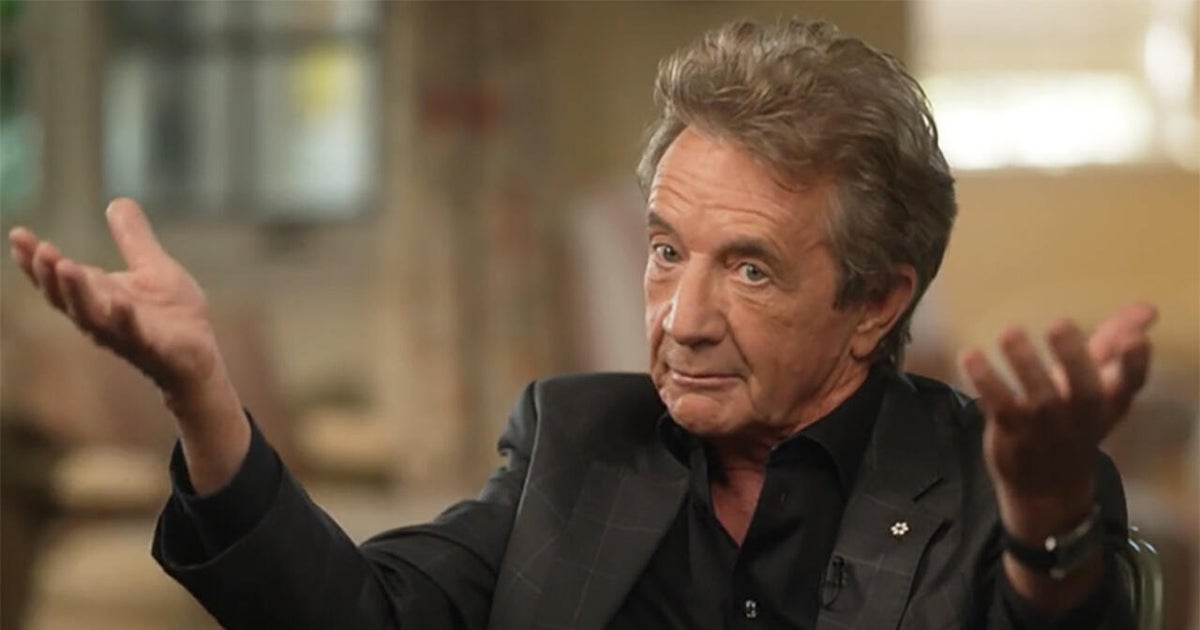
- Martin Short’s new Netflix documentary Marty: Life Is Short is out now, directed by Lawrence Kasdan
- Short lost his brother at 12, both parents before 21, his wife Nancy to ovarian cancer in 2010, and daughter Katherine to suicide in February 2025
- The film is dedicated to Katherine and to Second City legend Catherine O’Hara, who died in January
- Short’s son Oliver lost his home in the LA wildfires; Short’s Pacific Palisades house was spared
- A possible Broadway collaboration with Meryl Streep is in the works, plus a new season of Only Murders in the Building
Tom Hanks once said that Martin Short “operates at the speed of joy.” Short’s response, characteristically, was to deflect the compliment with a grin: “If that’s his review for me, I’ll accept it.” But after learning everything Short has quietly carried through five decades of one of comedy’s most beloved careers, the description lands differently. It doesn’t just feel like a compliment. It feels like a survival strategy.
Marty: Life Is Short, a new Netflix documentary out now, is directed by Hollywood legend Lawrence Kasdan — a close family friend who had to do some convincing to get Short in front of the camera at all. “It was not a natural instinct of his to want it; he’s not like that,” Kasdan said. “I had to sell him on it. I had to lie to him, tell him how much I loved him and I would never hurt him.” The result is something genuinely rare: a film that is, as Short himself might put it, hilarious and heartbreaking at the same time.
Kasdan weaves in hours of home movies alongside appearances from Short’s famous inner circle — Hanks, Kurt Russell, Steven Spielberg, Ron Howard. But for all the warmth and laughter on screen, the film doesn’t look away from the losses that have quietly defined this man’s life.
A Childhood That Taught Him How to Grieve
Short was the youngest of five children. He was 12 years old when his older brother was killed in a car accident. He was still a teenager when both of his parents died — gone before he turned 21. By the time he was old enough to drink, he had already buried three members of his immediate family.
At a Netflix event in Los Angeles hosted by David Letterman, Letterman reflected on watching Short’s story unfold on screen: “One thing that struck me was your childhood.” Short, now 76, has had a long time to sit with what that kind of early loss does to a person. “What it developed in me was this muscle of survival and handling grief and a perspective on it,” he told CBS News. And strangely, he says, it also freed him as a performer. “I think if you’ve gone through that, an audience not liking you is really not that important anymore.”
That fearlessness brought him to Toronto’s Second City in 1977, where he trained alongside legends-in-the-making: Eugene Levy, John Candy, and Catherine O’Hara. O’Hara, who died in January, is one of two people the documentary is dedicated to. Short’s tribute to her is tender and specific. “There was no one more brilliant. There was no one sweeter. And there was no one funnier. And she, more than anyone on ‘SCTV,’ would sit behind the camera and give you suggestions. ‘Marty, try that.’ ‘Oh, okay.’ And then you always just did it.”
His first professional job, incidentally, was the original Toronto production of Godspell — alongside a young Gilda Radner. Even the early chapters of his career read like a who’s who of comedy royalty.
Nancy, Katherine, and the Losses That Don’t Stop
The film’s emotional center is the life Short built with his wife Nancy Dolman, whom he met during his Toronto days and married in 1980. They were together for 30 years before she died of ovarian cancer in 2010. “She was funny. She had lots of edge,” Short said. “It was an equal ping pong match.” He smiled recalling how even Hanks would walk up to Nancy and ask, “Aren’t you tired of laughing at his jokes?”
During Nancy’s final months, Short continued to work — partly because she wanted him to. He was shooting the legal thriller Damages, and no one on set knew what was happening at home. “Glenn [Close] would go, ‘Marty’s here, yay!!’” he remembered. “And I’d go, ‘Okay. Let me just go to the dressing room for a second. … Okay, then.’” He’s honest that it wasn’t exactly therapeutic. “I don’t know if it helped. It didn’t help, but you had to do it. People have to do things in difficult times. And the mark of the man is: Can you do it?”
Nancy’s final words to him, he says, were: “Martin, let me go.”
The film’s second dedication is to their daughter Katherine, a social worker who died by suicide this past February at 42. Short speaks about her death with a directness that feels both painful and purposeful. “It’s been a nightmare for the family,” he said. “But the understanding is that mental health and cancer, like my wife’s, are both diseases, and sometimes with diseases they are terminal. And my daughter fought for a long time with extreme mental health, borderline personality disorder, other things, and did the best she could until she couldn’t.”
He connects the two losses with a quiet devastation: “So, Nan’s last words to me were, ‘Martin, let me go.’ And what she was just saying was, ‘Dad, let me go.’”
Still Finding Reasons to Keep Going
Short has lived in Pacific Palisades since November 1987 — a house he bought on the strength of two movie deals, one of which collapsed the moment he signed the mortgage. He laughed telling the story: Nancy’s response at the time was simply, “Then we’d move?” His home survived last year’s devastating LA wildfires. His son Oliver’s did not. Oliver and his wife are currently staying in Newport Beach while they figure out next steps.
Short described a moment of raw honesty that happened on the drive to visit them. “I was thinking, ‘Okay. I’m 75. Why am I continuing? Like, really why? I’m not gonna crash my car, but why? What is the point of this?’” And then he arrived, and Oliver’s two little boys — ages five and four — came running. “‘Papa! Let’s play giant!’ And suddenly you go, ‘Oh, that’s why. That’s why. Okay.’”
In the documentary, Ron Howard asks him directly: “Why do you continue to push yourself?” Short’s answer, delivered with his trademark comic timing, is also completely sincere: “I just think it’s important, if you’re ‘gifted,’ to share that gift, of course, with people!”
There’s plenty ahead to push toward. A new season of Only Murders in the Building shoots soon. And Short casually dropped that he and Meryl Streep are working on something for Broadway — though he’s playing coy on details. “We are trying to figure out something; we’re just not sure if the box office would be there,” he deadpanned. “It’s a gamble. You never know how Meryl’s gonna do at the box office, but let’s hope!”
When the darkness has been as heavy as it has for Martin Short — and it has been relentlessly, unfairly heavy — “heading for the light” isn’t a platitude. It’s the whole strategy. “You head for the light,” he said simply, when asked how he gets through it. “That’s what you have to do.”
If you or someone you know is in emotional distress or a suicidal crisis, you can reach the 988 Suicide & Crisis Lifeline by calling or texting 988. You can also chat online at 988lifeline.org.
Filed in

Comments
0