
Jordan Firstman’s ‘Club Kid’ Earns Standing Ovation at Cannes
Jordan Firstman’s directorial debut ‘Club Kid’ brought down the house at Cannes 2026 with a 7-minute standing ovation and tears from the filmmaker himself.
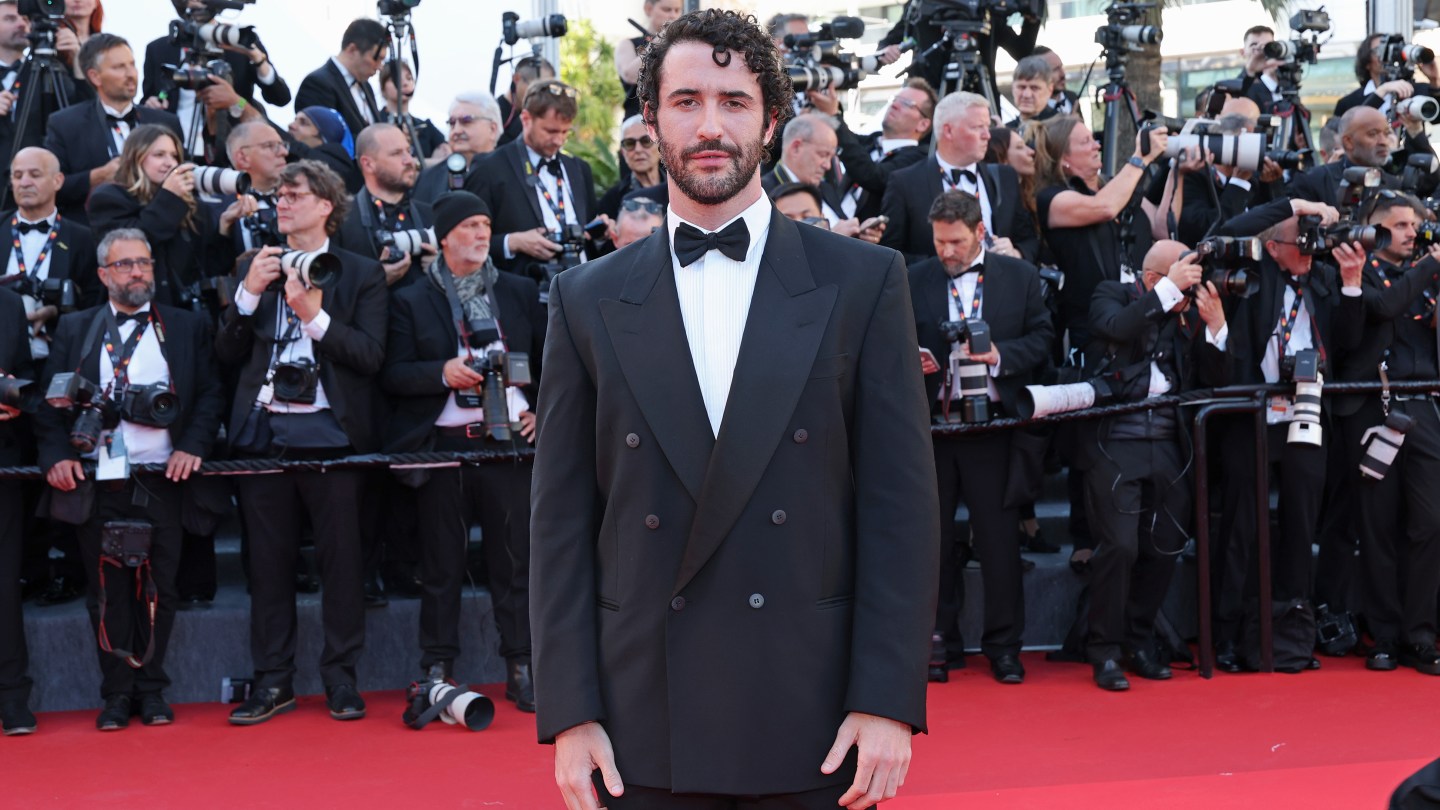
- Jordan Firstman’s directorial debut Club Kid premiered at Cannes 2026 to a 7-minute standing ovation in the Un Certain Regard section
- The comedy-drama stars Firstman as a washed-up NYC party promoter who discovers he has a 10-year-old son
- The film co-stars Cara Delevingne, Diego Calva, Miss Benny, and breakout newcomer Reggie Absolom
- Club Kid was produced by Alex Coco, who won Best Picture at the Oscars for Anora
- The film is currently seeking U.S. distribution after its Cannes world premiere
Jordan Firstman showed up to Cannes with something nobody quite expected from him: sincerity. And it floored everyone in the room.
The comedian, actor, and social media provocateur made his feature directorial debut Friday with Club Kid, premiering in the festival’s prestigious Un Certain Regard section inside the Théâtre Claude Debussy — and walking out of it to a thunderous seven-minute standing ovation. Firstman, who also wrote, executive produced, and stars in the 126-minute film, was visibly overwhelmed, hugging his cast as the applause rolled on.
It’s the kind of Cannes moment that turns careers. And for Firstman — who has spent years being labeled everything from “candid” to “confrontational” by a deeply divided internet — it felt genuinely earned.
What ‘Club Kid’ Is Actually About
Club Kid follows Peter, a drug-happy New York City party promoter who has spent a decade-plus of MDMA-addled revelry building a nightlife empire with his best friend and business partner Sophie (Cara Delevingne, described by one critic as “perpetually coked-out” and “two inches from a breakdown at all times”). The story opens in Brooklyn in 2016 and jumps forward roughly a decade, when a woman Peter barely remembers shows up at his rent-controlled Manhattan apartment — left to him by his late mother — with an eight-year-old boy. The child, Arlo (newcomer Reggie Absolom), is Peter’s son, the result of a one-night encounter, and his mother has just died. Peter is now responsible for raising a kid he never knew existed.
The ensemble also includes Diego Calva as a child psychologist who becomes a tentative love interest, Miss Benny, Kirby Howell-Baptiste, Eldar Isgandarov as Peter’s squatter houseguest Nicky (described by Hollywood Reporter as delivering “many of the film’s funniest line readings”), and Colleen Camp. The film was shot over 26 days on 35mm in real New York clubs — spaces Firstman accessed because he already knew them intimately.
“We were granted access to spaces that no one can even get to in life, let alone be filmed,” Firstman told The Hollywood Reporter. “We were let in because I was already there partying, and these are my friends. The invitation was not taken for granted.”
The subject matter is personal in ways that go beyond the obvious. Firstman has spoken openly about his years inside queer nightlife culture, watching the drug landscape shift — from Molly and coke to ketamine, GHB, Mephedrone — and the toll that takes on community. “You look around, and you see zombies where it should be a community,” he told IndieWire. “And sometimes that still feels like your community? It just changed.”
But the film, critics are quick to note, never becomes a morality play. “This is not a condemnation of people who do drugs or like to have fun,” Firstman explained. “This is more about this man who has overstayed his welcome, or never known a different option.”
The Reviews Are In — and They’re Glowing
IndieWire called Club Kid “brazen, funny, and surprisingly earnest,” writing that it “should put any nervous feelings to rest” about whether Firstman has the filmmaking chops to match his persona — and that “even his haters won’t be able to resist” what announces itself as “a major filmmaking talent with a sensitive side.” The Hollywood Reporter praised it as “a confident, exciting directorial debut, stylish in an unobtrusive way” and noted that Firstman and young Absolom share “such a lively, natural rapport” that the film’s more convenient plot mechanics barely register.
The soundtrack has drawn particular attention — Arthur Russell anchoring the film’s melancholy final act, and The White Lotus composer Cristobal Tapia de Veer contributing an original score. Cinematographer Adam Newport-Berra captures what one reviewer called “a certain lost-era grit” in New York, treating the city less as backdrop and more as character.
The film has also drawn comparisons to C’mon C’mon, Baby Boom, and even Kramer vs. Kramer — which tells you something about how unexpectedly it lands emotionally, given where it starts.
The Premiere Itself Was Pure Jordan Firstman
Before the screening, Firstman warmed up the Debussy crowd with a bit that immediately became the talk of the festival. Deliberately mispronouncing the theater’s name, he told the audience: “What an honor to play in the ‘Da-Bussy.’ I love ‘Da-Bussy.’ I can’t get enough of ‘Da-Bussy.’ I can live in ‘Da-Bussy,’ and I can’t wait for my film to screen in ‘Da-Bussy.’”
He also referenced a gay meme that apparently circulated widely in New York last year — a picture of a can of soup that read, “Some of you bitches would go to the opening of a can, and if the can sent you free clothes, you would post, ‘Thank you, the can!’” — which Firstman said he put in the movie precisely so he could one day say: “Thank you, the Cannes.”
Then, turning sincere on a dime in the way only he can, he told the room: “This movie was such an incredible experience, such a labor of love, a lot of crying, a lot of laughter, a lot of joy. I think it’s a film about cultivating kindness within your community and kindness for yourself. I just want to thank my beautiful cast here for giving me their time and their spirit and their stories and their souls and their looks. Let’s just say it: they’re hot.”
The Kid Who Made the Filmmaker Cry
Much of the film’s emotional weight rests on Firstman’s dynamic with Absolom, whom he discovered after watching hundreds of audition tapes out of London. “I remember seeing the thumbnail and being like, ‘Please be able to act, please be able to act, because that’s him,’” Firstman told IndieWire. “Then I met him, and we went for ice cream and talked about music. I sent all the kids the playlist I wrote the movie to. Reggie loved Massive Attack.”
Talking about Absolom’s experience on set — particularly a moment where the young actor bonded with the film’s ensemble of queer and trans performers — Firstman became emotional mid-interview. “For the rest of his life now he’s going to love trans people because he got to see how funny and creative they are, and listen to music with them and joke around with them,” he said, trailing off. “I think that’s the beauty of this story.”
That kind of openness is, by Firstman’s own admission, both his superpower and his vulnerability. “Everything shows on me,” he said with a laugh. “Maybe people have complicated feelings toward me because I can’t really hide anything.”
The Team Behind It
The film carries some serious producing pedigree. Alex Coco — who just won the Best Picture Oscar for Sean Baker’s Anora — produced alongside Lurker’s Galen Core, Topic Studios’ Ryan Heller and Michael Bloom. Executive producers include Firstman, Ian Stratford, Charles Croft, Jasmine Daghighian, Olmo Schnabel, and Daniela Taplin.
It marks Firstman’s first time at Cannes — and by all accounts, not his last. The film is currently seeking U.S. distribution, and given the response inside the Debussy, that conversation is probably already happening.
“I didn’t want to win anyone over anymore,” Firstman told IndieWire ahead of the premiere. “All I could do was tell the story I wanted to tell in the way that I wanted to tell it.”
Turns out, that was more than enough.
Filed in

Comments
0