
Sophie Okonedo and Ayo Edebiri Shine in Cannes’ ‘Clarissa’
The Esiri twins’ Mrs. Dalloway reimagining moves from 1920s London to present-day Lagos — and the result is one of Cannes’ most stirring films.
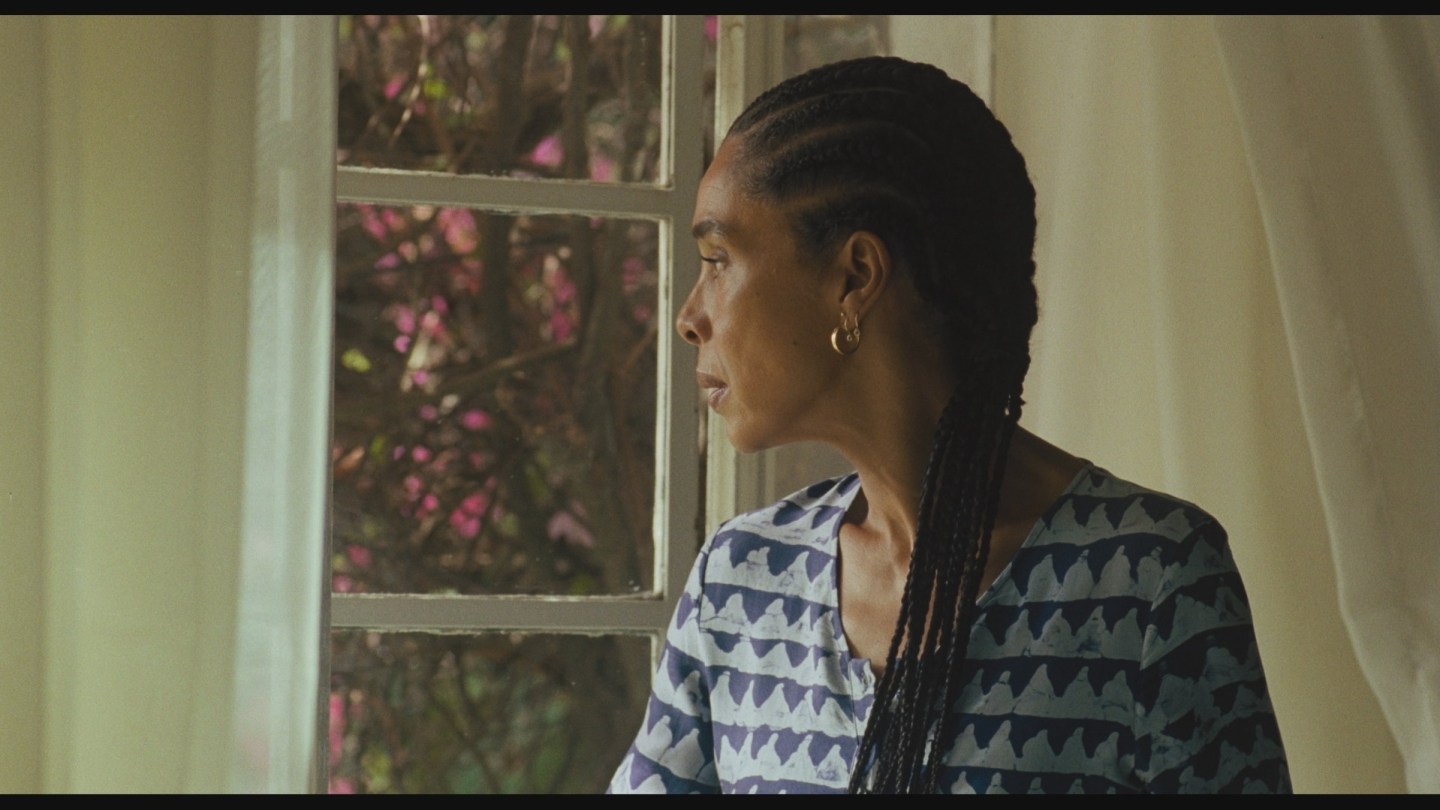
- Clarissa, a bold reimagining of Virginia Woolf’s Mrs. Dalloway set in present-day Lagos, premiered at Cannes’ Directors’ Fortnight sidebar
- Sophie Okonedo stars as the title character alongside Ayo Edebiri, David Oyelowo, Fortune Nwafor, and India Amarteifio
- The film is directed by twin brothers Arie and Chuko Esiri, who previously made the acclaimed drama Eyimofe
- Okonedo, who has never attended Cannes before, broke down in tears when she learned the film had been accepted
- Shot on 35mm with a nearly all-Nigerian crew, the film is being hailed as one of the most distinctive entries of the festival
\n\n
Virginia Woolf’s Mrs. Dalloway has always felt like a novel that resists being touched. Its stream-of-consciousness interiority, its fragmented time, its insistence on the whole world existing inside a single day — it’s the kind of book that filmmakers have historically approached with caution, or not at all. The 1997 Vanessa Redgrave adaptation stumbled. Michael Cunningham’s The Hours, itself inspired by Woolf, came closer by working around the source rather than through it. Stage adaptations have come and gone.
\n\n
Then Nigerian twin brothers Arie and Chuko Esiri decided to move the whole thing to Lagos. And somehow, that’s exactly where it always belonged.
\n\n
Clarissa, which premiered in the Directors’ Fortnight sidebar at Cannes, is a film of quiet audacity. The Esiris — whose debut feature Eyimofe earned significant critical praise — have transposed Woolf’s 1920s London story to present-day Nigeria, and in doing so have made something that doesn’t just adapt the novel but interrogates it. The result is one of the most striking films at this year’s festival.
\n\n
A New Lagos, a New Clarissa
\n\n
Sophie Okonedo plays Clarissa, now a Nigerian society woman navigating the infamously gridlocked Lagosian traffic, managing her household staff, and drifting through memories of long-ago summers in Abraka, a lush town in Nigeria’s Delta state. The screenplay (written by Chuko, though the film is co-directed by both brothers) opens not with flowers — though those come — but with a young Clarissa, played by India Amarteifio of Netflix’s Queen Charlotte, slipping out of the room of young Peter, played by Industry‘s Toheeb Jimoh. It is 1994. The friends are swimming in lakes, picnicking on beaches, arguing about postcolonial literature and what democracy really means for a newly independent nation still under military rule. Then morning prayers sound, and an older Clarissa wakes up. Lagos is waiting.
\n\n
Okonedo is terrific here — restrained in a way that takes a moment to fully register. She communicates Clarissa’s interior life not through outbursts but through the careful architecture of stillness. Clarissa married Richard (Jude Akuwudike), a respectable man in politics, but she still carries the memory of her former lover Peter, played in the present by David Oyelowo, and the charged intensity of her youthful relationship with Sally.
\n\n
Sally is played as a young woman by Ayo Edebiri, and as an older one by Nikki Amuka-Bird. In the flashbacks, Edebiri’s Sally is magnetic — never far from a cigarette or a book, radiating an effortless countercultural cool that young Clarissa can’t quite shake. The chemistry between Amarteifio and Edebiri is understated and entirely convincing, the kind of attraction that lives in glances and proximity rather than declaration. The film’s most alive scenes are the ones where the young friends gather to argue about literature and politics, the air between them buzzing with ideas and longing. You could spend a whole film in that room. If there’s a complaint to be made about Clarissa, it’s that the filmmakers don’t give us quite enough time there.
\n\n
Fortune Nwafor Is a Revelation
\n\n
Running parallel to Clarissa’s day is Septimus, here reimagined as a Nigerian military officer (Fortune Nwafor) recently returned from fighting Boko Haram in the country’s north. He lives in a cramped apartment with his wife Aisha (Modesinuola Ogundiwin), a Muslim seamstress, and travels the city by danfo — the communal minibuses that pack Lagos’s streets. Where the camera opens up for Clarissa, it closes in on Septimus, visually enacting the claustrophobia of his world.
\n\n
Nwafor, who also appeared in Eyimofe, is extraordinary. His performance lives almost entirely in his eyes, which manage to hold naïveté and devastation at the same time. Just as Woolf used Septimus to expose how Britain discarded its veterans after World War I, the Esiris use him to examine what Nigeria does with the men it sends to fight and then brings home. In Nwafor’s hands, Septimus becomes something almost unbearable — a symbol of a nation’s broken promises.
\n\n
The Craft Behind the Camera
\n\n
The film was shot on 35mm — a bold call on a tight budget, and a meaningful one. Jonathan Bloom’s cinematography finds visual poetry in close-ups: a lip grazing a knee, a kingfisher calling from a branch. Blair McClendon’s editing has an intuitive rhythm that mirrors the splintered logic of memory. Kelsey Lu’s score threads through it all like smoke. The overall register places Clarissa in conversation with a wave of recent films — All Dirt Roads Taste of Salt, Earth Mama, Nickel Boys, and Akinola Davies Jr.’s My Father’s Shadow — that share a commitment to cinema as felt experience rather than plot delivery.
\n\n
There’s also something quietly radical in the Esiris’ relationship to Woolf herself. The novel, for all its brilliance, was written within a colonial framework and carries traces of the racism that entailed. Clarissa doesn’t ignore that history. It turns it over, examines it, and then does something more interesting than simply condemning it — it reclaims the form entirely.
\n\n
Sophie Okonedo on the Journey to Cannes
\n\n
For Okonedo, getting here has been a long road with a lot of near-misses. Her first conversation with the Esiri brothers happened around the time of the pandemic lockdowns. They sent her a link to Eyimofe, she watched it, and immediately agreed to meet. When they pitched the Mrs. Dalloway reimagining set in Lagos, her answer was immediate.
\n\n
“I’m in,” she told them.
\n\n
Then came about a year and a half of silence. Then a script arrived. Then there was no money. Then producer Theresa Park (Bones and All) came on board and helped get it financed. The shoot itself was a logistical challenge — filming on 35mm in Lagos, with a nearly all-Nigerian crew, on a tight budget, in one of the world’s most chaotic cities.
\n\n
“It was so hard to get off the ground,” Okonedo told Deadline. “And tricky to get a film made in Nigeria. Obviously, they’ve got the huge Nollywood industry. But it’s a different type of film to that, and to get a film made on 35mm, and shot with nearly all Nigerian crew, is just extraordinary. There were so many instances of ‘it nearly didn’t happen,’ right up until the wire, really.”
\n\n
When Cannes came calling, she cried.
\n\n
“I’ve never been to Cannes,” she said. “I said, ‘If nothing else happens, this is more than we could ever wanted to happen to this film.’”
\n\n
To prepare, Okonedo reread the novel — finding in it something she’d completely missed the first time around. “I didn’t get it at all, the book,” she admitted. “I read it when I was young. I had no idea what the hell it was going on about. Then I read it at my age now and it knocked my socks off.” She even walked the London route Mrs. Dalloway takes in the novel before flying to Lagos for filming — trying to absorb the wonder of a city she could then carry into a different one.
\n\n
She also stayed with the Esiri brothers’ mother for the duration of the shoot. Having spent little time in Nigeria and not having grown up with her Nigerian family, Okonedo wanted to absorb as much as she could. What she found surprised her.
\n\n
“There’s a part of me that’s totally British, but there’s also a part of me that’s so Nigerian,” she said, “and because I haven’t spent time there, I didn’t understand that part until I went back.”
\n\n
That discovery, she said, made the whole project feel personal in a way she hadn’t anticipated. “This project has been so meaningful to me on a personal level that anything that happens with it afterwards is just extra.”
\n\n
It’s a feeling the film earns. Clarissa is the kind of adaptation that doesn’t ask permission — it takes a canonical text, strips it of its imperial assumptions, and rebuilds it somewhere it never expected to go. The result is something genuinely new: a film about memory and regret and the cost of a life lived properly, set against the noise and heat and impossible energy of Lagos. Woolf, you suspect, would have found it fascinating.
“,
“category”: “Movies
Filed in

Comments
0