
Yeon Sang-ho on Colony, AI, and Korean Cinema’s Comeback
Train to Busan director Yeon Sang-ho talks Colony’s Cannes premiere, AI fears, zombie choreography, and his upcoming Netflix Japan series Human Vapor.
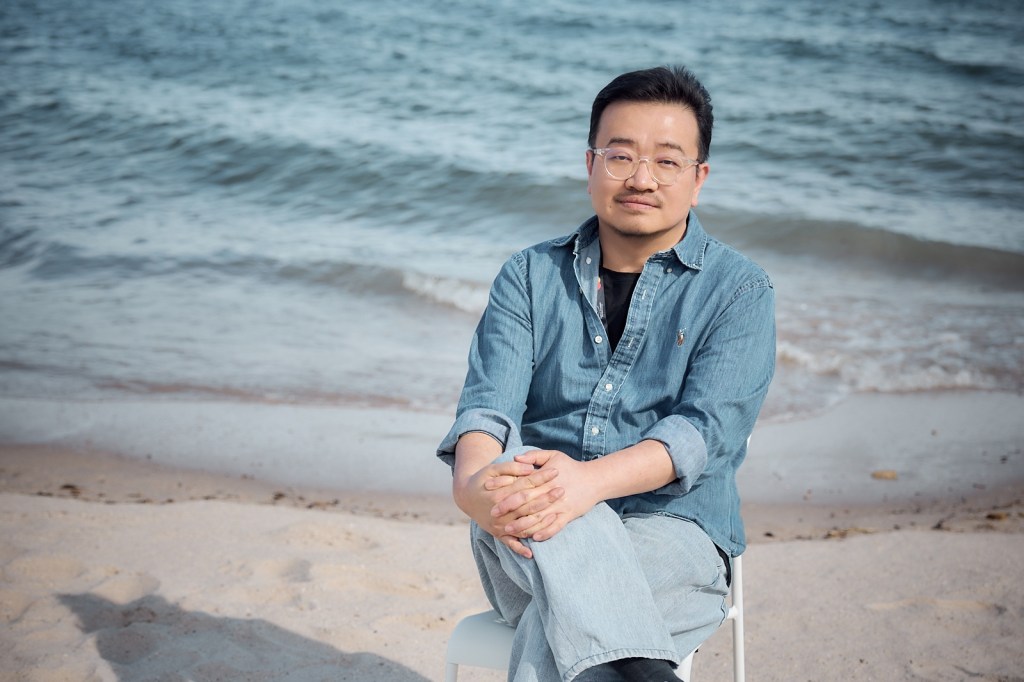
- Yeon Sang-ho’s zombie thriller Colony premiered in Midnight Screenings at Cannes and has already sold to 124+ territories via Showbox
- The film stars Gianna Jun and features hive-mind zombies brought to life by professional dancers rather than CGI
- Yeon says Colony’s collective zombie consciousness is a direct metaphor for AI’s threat to human individuality
- His Netflix Japan series Human Vapor, co-produced with Toho Studios, drops July 2
- Colony opens in North American theaters August 28, preceded by a 4K Train to Busan rerelease on August 14
Yeon Sang-ho hasn’t exactly been taking it easy. The Train to Busan director premiered his new zombie thriller Colony in the Midnight Screenings section at Cannes this week, and that’s just one piece of a staggering recent workload — he also directed two other films last year, The Ugly and Revelations, and served as showrunner on a Japanese Netflix series that’s about to launch. For a filmmaker who once said he just thought Korean cinema was going through a “transformation” rather than a crisis, Yeon is clearly doing his part to prove it.
Colony marks a return to the genre that made Yeon an international name, but this isn’t a retread. The film stars Gianna Jun — best known internationally for Kingdom: Ashin of the North — as a biotechnology professor attending a conference when a viral outbreak tears through the building. What follows isn’t your standard zombie chaos. These infected share information. They operate as a networked hive mind, collectively tracking survivors through what amounts to a biological internet. The ensemble also includes Go Soo, Ji Chang-wook, Kim Shin-rock, and Koo Kyo-hwan, and the film has already been sold to more than 124 territories by Korean studio Showbox.
Its Cannes premiere is itself a moment worth marking. Korean cinema hasn’t had this kind of presence in the official selection in years — Colony is joined by Na Hong-jin’s Hope in competition and July Jung’s Dora in Directors’ Fortnight. A long-overdue homecoming for a national cinema that’s been reshaping global pop culture for the better part of a decade.
Why the Zombies Move the Way They Do
One of the first things Yeon is eager to clarify: despite the film’s high concept, he kept the technology behind it deliberately analog. No AI tools were used in production, and CGI was kept to a minimum — reserved almost entirely for the film’s finale, when the sheer scale of the infected required digital augmentation.
“I have nothing against CGI and used it heavily in Hellbound and Parasyte: The Grey, but for this movie I only wanted to use it at the end to create the greatest number of zombies,” Yeon told Deadline in Cannes. “For most of the movie, we relied on choreographers, dancers, a stunt team and of course also the actors. We had some of the best contemporary dancers in Korea working on the film.”
He deployed three separate teams of professional dancers to embody the infected, and the metaphor he gave them was precise: “Ten fingers of one hand playing a piano. So each of them, they are in one hand, so they are a body, but each of them have their specific role.” The point was that creatures sharing a collective consciousness shouldn’t move identically — each still has a distinct function within the whole. It’s a choreographic idea that cuts right to the heart of what the film is about.
The setting also shifts things dramatically from Train to Busan. Where that film moved horizontally — hurtling forward on a speeding train — Colony unfolds vertically, inside a sealed high-rise. Yeon sees that geometry as symbolic. “When you have vertical action, it also expresses that the civilization made by humans can also go back very quickly to the primitive, to the savageness that we all knew before,” he told Variety. And there’s a dark irony baked into the architecture: “Humans think that you better go up, upwards to survive, but actually in the movie, you know that it doesn’t really help to go on the top.”
The containment scenario also let Yeon explore a perspective Train to Busan never had room for — the people on the outside who want the building locked down and everyone inside kept there. That dynamic, he notes, lands differently in a post-COVID world. “We all experienced the coronavirus experience since then. I think we all have a way of watching that completely changed because of that experience.”
The AI Question the Film Is Really Asking
Yeon is thoughtful — almost philosophical — when the conversation turns to artificial intelligence, which is fitting, because Colony‘s hive-mind premise is essentially a zombie metaphor for the thing keeping the film industry up at night.
“I was wondering what the greatest fear of our time is, and I think it’s the extreme high-speed exchange of communication, because technology is now connecting all of our thoughts and AI is only going to accelerate that process,” he says. “If we try to define AI, it’s a kind of sum or universality of thought, and it’s developing very rapidly, but to the detriment of the originality or individuality of people.”
He’s not simply anti-technology — he’s asking a more specific question about what gets lost when everything trends toward the universal. His research into viral colonies for the film revealed something instructive: even organisms that appear identical produce mutations, and those mutations are actually a survival mechanism. A colony with no variation has no defense against extinction. “I think the human society can learn a lot about this because actually, it’s also for us very important to protect the minority in front of the universality,” he says.
Applied to AI, that concern becomes pointed. “AI is appropriate for creating universal opinions, but it has limitations in creating mutations, which are characteristics of living organisms — minority opinions.” The bugs, the errors, the outliers — those are the things AI is worst at preserving, and Yeon thinks that matters enormously.
He draws the comparison to a debate he encountered as a Fine Arts student: Marcel Duchamp’s The Fountain — the famous porcelain urinal submitted as art — once threw the entire art world into an identity crisis over what art even was. “The world of cinema is very concerned with this question now,” Yeon says. “AI is generating new images, but the sum of these images is universal, and what defines art is originality, something that is personal to the artist or the individual, not universality. But at the same time, the big debate in fine arts over The Fountain ended up enriching the industry of art, so I think we’re at a similar crossroads now.”
South Korea is already navigating that crossroads in real time. CJ ENM recently released The House, an AI-human hybrid feature, in Korean cinemas. But the film that actually broke records wasn’t a tech experiment — it was Showbox’s historical drama The King’s Warden, which pulled in $108 million to become the highest-grossing Korean film of all time. Old-fashioned human storytelling, it turns out, is what brought audiences back.
Korean Cinema’s Real Revival
Yeon has watched the hand-wringing over Korean cinema’s supposed decline with a certain patience. “A lot of people said Korean cinema was going through a crisis, but I never thought of it that way, I just thought it was going through a transformation,” he says.
His diagnosis of what happened is clear-eyed: streaming exploded during COVID, short-form content ate into young people’s attention spans, and theatrical attendance cratered. But something has shifted. “Now we have the phenomenon where young people have started going back to the movie theatres.” He points to one unexpected driver of that return: the rise of GVs, or guest visits — post-screening Q&As with directors and cast that started at film festivals but have become a fixture of regular theatrical releases. “Audiences are demanding a lot of GVs,” he says, and there’s something telling about that. People aren’t just going to see films — they want the human experience around them.
Yeon credits the generation of filmmakers before him for building the foundation that makes all of this possible. “You see recently all those famous directors like Lee Chang-dong, Bong Joon Ho, Park Chan-wook — we really owe them a lot because they are the ones who made the basic frame of doing movies that are at the same time commercial but also very auteur.” That hybrid approach, he argues, is Korean cinema’s defining strength and what separates it from other commercial film industries.
What’s Coming Next
Yeon’s production company Wow Point — which he founded with producer Yoomin Hailey Yang — is actively developing international co-productions, and his collaboration with Japan is already bearing fruit. Human Vapor, a sci-fi crime thriller based on a 1960 tokusatsu and Okuda Hideo’s novel Olympic Ransom, is directed by Shinzo Katayama and written and executive produced by Yeon. It’s a co-production between Wow Point and Toho Studios, and it hits Netflix on July 2.
“With Human Vapor, I was really attracted by the theme and the setting in Japan,” Yeon says. “We talked a lot with the Japanese director and producer and about the differences in the ways that Japanese and Korean audiences receive information. It was a refreshing experience and I’m really looking forward to working on more projects like this.”
He’s found that cross-cultural creative friction produces something genuinely valuable — and he points to Alfonso Cuarón’s involvement on Revelations as evidence. “He said it was interesting to learn about the cultural differences. It’s a story set in Korea but his viewpoint is very much reflected in the movie. So I think it’s always an enriching experience to work with foreign artists.”
One name Yeon drops as a dream collaborator will have genre fans immediately on board: “Indonesia’s Joko Anwar is one director that I would love to work with one day.”
He’s also deep in post-production on Paradise Lost, a smaller, darker film that extends the territory he explored with The Ugly. Inspired by the low-budget work of Edward Yang and Kurosawa Kiyoshi, it follows a mother who uses AI services to virtually resurrect her dead young son — only for her actual son to return nine years later. “It’s a very dark movie and it’s really completely different to the big movies that I usually make,” Yeon says. “But I don’t want to focus on only one kind of movie; I really want to have a parallel, to make both independent low-budget movies and also all those commercial movies together.” He’s also hinting at an international project outside Korean-language cinema entirely, though he’s keeping the details close for now.
For North American audiences, Colony opens the New York Asian Film Festival before WellGo USA releases it theatrically on August 28. And if you want to revisit where it all started, a 4K restoration of Train to Busan hits theaters on August 14 — two weeks earlier, as if to remind everyone just how far this filmmaker has come, and how much further he intends to go.
Filed in

Comments
0