
Damon Lindelof on Being Fired From Star Wars
Damon Lindelof reveals his Star Wars movie would’ve been ‘the Protestant Reformation inside Star Wars’ — and why it ultimately didn’t work.
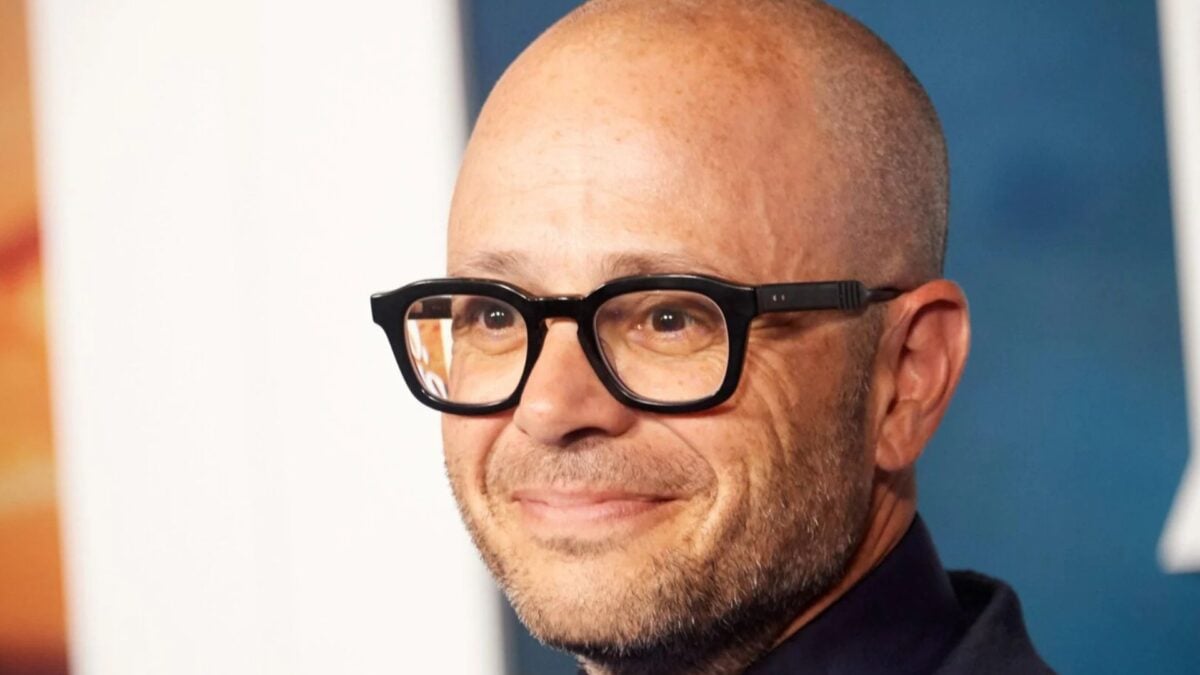
- Damon Lindelof was fired from a Star Wars movie in 2023 after two years of development with co-writers Justin Britt-Gibson and Rayna McClendon
- His script would have centered on Daisy Ridley’s Rey and explored the franchise’s war between nostalgia and reinvention — what he called “the Protestant Reformation inside Star Wars”
- Peaky Blinders creator Steven Knight was hired to replace Lindelof and Britt-Gibson, but that version also stalled
- Lindelof says the writing was genuinely hard — nailing the tone, the canon placement, and the relationship to Episode IX all proved elusive
- His comments land the same week The Mandalorian and Grogu opens in theaters, the first Star Wars film since 2019
Damon Lindelof just said out loud what a lot of Star Wars fans have been whispering for years — and he did it by describing his own firing.
The creator of Lost, The Leftovers, and HBO’s Watchmen appeared on The Ringer-Verse’s House of R podcast this week and decided to address what he called “the Bantha in the room”: the fact that he was fired off a Star Wars movie. He didn’t hedge. He didn’t spin it. He just told the story.
“They asked me, ‘What do you think a Star Wars movie should be?’ And I said, ‘Here’s what it should be.’ And they said, ‘Great, you’re hired.’ And then two years later, I was fired,” Lindelof said. “And so I was wrong. At least through that prism.”
The project was first announced in 2022, with Lindelof and co-writer Justin Britt-Gibson developing what would eventually be revealed as a Rey-centric New Jedi Order story — set after the events of The Rise of Skywalker, with Daisy Ridley returning as Rey as she attempts to rebuild the Jedi Order. Director Sharmeen Obaid-Chinoy was attached to helm it. By 2023, Lindelof and Britt-Gibson were out, replaced by Peaky Blinders creator Steven Knight. That version has since stalled too.
What the Movie Would Have Actually Been About
Here’s where it gets interesting. Lindelof wasn’t just writing a Rey sequel. He was trying to make a film that directly engaged with the fractured state of the Star Wars fanbase itself — without ever breaking the fourth wall to wink at the audience.
“What we were attempting to do — my partners Justin Britt-Gibson and Rayna McClendon and I — was to have this conversation in the movie,” he explained. “Which is to say, there is a Force of nostalgia and there is a Force of revision, and they are at odds with one another. And let’s do the Protestant Reformation inside Star Wars.”
He paused on that, then added: “And it didn’t work.”
It’s a genuinely ambitious idea. The tension between nostalgia and reinvention has been the defining fault line of Star Wars since The Force Awakens — the franchise simultaneously trying to honor the past and build something new, and never quite committing to either. The Last Jedi pushed hard toward revision. The Rise of Skywalker yanked back toward nostalgia. The fandom split accordingly. Lindelof wanted to make that conflict the actual architecture of a movie, not just the subtext.
One intriguing detail that surfaced: Lindelof’s original pitch was apparently set decades after The Rise of Skywalker, and he’d even floated the idea of Helen Mirren playing an older Rey — a version of the character far removed from where Daisy Ridley left her. It’s a bold swing that would have sidestepped the announced story entirely, which may partly explain why the project became such a slow-moving puzzle.
Why the Writing Stalled
Lindelof is clear that the premise wasn’t the problem. Lucasfilm liked it. The problem was execution — and the sheer gravitational weight of the Star Wars universe.
“The writing was really hard. It was slow,” he said. “The tone, getting it right, where it was inside the canon, what its relationship was to Episode IX — is it starting a new trilogy? All of those things. They’re so massive. They’re so big. It’s sort of the tanker equation, which is you turn the wheel and it takes five minutes before it turns a little bit.”
He’s describing something any writer who’s ever tried to work inside a massive franchise will recognize: the script isn’t just a script, it’s also a position statement on everything that came before it. Every scene carries institutional weight. Every choice about tone or timeline or canon ripples outward in ways that are almost impossible to fully anticipate until you’re deep in the work.
And underneath all of it was a more fundamental question that nobody had quite answered yet.
“We’re looking for the center of Star Wars,” Lindelof said. “When Episode VII came out, we all knew what it was. It was Rey and it was Finn and it was Poe, and then we were migrating back in — Luke and Leia and Han and Chewie and all those guys. But we got the sense that when this new trilogy was over, we were going to be launching with these new characters, and that was the center of Star Wars. The new question is: are Mando and Grogu the center of Star Wars now?”
A Franchise Still Looking for Its Footing
That question hangs over everything right now. The Mandalorian and Grogu — the franchise’s first theatrical release in six years — opened May 22, and early reviews have been mixed at best. IGN called it a 5/10, writing that it’s not “a Star Wars movie that thrills, surprises, challenges, or demonstrates a vested interest in seeing its characters grow and change.” The film exists, in part, because so many of the more ambitious projects — Lindelof’s among them, but also a Rian Johnson trilogy, a film from Game of Thrones showrunners David Benioff and D.B. Weiss, a Kevin Feige-produced Star Wars movie, James Mangold’s Dawn of the Jedi — never made it out of development.
The Rey movie announced at Star Wars Celebration 2023 with Ridley and Obaid-Chinoy on stage is still technically alive, but new Lucasfilm president Dave Filoni has been quiet about its status. Knight’s replacement script has reportedly hit its own walls. And Kathleen Kennedy, who championed the project publicly, has since stepped down. Meanwhile, a new trilogy from Simon Kinberg is apparently in early development alongside everything else.
Lindelof, for his part, has plenty to keep him busy. His DC series Lanterns is heading to HBO later this year, and he remains one of the most compelling voices in prestige genre television. But it’s hard to listen to him describe what his Star Wars movie could have been — a film that put the franchise’s own identity crisis on screen and tried to work through it — and not feel like something genuinely interesting slipped through the cracks.
“The conversation that the fandom is having, without winking and looking at the audience,” he said. “That didn’t feel necessarily that risky.”
Maybe it wasn’t. But it also never got made.
Filed in

Comments
0