
Cannes 2026: Sebastian Stan Shines in Mungiu’s ‘Fjord’
Sebastian Stan and Renate Reinsve star in Cristian Mungiu’s gripping new drama ‘Fjord,’ a culture-clash thriller premiering at Cannes 2026.
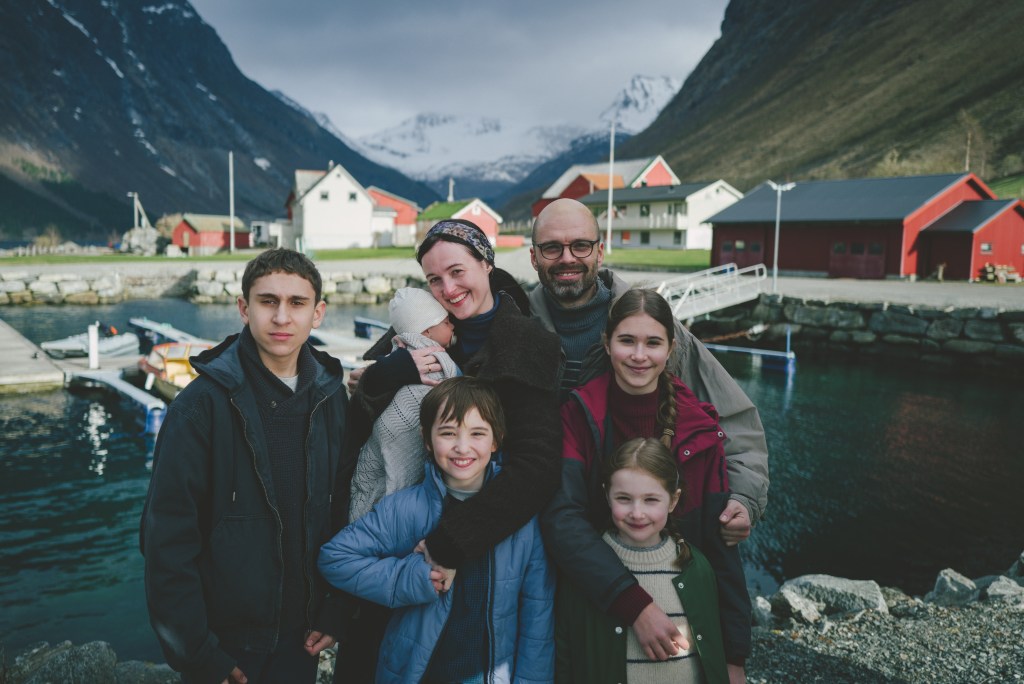
- Cristian Mungiu’s Fjord premiered in Competition at the 2026 Cannes Film Festival to strong reviews
- Sebastian Stan and Renate Reinsve star as Romanian-Norwegian parents accused of child abuse in Norway
- The film marks Mungiu’s first feature set outside Romania, shot on location in a Norwegian fjord town
- NEON will release Fjord in U.S. theaters later this year
- Mungiu previously won the Palme d’Or in 2007 for 4 Months, 3 Weeks and 2 Days
Cristian Mungiu has never been a filmmaker who makes things easy for his audience — and with Fjord, which world premiered in Competition at the 2026 Cannes Film Festival, he’s made something that might be his most genuinely unsettling work in years. Not because it’s dark, exactly. Because it refuses to let you off the hook.
Sebastian Stan — bald, rigid, barely making eye contact at parties — plays Mihai Gheorghiu, a Romanian software engineer who has relocated his family of seven to a scenic fjord community in Norway after the death of his parents. His wife Lisbet, played by Norway’s Renate Reinsve in what critics are already calling a career-high performance, grew up nearby. On paper, this is a homecoming. In practice, it becomes a slow-motion collision between two entirely different ideas of what a good life looks like.
The Gheorghius are devoutly Evangelical Christians. Strict ones. Daily Bible study, no cellphones, no video games, no secular music. Mihai runs the household on a point system and doesn’t spare the occasional slap when he feels his children have earned one. In Romania, where he comes from, that’s not unusual. In Norway — one of the world’s consistently happiest countries with some of the most progressive child welfare laws on earth — it is very much a problem.
When their eldest daughter Elia (Vanessa Ceban) shows up to gym class with bruises on her body, the school’s child protection team moves fast. All five Gheorghiu children — including a newborn who still breastfeeds — are removed from the home while investigators determine whether abuse has taken place. Mihai admits to “slapping” the children. The state sees no distinction between that and hitting. He does. And so the war begins.
A Culture Clash That Refuses to Pick a Side
What makes Fjord so disquieting — and so accomplished — is that Mungiu genuinely doesn’t tip his hand. He’s not making a film about the evils of religious conservatism, nor is he making a persecution drama that asks you to root for the family against an overreaching state. He’s doing something harder: building a scenario where every party has a point, and every party is also, in some way, wrong.
The children’s testimony, which becomes the most damning evidence against their father, may have been the result of a language-related miscommunication. The child welfare workers who enter Lisbet’s home and calmly tell her they’ll be leaving with all of her children say, with total sincerity, “We’re here to help.” Both of those things can be true at once. That tension is where Fjord lives for its entire two-and-a-half-hour runtime, and Mungiu holds it without flinching.
As the case grows into something larger — Mihai begins posting emotional YouTube videos calling for global solidarity from fellow Evangelicals, whipping up conservative protests across Europe — the film asks an uncomfortable question about what happens when someone who may have genuinely wronged their children is also genuinely being persecuted for their beliefs. The courtroom scenes, critics note, occasionally over-explain what the earlier scenes had left beautifully ambiguous. But even there, Mungiu is working at a level most filmmakers can’t reach.
Stan, last seen at Cannes for The Apprentice, gives a performance that is almost aggressively unsympathetic — and that’s entirely the point. Mihai is a wronged man and a man in the wrong, sometimes simultaneously. He’s stiff, joyless, visibly uncomfortable even saying the words “we’ve been blessed” to new colleagues. Yet when the camera holds on him as his children are taken from his home, something real and devastating breaks through. Reinsve, meanwhile, plays Lisbet like a shaken willow — a woman who returned to her homeland only to find she no longer belongs to it, her secular Norwegian roots now buried under two decades of religious traditionalism that her neighbors resent her for.
Mungiu at His Most Precise
This is Mungiu’s fifth film to compete at Cannes — his first was 4 Months, 3 Weeks and 2 Days, which took the Palme d’Or in 2007 — and his first set entirely outside Romania. That shift, it turns out, suits him. So much of his work has circled the friction between Eastern and Western Europe, between tradition and progress, between the individual and the institution, that dropping his lens into Norway feels less like a departure than a natural expansion.
Cinematographer Tudor Vladimir Panduru, who also shot R.M.N. and Graduation, frames the Norwegian landscape in sleety, silvery blues that never quite warm up. Wide, unbroken takes capture the whole community at once — neighbors who are also employers, teachers, lawyers, and potential adversaries, all crammed into the same expansive frame. There are actual avalanches in the background of several scenes, gathering and tumbling down the hill behind the local school. Nobody is particularly concerned. It’s the human nature inside those walls, Mungiu suggests, that’s the real disaster in progress.
The supporting cast holds its own throughout. Markus Scarth Tønseth plays Mats, the next-door neighbor and school principal whose friendly demeanor barely conceals his discomfort with the family beside him. His stepdaughter Noora (Henrikke Lund-Olsen) forms a fast, intense bond with Elia — the kind of closeness that Mihai, who teaches his children that a family can only begin with a man and a woman, watches with visible unease. Lisa Carlehed is particularly fine as the neighbor-turned-lawyer who takes on Lisbet’s case after the first attorney quits in frustration.
Fjord is the kind of film that stays with you not because it answers anything, but because it keeps asking. “What does it mean to be a good neighbor?” is the question Mungiu keeps circling, in a world where everyone — the state, the church, the parents, the children, even the audience — believes they already know. NEON will release it in U.S. theaters later this year. Whatever your politics, clear your schedule.
Filed in

Comments
0