
Kiyoshi Kurosawa’s Samurai Epic Wows at Cannes
Kiyoshi Kurosawa brings a feudal Japanese murder mystery to Cannes 2026 — here’s what critics are saying about ‘The Samurai and the Prisoner.’
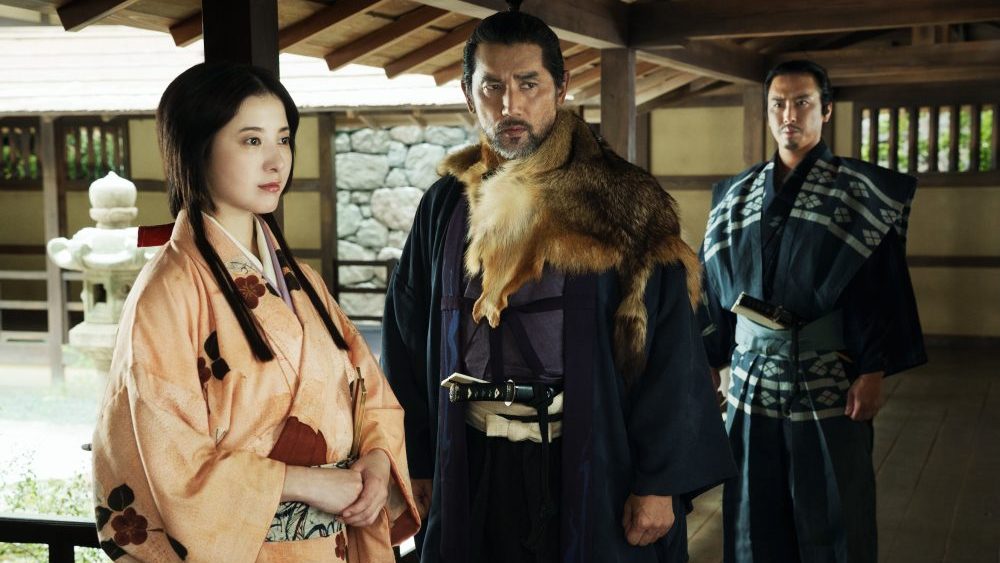
- Kiyoshi Kurosawa’s The Samurai and the Prisoner premiered at the 2026 Cannes Film Festival
- The film adapts Honobu Yonezawa’s 2021 novel, set during 16th-century Japan’s Azuchi-Momoyama period
- Stars Masahiro Motoki and Masaki Suda, who previously worked with Kurosawa on 2024 thriller Cloud
- Janus Films will release the film in U.S. theaters
- Critics are divided — some call it a mesmerizing epic, others find it plodding but worthwhile
Kiyoshi Kurosawa has never been easy to pin down — the Japanese auteur behind unsettling modern thrillers like Cure and Cloud has now planted himself firmly in feudal Japan, and the result is one of the more intriguing films to come out of Cannes 2026. The Samurai and the Prisoner, an adaptation of Honobu Yonezawa’s 2021 novel, is part murder mystery, part political chess match, and part deeply human story about what it costs to lead — and what it means to be truly free.
It’s a genuine curveball from a filmmaker whose work has always carried the chill of the contemporary world. But Kurosawa doesn’t abandon his instincts here — he just dresses them in a kimono.
A Castle Under Siege, and the Mysteries Within Its Walls
The story begins in winter of 1578, inside Arioka Castle, where Lord Araki Murashige — played with conflicted charisma by Masahiro Motoki — has made the fateful decision to rebel against the powerful warlord Oda Nobunaga. The castle is surrounded. Defection is spreading. And then people start dying in ways that don’t make sense.
A boy killed by an arrow that passes through a crack in a door and then vanishes. A decapitated head that goes missing in spring. A prized tea kettle stolen in summer. A man struck by lightning at the exact moment he’s about to reveal a secret in autumn. Each death carries the whiff of divine punishment — and each one rattles Murashige, a man who has recently and very deliberately rejected the old samurai code, instructing his retainers “do not die for me.”
Unable to explain what he’s seeing, Murashige keeps doing the one thing that makes no sense by any measure of feudal protocol: walking down to the dungeon to talk to his prisoner.
That prisoner is Kuroda Kanbei, played by Masaki Suda in a reunion with Kurosawa after their collaboration on Cloud. Kanbei arrived at the castle as Nobunaga’s envoy, expecting to be executed when his peace overtures failed. Instead he’s been locked away — a move that is simultaneously an act of mercy and a calculated propaganda play, since Nobunaga will assume that a living Kanbei must have switched sides. It’s the kind of double-edged decision that defines Murashige at every turn.
Locked in darkness, Kanbei becomes something Murashige never expected: the only person he can really talk to. Their conversations, which begin as cold tactical briefings and slowly become something warmer and more destabilizing, form the emotional spine of the film. As one critic put it, you start to sense that Murashige doesn’t have anyone else he can truly confide in — and when that’s pointed out to him, “he rejects this a bit too strongly.”
What the Critics Are Saying
Cannes critics came out of the film with notably different reactions — which, honestly, feels appropriate for a movie this layered.
The Wrap called it “remarkable, restrained and ultimately riveting,” praising Kurosawa’s ability to merge the procedural and the profound, and drawing a comparison to the best parts of a Knives Out film transplanted into feudal Japan. The review singled out the way Kurosawa shoots the film — “in each mesmerizing move of the camera or precisely-framed shot, he draws us in closer and closer” — and noted that despite its nearly two-and-a-half-hour runtime, the film “feels like it’s constantly hurtling onwards.”
Variety was equally warm, praising the film’s “absorbing, clean-lined” approach and calling it “a satisfyingly linked series of rousing whodunnits” that doubles as “a trenchant, often rather moving, exploration of the nature of true leadership.” DP Yasuyuki Sasaki’s camerawork gets a specific shoutout — particularly the dungeon sequences, “lit by shafts of light that slice through the cracks in the walls like laser beams.”
IndieWire was the most measured, acknowledging the film’s thematic richness while finding the plotting “tedious” and the first three mysteries amounting to “a mild shrug.” The review drew an interesting parallel between Kurosawa and his own protagonist — suggesting the director, hired to faithfully adapt the novel, may have felt as constrained as Kanbei in his dungeon, his particular genius both an asset and a liability. Still, IndieWire conceded that the film “gains a curious strength” in its final stretch, and that its closing grace note — a leader who finds that opting out of the future might be the only way to change it — is pure vintage Kurosawa.
The film’s four-chapter seasonal structure and its contained, almost abstract castle setting give it the feel of prestige television at times — a comparison Variety raises directly, noting that in the era of Shogun, that’s not necessarily a knock. The cast is large and well-differentiated, though fans should be warned: as the seasons pass, the ranks thin considerably. Kochi Yamato, who broke out as the unsettling Walking Man in the 2025 videogame adaptation Exit 8, appears here — and viewers are advised not to get too attached.
Kurosawa in a New Register
What’s striking about The Samurai and the Prisoner is how fully Kurosawa commits to the classical form of the jidaigeki — the traditional Japanese period drama — without letting it swallow him whole. This isn’t a deconstruction. There’s none of the eerie, reality-bending experimentation of his horror work. It’s a straight-faced, handsomely mounted historical drama that just happens to be made by one of cinema’s most restless minds.
And yet his fingerprints are everywhere. The Buddhist phrase invoked repeatedly throughout the film — “advance to paradise, retreat into hell” — is a theme Kurosawa has circled his entire career, the idea that the worst outcomes often come from pressing forward rather than questioning why we’re moving at all. Here, he gives his protagonist the rare chance to consider a different path. Murashige, shaped by a year of conversations with the man he imprisoned, begins to understand that loyalty can be forged through surrender as much as through victory.
It’s a quiet, unusual kind of heroism for a samurai epic. But then, this is a quiet, unusual kind of samurai epic.
The Samurai and the Prisoner premiered at Cannes and will be released in U.S. theaters by Janus Films. No release date has been announced yet.
Filed in

Comments
0