
Sebastian Stan Stuns Cannes With Fjord
Sebastian Stan earns a 12-minute standing ovation at Cannes for Fjord, his most daring role yet opposite Renate Reinsve in Cristian Mungiu’s new drama.
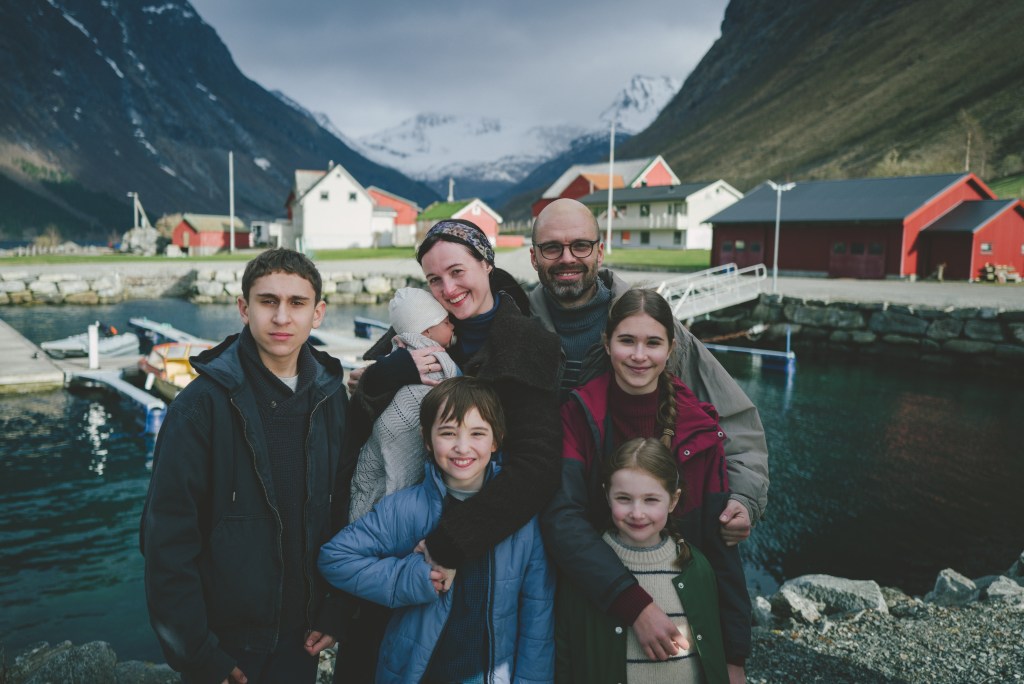
- Sebastian Stan stars in Cristian Mungiu’s Fjord, which received a 12-minute standing ovation at its Cannes world premiere — the longest of the festival so far
- Stan plays a Romanian engineer whose conservative religious family is torn apart by Norwegian child protective services after relocating to a fjord village
- Renate Reinsve co-stars as his Norwegian wife; the two previously appeared together in 2024’s A Different Man
- Stan, who was born in Romania, said the film gave him a chance to “rebond” with his home country
- Neon has acquired U.S., Canada, UK, Australia, and New Zealand rights, with early Oscar buzz building around Stan’s multilingual performance
When the credits rolled on Fjord at Cannes, the person sitting next to one critic reportedly gasped “Sebastian Stan!?” — not because he was unrecognizable, exactly, but because nobody quite expected a Marvel star to show up in the new film from Cristian Mungiu, the Romanian director who won the 2007 Palme d’Or for the brutal abortion drama 4 Months, 3 Weeks and 2 Days. Then again, if you’ve been paying attention to Stan’s choices lately — the droll indie fable A Different Man, his unsettling turn as a young Donald Trump in The Apprentice — you know he’s been deliberately pushing himself into territory most blockbuster actors wouldn’t go near.
Fjord is his most ambitious move yet. The film received a 12-minute standing ovation at its world premiere Monday night, the longest of this year’s festival so far, and it’s easy to understand why. This is a film that refuses to let you get comfortable — and Stan is the engine of that discomfort.
What Fjord Is Actually About
Stan plays Mihai Gheorghiu, a Romanian engineer (described in the film’s press materials as an IT technician, though other accounts identify him as aeronautical) who has relocated his wife Lisbet — played by Sentimental Value standout Renate Reinsve — and their five children, including a nursing baby, to the Norwegian fjord village where Lisbet was born. The family is devoutly Evangelical. No phones, no secular music, no YouTube. Homosexuality is taught as a mortal sin. The kids study the Bible. Mihai plays hymns in the cafeteria at lunch.
None of that is illegal. But when one of the older children, Elia (Vanessa Ceban), shows up at school with bruises on her back, a teacher calls child protective services. And from there, Fjord becomes something far harder to categorize than a simple immigrant family drama.
The Norwegian state moves swiftly — all five children are removed from the household while an investigation proceeds, including the infant still being breastfed by Lisbet. A civil case follows, then a criminal one. The bureaucratic machinery is calm, polite, and utterly crushing. “No one can know what goes on inside a family,” one character notes, and the film takes that uncertainty seriously, holding key facts back while giving equal weight to everyone’s competing version of the truth.
Mungiu, who has spent his career depicting people ground down by oppressive systems, pulls off something genuinely daring here: the oppressive system is progressive Norway. Its child welfare apparatus, with its breezy talk of trauma and best interests, becomes the institutional force that destroys a family. The main caseworker, Gunda (Ellen Dorrit Petersen), maintains a “terrifyingly reasonable tone” while arguing there’s no inherent reason to believe a biological parent’s care is always ideal. The state’s attorney sneers. The foster care drags on for months.
And yet — and this is where Mungiu earns his reputation — he never lets the Gheorghius off the hook either. Mihai admits in his deposition to “slapping” the children. He rallies an international coalition of religious conservatives to pressure the Norwegian government. He is, as one review put it, “a wronged man just as often as he is in the wrong.” The film’s quietly devastating argument is that what Norway is really enforcing isn’t child safety so much as cultural conformity — the same assimilation pressure that has historically been used to “civilize” Indigenous populations like the Sámi — just dressed up in the language of progressive values.
It wouldn’t take much for this material to tip into right-wing culture-war fantasy, and there are moments, particularly when the sneering prosecutor is onscreen, where it does tilt that direction. But Mungiu is too intelligent a filmmaker to leave it there. Both sides are full of people who, in their good intentions, cannot conceive for a moment that they might be biased. The film asks its audience to sit in that discomfort rather than escape it.
Stan Reconnects With His Romanian Roots
For Stan, the role carries a deeply personal dimension. He left Romania at around age 8 with his mother, during a period when the vast majority of the country was suffering under the economic hardship and political repression of communist leader Nicolae Ceaușescu. It was, as he described it at the Cannes press conference, a chaotic departure.
“I left in a very chaotic way, and I’ve really tried to educate myself about the country,” Stan told journalists on Tuesday, describing the film as having given him the chance “to rebond” with the country of his birth.
Mungiu revealed that he only began writing the script — inspired by true stories — after Stan had already agreed to take on the role. The character of Mihai required Stan to perform much of the film in Romanian, with English and Norwegian woven throughout. It’s a genuinely trilingual performance, and by all accounts it’s the best work of his career.
Reinsve, who previously co-starred with Stan in A Different Man, said the role was its own kind of challenge. “It was very scary to go into playing someone who was doing something wrong and was violent without knowing it,” she said at the press conference.
Stan was also asked about his understanding of Donald Trump following The Apprentice, which competed at Cannes in 2024. His answer was blunt. Noting that the film had faced threats similar to those experienced by late-night hosts Jimmy Kimmel and Stephen Colbert during Trump’s second term, Stan said simply: “We’re in a really, really bad place.”
The Performances, the Craft, the Oscar Talk
Fjord marks Mungiu’s first venture into languages other than Romanian — a significant step for a filmmaker so associated with a specific national cinema. He pulls it off. His signature style is intact: long, unbroken takes, a camera that keeps its distance, no musical score beyond occasional source music, and a narrative architecture so precisely constructed that all the major players — neighbors, teachers, lawyers, a rebellious teenager named Noora (Henrikke Lund-Olsen) who develops a complicated closeness to the Gheorghius’ eldest daughter — are introduced and interwoven before the 15-minute mark.
Cinematographer Vladimir Banduru captures Norway’s landscape beautifully — glaciers, lakes, the wide fjord valleys — while also conveying the suffocating smallness of a village where your neighbor is also your child’s principal, your lawyer, and the person who helped start the investigation against you.
Stan’s performance has drawn some minor quibbles — one critic noted that the prosthetic hairline used to make him look more ordinary feels overly artificial — but the consensus is that it didn’t need the gimmick anyway. The performance carries itself. Reinsve matches him, playing a woman who returned home after two decades away and finds herself a stranger in her own culture, steadfast in beliefs her neighbors find incomprehensible.
Neon has already acquired rights across the U.S., Canada, the UK, Australia, and New Zealand. With Fjord competing for the Palme d’Or — the winner will be announced May 23 — and the critical reception here running extremely warm, the film is already being discussed as a frontrunner for a Best International Feature Oscar nomination. Stan himself is being mentioned as a dark horse Best Actor contender.
Mungiu has competed at Cannes four times, winning the Palme d’Or in 2007, Best Screenplay for Beyond the Hills in 2012, and Best Director for Graduation in 2016. Fjord is his first film since 2022’s R.M.N. — and if the 12-minute ovation is any indication, the wait was worth it.
“We’ve been blessed,” Mihai says early in the film, visibly uneasy with the phrase. By the end of Fjord, you understand exactly why.
Filed in

Comments
0